What the Shenzhen trilateral signalled, and what it didn’t
Source Entity
Latest News: Todays Latest News Headlines from India & World | Hindustan Times
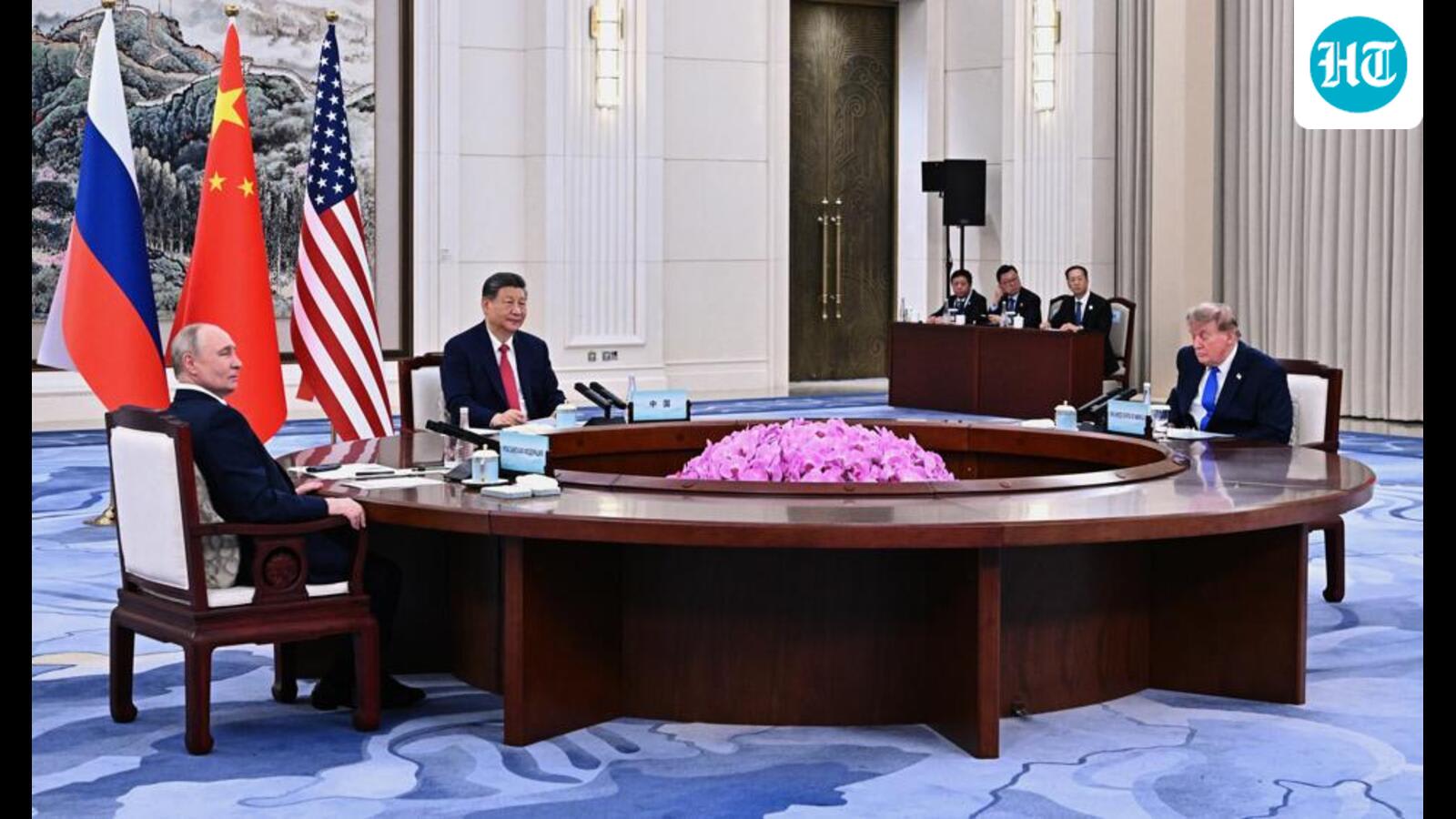
US President Donald Trump, Chinese President Xi Jinping, and Russian President Vladimir Putin held their first-ever trilateral summit in Shenzhen. The meeting focused on energy production and nuclear risk reduction, signaling a shift toward a G3-style management of global affairs.
The Shenzhen Trilateral: A New Era of Great-Power Diplomacy
A Historic Convergence
The first-ever formal trilateral summit between US President Donald Trump, Chinese President Xi Jinping, and Russian President Vladimir Putin, held in Shenzhen, China, marks a significant inflection point in contemporary international relations. Convened on the sidelines of the APEC summit at Kylin Villa, this meeting represents a rare moment where the world’s three most consequential powers engaged in direct, high-level dialogue. By facilitating this encounter, President Xi Jinping has once again demonstrated China’s capacity to serve as a central theater for global decision-making.
Redefining the Global Order
The summit’s primary output—a consensus on boosting global oil supplies and mitigating nuclear risks—highlights a pragmatic pivot in foreign policy. While the broader geopolitical ambitions of Washington, Beijing, and Moscow remain deeply divergent, the willingness of these leaders to coordinate on core economic and security issues suggests a desire to stabilize a volatile international system. This 'G3-style' arrangement implies that these nations view the management of global stability as a responsibility reserved for the world's most powerful states.
The Symbolism of Power
Beyond the stated policy goals, the Shenzhen summit serves as a potent symbol. For China, hosting such a meeting reinforces its status as a primary architect of global diplomacy. By bringing President Trump and President Putin to Chinese soil for this trilateral engagement, Beijing is effectively projecting an image of itself as an indispensable mediator. This follows a pattern of Chinese-led diplomatic coordination, building on similar efforts seen in previous years, such as the 2025 engagement involving the Indian Prime Minister.
Strategic Implications for Global Interests
For the UPSC and broader academic analysis, this summit is a critical case study in bilateral and multilateral groupings. The transition from separate bilateral engagements to a unified trilateral front signals that the 'great-power enterprise' is currently the primary mechanism for addressing systemic shocks, such as energy price fluctuations and existential nuclear threats. This shift necessitates a re-evaluation of how international organizations—which have historically provided a platform for smaller nations—interact with this emerging triumvirate.
Future Trends in Geopolitics
Looking ahead, the Shenzhen summit suggests a future where global governance is increasingly dictated by the direct consensus of a few powerful players rather than broad, inclusive frameworks. While this may lead to short-term stability in energy markets and nuclear de-escalation, it also poses challenges for the international rule of law and the interests of middle powers. As these three leaders continue to navigate their complex competitive dynamics, the world will likely see more 'minilateral' summits that prioritize immediate crisis management over long-term institutional reform.
Conclusion
The Shenzhen meeting is not merely a diplomatic photo-op; it is a declaration of the current hierarchy of international power. While the immediate agreements on oil and nuclear safety are functional, the true legacy of this summit will be the formalization of a G3 framework. As these powers continue to balance competition with cooperation, the global community must prepare for a landscape where the most critical decisions are made behind closed doors by a select few.
Multiple Citing Sources
Verification Required?