Make MoU with BRO on Sheshnag road work public: Mehbooba to Omar
Source Entity
Latest News: Todays Latest News Headlines from India & World | Hindustan Times
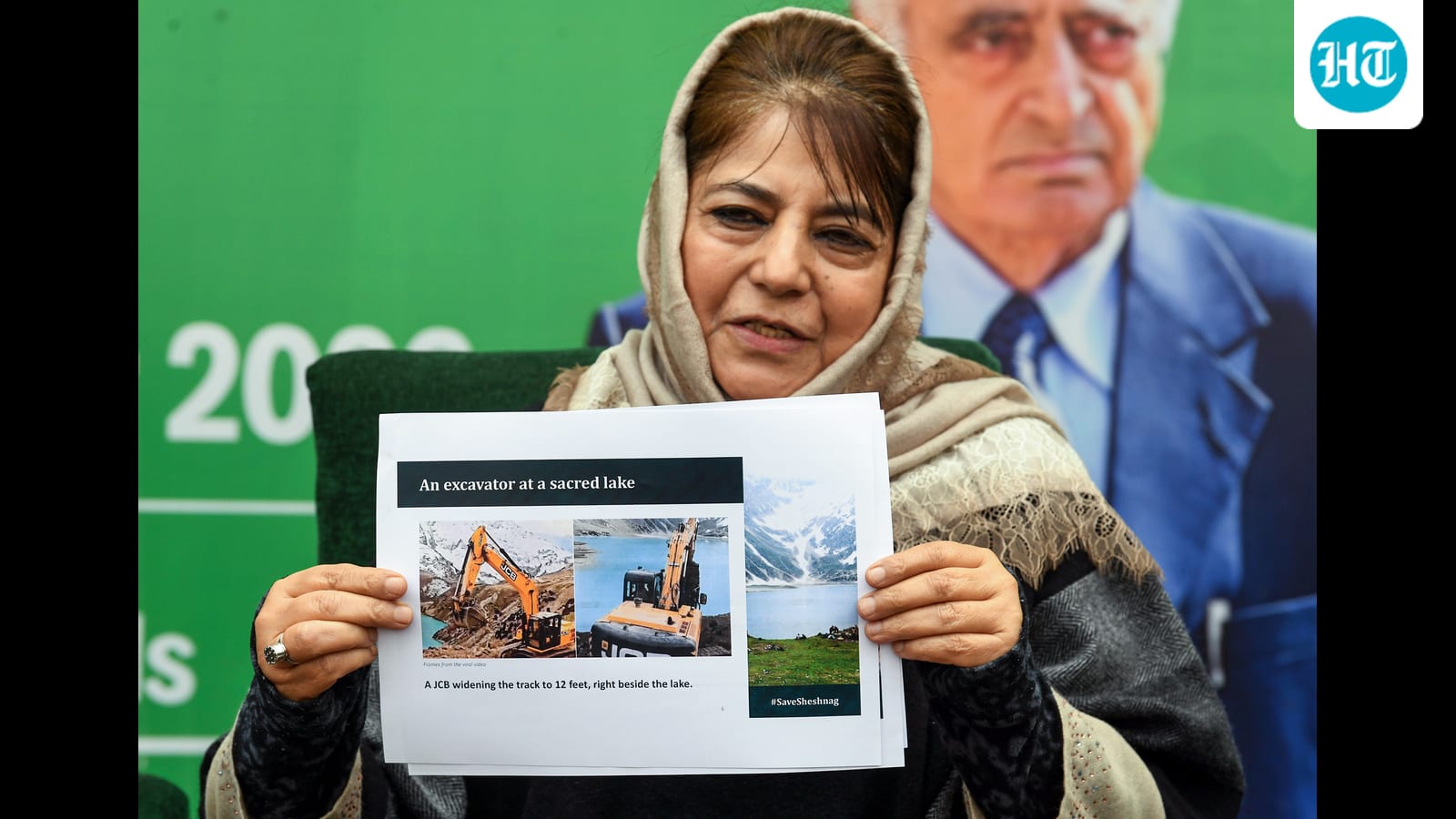
Political leaders and activists are demanding transparency regarding construction activities by the Border Roads Organisation near the ecologically fragile Sheshnag Lake. The controversy, fueled by a viral video, has led to allegations of police intimidation against a student activist campaigning for the lake's protection.
The Sheshnag Lake Controversy: Infrastructure vs. Ecology
Recent reports concerning the ecological integrity of Sheshnag Lake, a high-altitude alpine glacial lake situated at 11,780 feet in Jammu and Kashmir, have ignited a significant public debate. The controversy stems from a viral video depicting an earthmover operating near the lake's shores, an area crucial to the annual Amarnath pilgrimage. This visual evidence has served as a catalyst for widespread public outcry, prompting environmentalists and political figures to question the long-term impact of heavy machinery in such a sensitive, high-altitude ecosystem.
Political Demands for Transparency
The political discourse surrounding the site has intensified, with former J&K Chief Minister Mehbooba Mufti leading calls for accountability. Mufti has specifically urged the current administration to make the Memorandum of Understanding (MoU) between the government and the Border Roads Organisation (BRO) public. This demand for transparency follows Chief Minister Omar Abdullah’s request for a formal report from the forest minister, signaling that the state government is under pressure to clarify the scope and authorization of the ongoing track development projects.
BRO’s Stance and Environmental Concerns
In response to the growing backlash, the Border Roads Organisation has sought to mitigate concerns by clarifying that the activity is limited to the maintenance and widening of existing pilgrimage tracks, rather than new construction. Despite these assurances, critics remain skeptical, pointing to the inherent risks of soil excavation in a region already grappling with the environmental impacts of receding glaciers. The debate highlights the perpetual tension in Kashmir between the necessity of upgrading infrastructure for religious tourism and the urgent need to preserve the region’s delicate alpine biodiversity.
The Role of Civil Society and Allegations of Intimidation
The situation has transcended political boundaries to involve grassroots activism. Zarqua Banday, a PhD scholar, launched an online petition to protect Kashmir’s alpine lakes, which garnered over 13,000 signatures. However, the situation took a concerning turn when Banday alleged that she faced pressure from cyber police to remove the petition. She further claimed that her family members were contacted by authorities after her refusal to comply. These allegations of intimidation have drawn sharp criticism from climate activists, who argue that such actions stifle legitimate public discourse on sustainable development.
Broader Implications and Future Trends
The conflict surrounding Sheshnag Lake is emblematic of a larger, systemic challenge facing the Himalayan region: the balance between rapid infrastructure development and environmental sustainability. As climate change continues to stress glacial systems, any project involving heavy machinery in these zones will likely face heightened scrutiny. Future trends suggest that the intersection of digital activism and environmental policy will play an increasingly prominent role in Kashmir’s governance, as citizens demand more rigorous environmental impact assessments and transparent administrative processes regarding development projects in ecologically sensitive corridors.
Multiple Citing Sources
Verification Required?