D.K. Shivakumar seeks ‘fairness’ for Southern states in devolution and delimitation
Source Entity
India Latest News: Top National Headlines Today & Breaking News | The Hindu
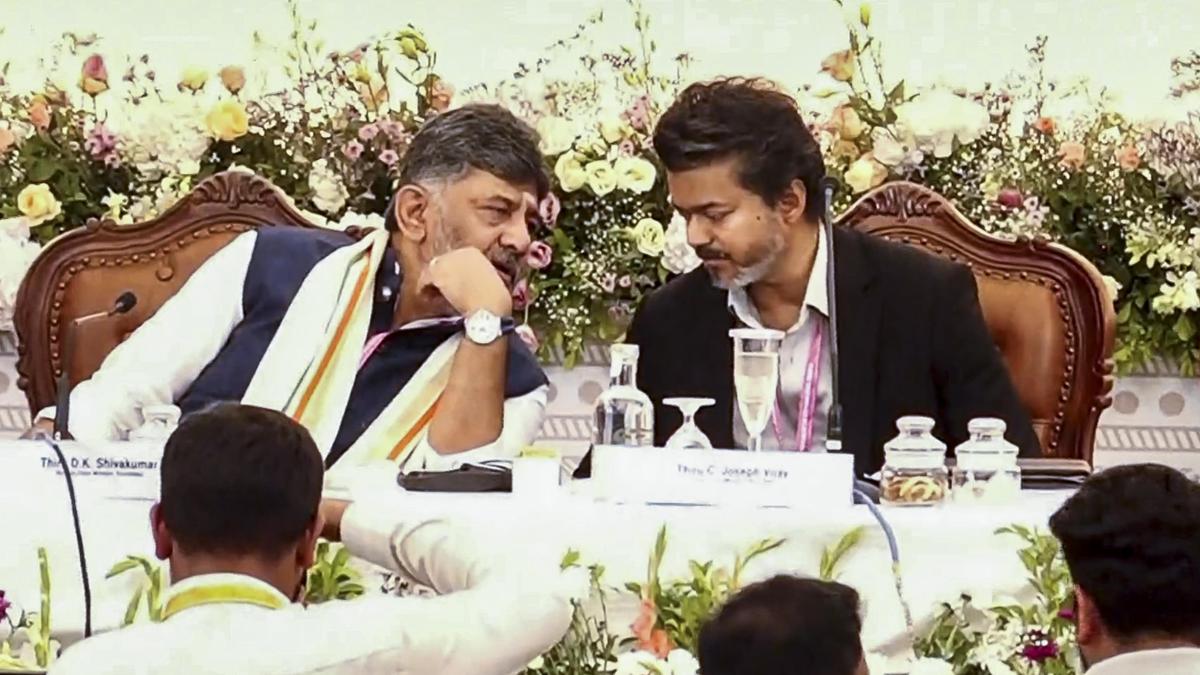
Karnataka CM D.K. Shivakumar has urged the Southern Zonal Council to freeze the number of Lok Sabha seats at 543 based on the 1971 census. He argues that southern states should not be penalized for their successful population control measures during future delimitation exercises.
The Delimitation Dilemma: Southern States Demand Political Equity
At the 31st meeting of the Southern Zonal Council held in Mahabalipuram, Karnataka Chief Minister D.K. Shivakumar spearheaded a significant push for political safeguarding of the southern region. The core of his argument rests on the principle of fairness, asserting that the southern states, which have effectively managed their population growth in alignment with national goals, should not face a reduction in their political influence. By proposing a resolution to retain the current 543-seat strength of the Lok Sabha, Shivakumar is attempting to preemptively address concerns that the upcoming delimitation process could disenfranchise states that have historically prioritized population stabilization.
The 1971 Census as a Benchmark
Central to the Chief Minister's proposal is the demand to utilize the 1971 census as the immutable basis for delimitation. Historically, the 1971 census has served as a reference point for political representation to ensure that states are not penalized for their progress in family planning. Shivakumar argues that shifting the demographic baseline would inadvertently punish the southern states for their social and economic discipline. This request reflects a broader anxiety among southern leaders that their political 'voice' is being diluted in favor of regions that have seen higher population growth rates over the last five decades.
Economic Contribution and Political Weight
Shivakumar framed his argument through the lens of economic contribution, describing the southern states as the 'engine of the Indian economy.' He emphasized that 'representation is not only about numbers; it is about weight, and about voice.' The Chief Minister posited that the fiscal contribution of these states warrants a proportional level of political respect and representation. By linking economic output to legislative influence, he is attempting to establish a new paradigm where financial viability and developmental success are recognized as key pillars of a state’s standing within the federal structure.
Integrating Women’s Reservation
An innovative aspect of the proposal is the integration of women's reservation within the existing 543-seat limit. Rather than expanding the size of the Lok Sabha to accommodate new mandates, Shivakumar suggests that the reservation for women should be carved out of the current seat capacity. This approach aims to achieve social justice goals—specifically, increasing female participation in governance—without necessitating the contentious process of increasing the total number of parliamentary constituencies, which many fear would lead to a demographic skew against the South.
Broader Implications for Indian Federalism
This debate highlights a growing friction between the Union government and the states regarding the future of federal representation. As the nation moves toward a future delimitation exercise, the Southern Zonal Council meeting serves as a critical forum for airing these grievances. The demand for a 25-year freeze on seat adjustments is a strategic maneuver designed to provide stability and ensure that the southern states maintain their federal leverage. The reception of this proposal by the Union Home Minister, Amit Shah, will be a bellwether for how the central government intends to balance demographic shifts with the need to maintain regional harmony.
Conclusion and Future Trends
Ultimately, D.K. Shivakumar’s advocacy signals a long-term trend in Indian politics where states are increasingly assertive about their regional interests in the face of national policy changes. The tension between population-based representation and developmental performance is likely to intensify in the coming years. Whether the Union government adopts the resolution or seeks a compromise, the arguments presented at Mahabalipuram have successfully framed the delimitation debate as a matter of justice, fairness, and the preservation of the constitutional balance between the North and the South.
Verification Required?