How the shrinking Caspian Sea intensifies ecological stress
Source Entity
The Indian Express
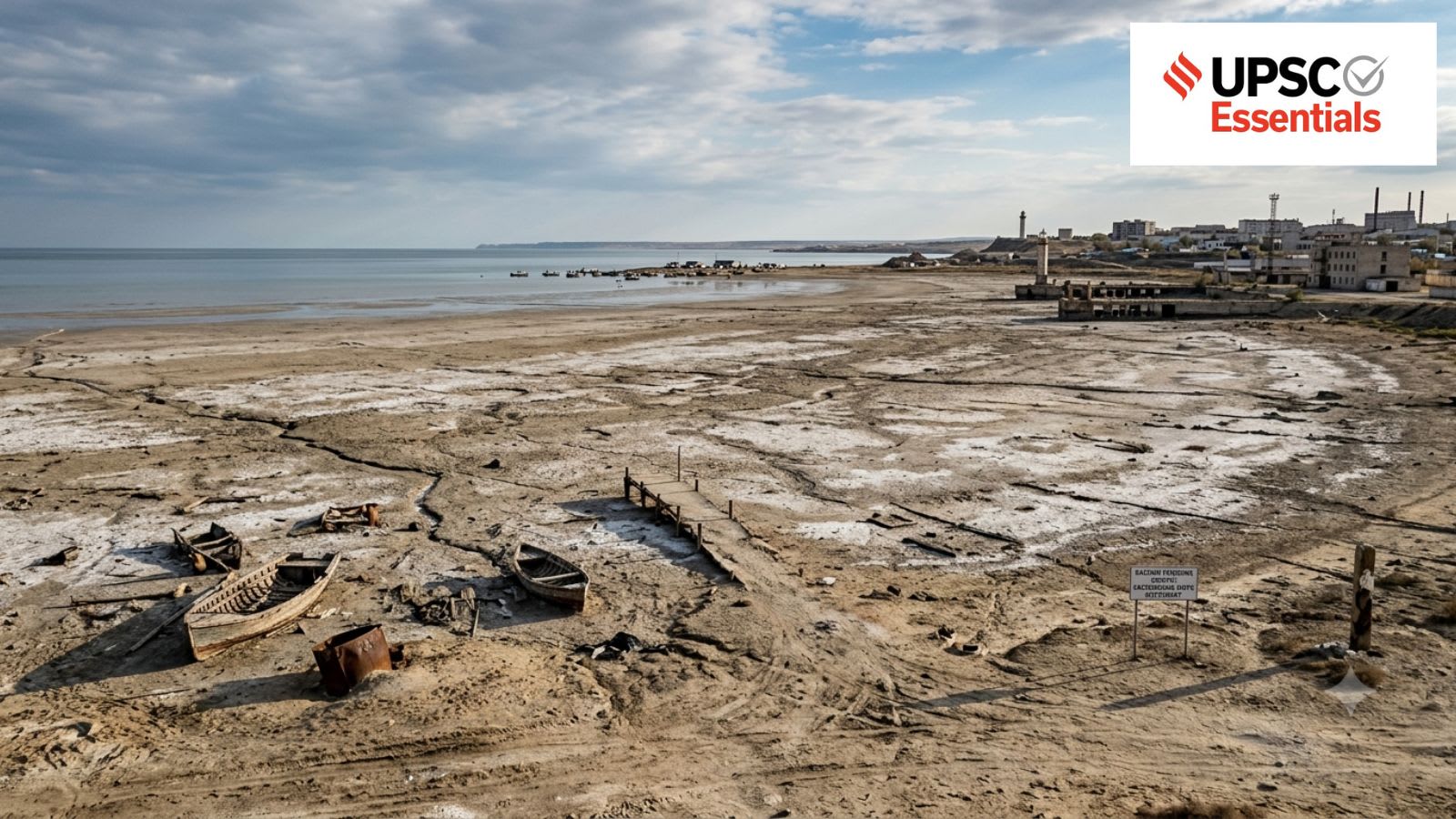
— Renuka The shrinking of the Caspian Sea offers a stark example of how climate change and anthropogenic interventions are affecting the world’s inland water systems. The Earth’s largest landlocked w...
The Receding Giant: Analyzing the Ecological Crisis of the Caspian Sea
The Caspian Sea, the largest inland body of water on Earth, is currently facing a critical environmental tipping point. As highlighted in recent reports, the sea is shrinking at an alarming rate, serving as a global bellwether for how the intersection of anthropogenic activity and climate change can destabilize massive inland aquatic systems. This phenomenon is not merely a change in geography but a systemic ecological collapse that threatens the delicate balance of a unique brackish ecosystem shared by several nations.
Drivers of Desiccation: Climate and Human Intervention
The shrinking of the Caspian Sea is driven by a dual-threat mechanism. Firstly, anthropogenic interventions—specifically the damming of rivers and the diversion of water for large-scale irrigation in the surrounding basins—have significantly reduced the freshwater inflow that sustains the sea. When the outflow of water via evaporation exceeds the inflow from rivers like the Volga, the water level inevitably drops. Secondly, accelerating climate change has amplified evaporation rates. Rising atmospheric temperatures over Central Asia and Eastern Europe have turned the region into a heat trap, pulling moisture from the sea's surface more rapidly than in previous decades, creating a feedback loop of water loss.
Ecological Fallout and Biodiversity Loss
The ecological stress mentioned in the reports manifests most acutely in the loss of critical habitats. The receding shoreline exposes vast areas of the seabed, destroying the shallow-water spawning grounds essential for the Caspian sturgeon, a species world-renowned for producing caviar but now teetering on the edge of extinction. Furthermore, the Caspian seal, the only marine mammal in the region, faces habitat fragmentation and increased vulnerability to disease as its resting beaches shift and shrink. The loss of these keystones disrupts the entire food web, leading to a decline in fish populations and affecting the migratory birds that rely on the Caspian as a vital stopover.
Geopolitical and Economic Implications
Beyond the biological impact, the shrinking sea introduces complex geopolitical tensions. Because the Caspian is landlocked and shared by Russia, Kazakhstan, Turkmenistan, Iran, and Azerbaijan, changes in water levels can shift coastal boundaries and impact the accessibility of strategic ports. Moreover, the Caspian is rich in oil and gas reserves. As the shoreline recedes, the infrastructure used for resource extraction may face stability issues, and the competition for the remaining freshwater resources in the feeding rivers could lead to diplomatic friction between the riparian states, turning an environmental crisis into a security concern.
Historical Context and Comparative Risks
To understand the gravity of the Caspian's decline, one must look at the historical precedent of the Aral Sea. Once one of the four largest lakes in the world, the Aral Sea virtually disappeared due to Soviet-era irrigation projects, leaving behind a toxic salt desert. While the Caspian is vastly larger and its decline is more gradual, the underlying drivers—over-extraction of river water and climatic shifts—are strikingly similar. The Caspian serves as a warning that without coordinated international management, the world's largest inland sea could follow a similar trajectory of degradation, albeit on a much more catastrophic scale due to its size.
Future Projections and the Path to Recovery
Looking forward, the trajectory of the Caspian Sea depends entirely on the implementation of transboundary water management agreements. If current trends of uncontrolled river diversion and rising temperatures continue, the sea may undergo a permanent regime shift, resulting in increased salinity and a total collapse of freshwater-dependent species. However, a shift toward sustainable agriculture in the basin and a coordinated effort to restore river flows could stabilize the water levels. The future of the Caspian is not just a regional issue but a global case study in whether humanity can reverse the damage inflicted upon the world's most critical inland water systems.