In 1983, Sinclair tried to make a flat-screen pocket TV; its unusual picture tube needed a special lens to stretch the image into shape
Source Entity
Latest News: Todays Latest News Headlines from India & World | Hindustan Times
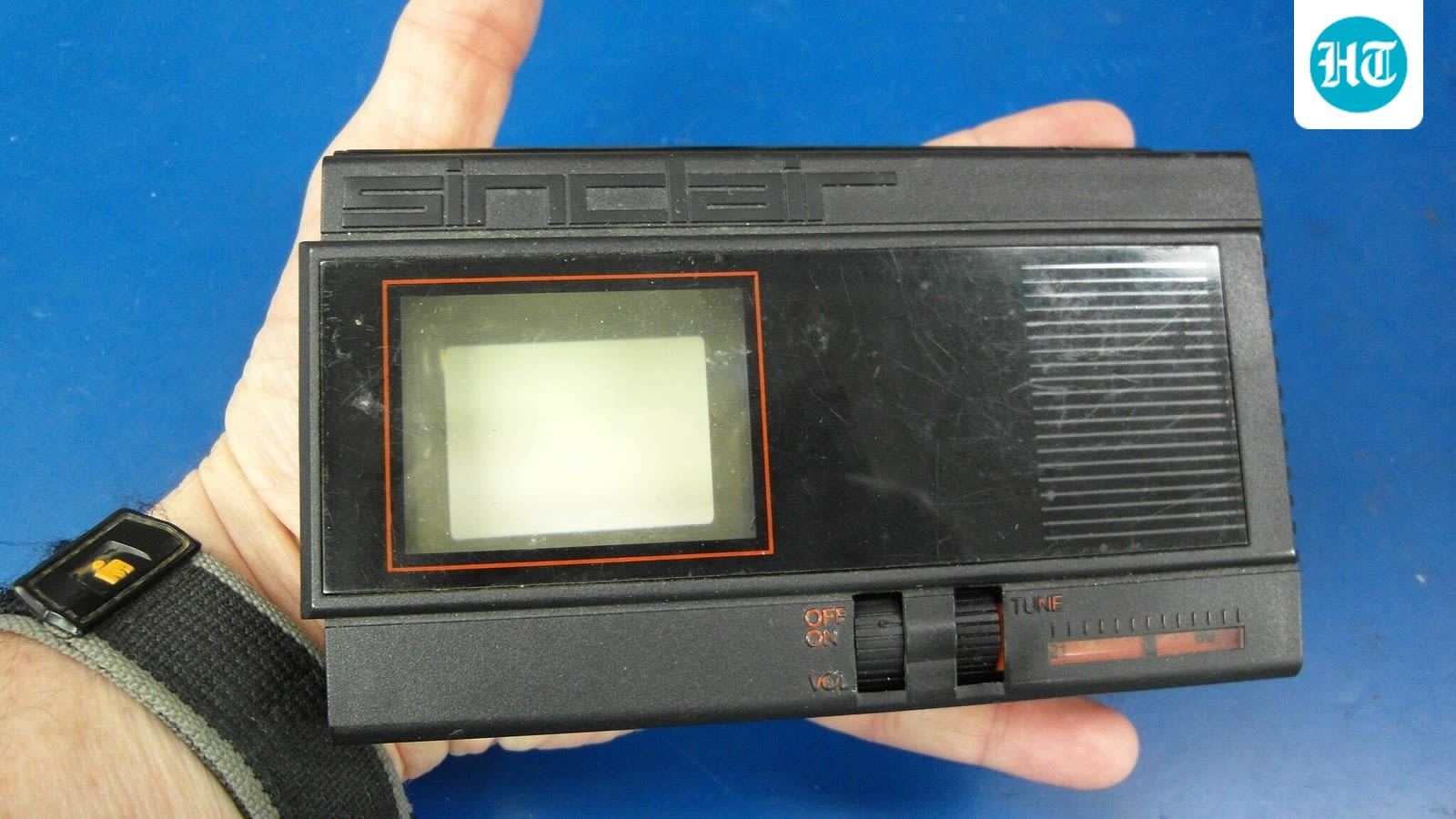
The 1983 Sinclair FTV1 was a pioneering attempt at portable television, utilizing a sideways-firing CRT and a Fresnel lens to achieve a pocket-sized form factor. Despite its innovative engineering, the device represents a significant milestone in consumer electronics miniaturization history.
The Engineering Ambition of the Sinclair FTV1
In 1983, Sinclair Research pushed the boundaries of consumer electronics with the introduction of the FTV1, a pocket-sized television that challenged the physical limitations of cathode-ray tube (CRT) technology. At a time when television sets were predominantly bulky, stationary furniture pieces, the FTV1 sought to redefine mobility, weighing just 300 grams and measuring a compact 90 by 140 by 32 mm.
Overcoming the CRT Barrier
The fundamental challenge for Sinclair was the inherent depth required by traditional CRTs, where an electron gun must fire at a phosphor screen from a distance. To circumvent this, the FTV1 utilized a unique sideways-firing electron gun. This design choice necessitated the use of electrostatic plates to manipulate the electron beam and a front-mounted Fresnel lens to optically stretch and correct the resulting monochrome image. This sophisticated optical workaround allowed for a flat-screen profile that was revolutionary for its era.
A Legacy of High-Stakes Innovation
The development of the FTV1 was no small feat, reflecting the high-risk, high-reward culture of Sinclair Radionics Limited. Reports indicate that the project required a massive investment of over £4 million and six years of dedicated research and development. This commitment underscores the company's drive to miniaturize complex hardware—a trend that would eventually pave the way for modern mobile devices.
The Historical Context of Miniaturization
Looking back, the FTV1 serves as a bridge between the vacuum-tube era and the solid-state revolution. By attempting to compress bulky CRT technology into a handheld form factor, Sinclair anticipated the consumer desire for portable media. While the device faced limitations in screen quality and manufacturing complexity, it demonstrated that the miniaturization of advanced displays was a viable, albeit expensive, pursuit for future engineers.
Broader Implications and Future Trends
Though the FTV1 was not a mass-market success in the way later LCD devices would become, it remains a testament to the importance of iterative design. The lessons learned in beam deflection and optical magnification were critical stepping stones for the display technologies that followed. Today, as we carry high-resolution, ultra-thin smartphones, the Sinclair FTV1 stands as a poignant reminder of the early, ambitious efforts to bring the world into our pockets.
Verification Required?