How Sinner out-served a faster, harder-hitting Zverev at Wimbledon
Source Entity
Bhuvan Gupta
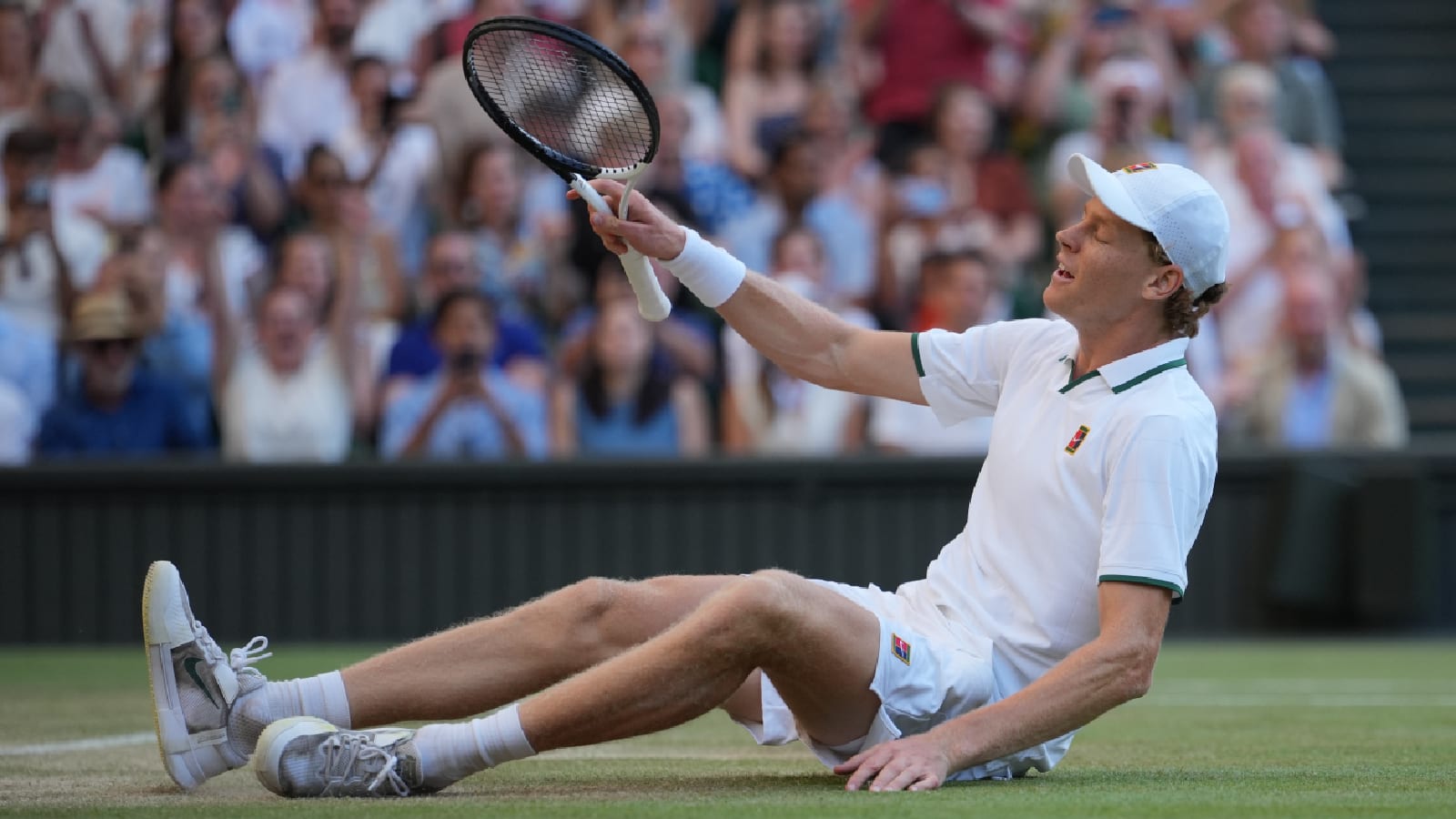
In theory, Alexander Zverev should have been the happier man walking off Centre Court on Sunday. He out-aced Sinner 17 to 15 and landed 80 per cent of his first serves to Sinner’s 66. He lost anyway, ...
Tactical Mastery: How Sinner Overcame Zverev's Power
The encounter between Jannik Sinner and Alexander Zverev at Wimbledon served as a masterclass in tactical tennis, where raw power was eclipsed by precision and mental fortitude. On the hallowed grass of Centre Court, the narrative appeared to favor Zverev, whose serve is widely regarded as one of the most lethal weapons in the modern game. However, the result told a different story, highlighting a critical lesson in elite sports: the profound difference between winning the statistics and winning the match.
The Statistical Paradox of the Serve
On paper, Zverev dominated the serving department. Recording 17 aces compared to Sinner's 15 and maintaining a formidable 80% first-serve success rate—significantly higher than Sinner's 66%—Zverev seemed to be in complete control of his delivery. In most matchups, such a disparity in serve efficiency leads to a dominant performance. However, Sinner's ability to neutralize these advantages suggests that Zverev's serves, while frequent and fast, may have lacked the specific placement or variation needed to break Sinner's rhythm during the most critical junctures of the match.
Precision vs. Power
Sinner's victory was not built on matching Zverev's raw speed, but on outmaneuvering him. By focusing on the quality of the serve rather than the quantity, Sinner targeted specific zones of the court to force Zverev into awkward returns. While Zverev was hitting the ball harder, Sinner’s strategic placement allowed him to dictate the points that followed. This "out-serving" was not about the number of aces, but about the effectiveness of the serve as a tool to set up the winning shot, proving that efficiency in point construction outweighs raw velocity.
The Mental Grind of Centre Court
The environment of Wimbledon adds a layer of psychological pressure that often amplifies small tactical errors. For Zverev, the frustration of possessing superior serve statistics yet failing to secure the match can be a mental drain. Sinner, conversely, displayed a level of composure that has become his trademark. By staying patient and refusing to be intimidated by Zverev's power, Sinner was able to capitalize on the few moments where Zverev's concentration wavered, turning a statistical disadvantage into a competitive edge.
Implications for the Modern Game
This encounter reflects a broader trend in professional tennis where the "big server" archetype is being challenged by "all-court" players who combine power with extreme precision. Sinner's win over Zverev underscores a shift toward a more holistic approach to the game. As these two players continue to clash at the top of the ATP rankings, this match serves as a blueprint for how to dismantle a power-based game through superior court positioning and tactical intelligence, suggesting that the next era of dominance will be defined by versatility rather than singular strengths.
Conclusion
Ultimately, the clash between Sinner and Zverev was a testament to the nuance of professional tennis. While Zverev left the court with the better serve percentages, Sinner left with the victory. This match reinforces the idea that in elite sports, the most important statistic is the final score. Sinner's ability to triumph over a faster, harder-hitting opponent marks him not just as a physical powerhouse, but as a cerebral tactician capable of overcoming any statistical hurdle.