Sonam Wangchuk loses over 9 kg, weakens significantly on 19th day of hunger strike: CJP
Source Entity
India Latest News: Top National Headlines Today & Breaking News | The Hindu
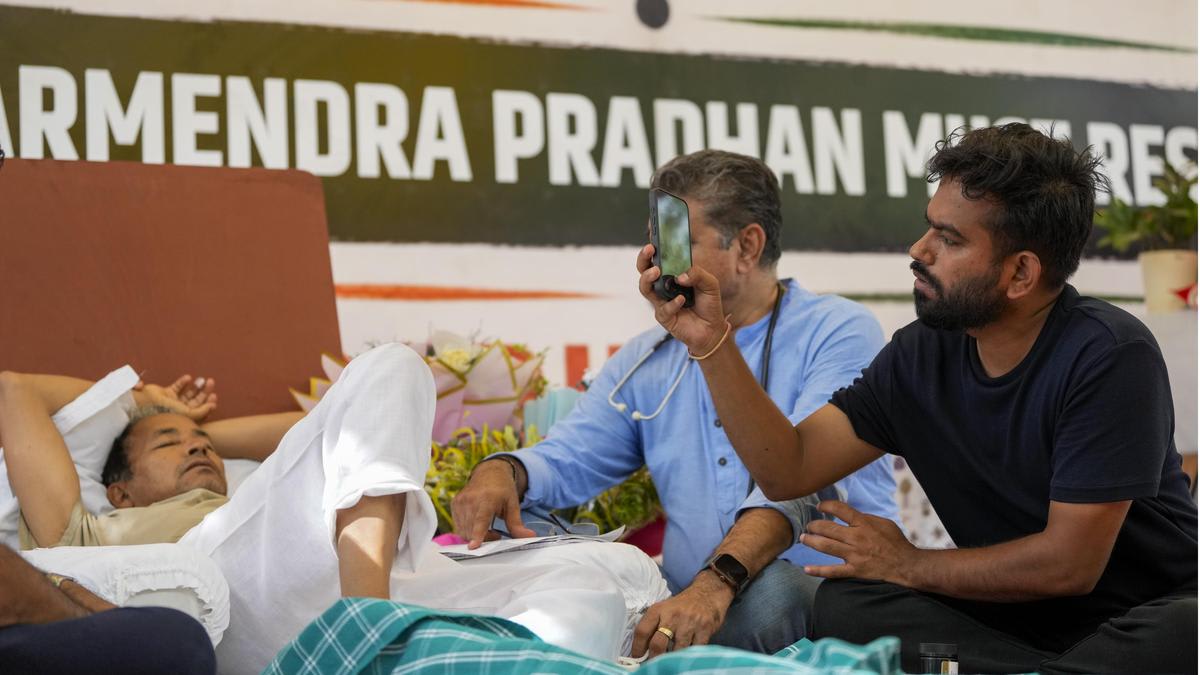
Environmental activist Sonam Wangchuk has lost over 9 kg by the 19th day of his hunger strike. Despite significant physical weakening, medical reports indicate he remains mentally alert as he continues his protest for Ladakh's constitutional protections.
The Physical and Political Toll: Analyzing Sonam Wangchuk's Hunger Strike
The recent report indicating that Sonam Wangchuk has lost over 9 kilograms by the 19th day of his hunger strike marks a critical juncture in his campaign for the rights of Ladakh. The statement released by the CJP highlights a stark contrast between his deteriorating physical state and his enduring mental resilience. As he enters the third week of fasting, the physiological strain is becoming evident, yet the fact that he remains "mentally alert" underscores a profound psychological commitment to his cause, transforming a personal health crisis into a potent political symbol.
The Catalyst: The Fight for the Sixth Schedule
To understand the gravity of this hunger strike, one must look at the underlying demands driving Wangchuk's resolve. The primary objective is the inclusion of Ladakh under the Sixth Schedule of the Indian Constitution. This provision is designed to protect the tribal populations of Northeast India by allowing for the creation of Autonomous District Councils (ADCs), which grant local communities significant power over land, forests, and water. For Ladakh, a region of extreme ecological fragility and unique cultural heritage, such protections are seen as the only way to prevent unregulated industrialization and land alienation in the wake of its separation from Jammu and Kashmir.
Physiological Implications of Prolonged Fasting
From a medical perspective, a weight loss of 9 kg in 19 days is an alarming indicator of the body entering a state of advanced ketosis and muscle atrophy. When the body is deprived of caloric intake, it begins consuming its own fat stores and subsequently breaks down muscle tissue, including cardiac muscle, to maintain essential organ functions. The mention of "constant medical supervision" is critical here; without professional monitoring of electrolytes and vital signs, a fast of this duration could lead to irreversible organ failure. The persistence of his mental alertness suggests a disciplined approach to the fast, but the physical weakening puts him at a high risk of sudden health collapse.
Broader Political Implications for the Region
This protest is not merely an individual act of defiance but represents a broader collective anxiety among the people of Ladakh. The transition of Ladakh into a Union Territory in 2019 initially brought celebration, but the subsequent lack of full statehood and legislative representation has led to a sense of disenfranchisement. Wangchuk's deteriorating health serves as a ticking clock for the central government, amplifying the urgency for a diplomatic resolution. The strike effectively bridges the gap between environmental conservation and political autonomy, arguing that the land cannot be protected if the people have no legal authority over it.
Environmental Stakes in the High Himalayas
Beyond the political framework, the hunger strike is a desperate plea for environmental stewardship. Ladakh is home to some of the world's most critical glaciers, which feed millions of people downstream. The fear is that without the protections of the Sixth Schedule, the region could be opened to large-scale mining and corporate infrastructure projects that would devastate the permafrost and disrupt the delicate water cycle. Wangchuk, a renowned innovator and educator, is leveraging his international reputation to highlight that the survival of the Himalayan ecosystem is intrinsically linked to the political empowerment of its indigenous inhabitants.
Historical Context of Non-Violent Resistance
Wangchuk's method of protest follows a long tradition of Satyagraha or non-violent resistance in India. By utilizing a hunger strike, he is employing a tool that historically forces the state to acknowledge the moral weight of a demand. Unlike violent uprisings, this form of protest places the moral burden of the activist's life on the shoulders of the governing authority. This strategy has been used effectively in various Indian movements to secure minority rights and land protections, making it a calculated choice to draw maximum attention to the "forgotten" plight of the Ladakhis.
Conclusion and Future Outlook
As Sonam Wangchuk continues to weaken physically, the pressure on the administration to negotiate increases. The outcome of this strike will likely determine the trajectory of civil discourse in Ladakh for years to come. If the government yields to the demands for the Sixth Schedule, it could set a precedent for other ecologically sensitive regions in India. Conversely, if the strike ends without a concrete agreement, it may lead to deeper resentment and a loss of faith in democratic petitions. The world now watches as a man of science and peace risks his life to protect a landscape that is vital to the planet's ecological health.
Verification Required?