'Could be alarming': Doctor flag new 'risks' as Wangchuk loses over 9kgs, fast enters Day 19
Source Entity
TOI NEWS DESK
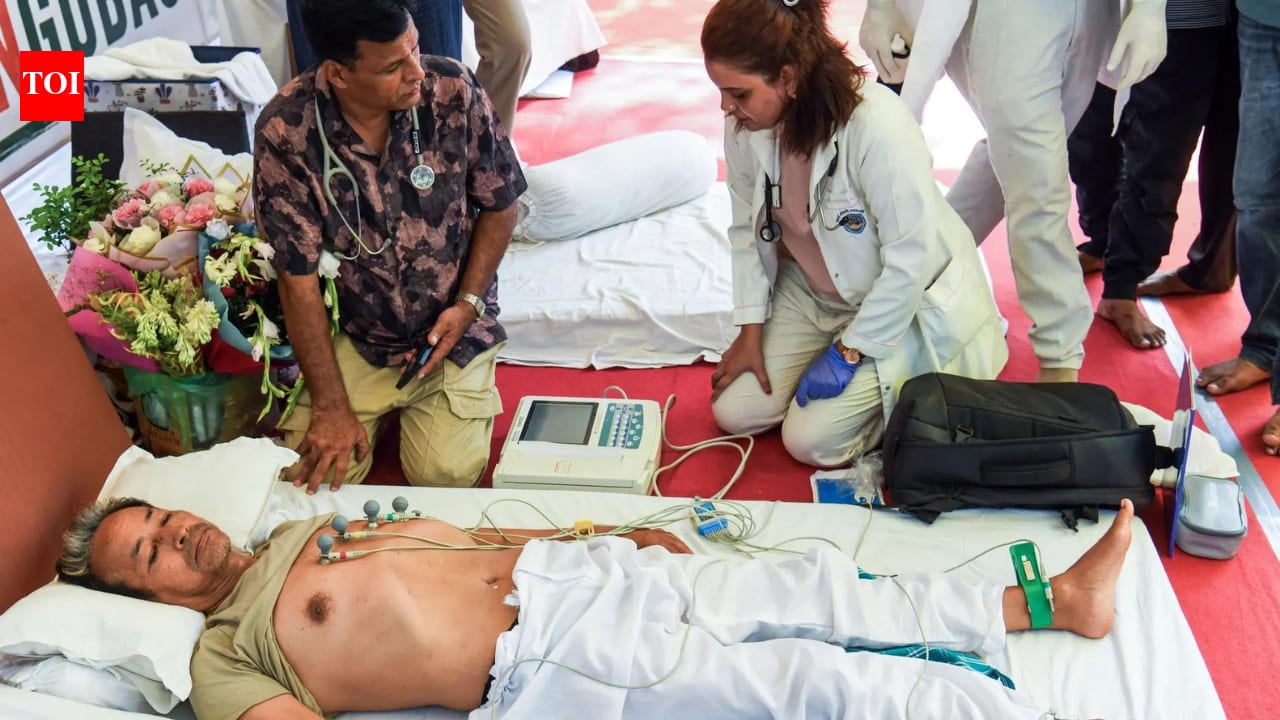
Prominent Ladakhi activist Sonam Wangchuk's health has become a point of concern as he enters the 19th day of an indefinite hunger strike, having lost over 9kg, leading doctors to warn of potential medical risks.
Health Crisis and Political Resolve: The Hunger Strike of Sonam Wangchuk
The current situation surrounding activist Sonam Wangchuk has reached a critical juncture as his indefinite hunger strike enters its 19th day. With a reported weight loss of over 9 kilograms, medical professionals have begun flagging 'alarming' risks to his health. This physical deterioration serves as a stark manifestation of the desperation and determination driving the movement in Ladakh. The transition from a peaceful protest to a life-threatening fast indicates a significant escalation in the attempt to draw national and international attention to the grievances of the region.
The Catalyst: Ladakh's Quest for Autonomy
To understand the gravity of Wangchuk's fast, one must examine the core demands that have led him to this extreme measure. The protest is primarily centered on the demand for Ladakh to be included under the Sixth Schedule of the Indian Constitution. This legal framework would provide the region with autonomous district councils, granting the local indigenous population greater control over their land, forests, and cultural heritage. By risking his own life through fasting, Wangchuk is highlighting the perceived vulnerability of Ladakh's fragile ecosystem and its unique cultural identity against the backdrop of centralized administrative control.
Medical Implications of Prolonged Fasting
From a clinical perspective, the loss of 9kg in under three weeks is a rapid decline that places immense stress on the body's vital organs. Doctors are likely concerned about electrolyte imbalances, muscle atrophy, and the potential for organ failure, particularly the kidneys and heart. When the body is deprived of caloric intake for an extended period, it enters a state of ketosis and eventually begins breaking down protein from muscle tissue to maintain basic functions. In the context of a high-altitude region like Ladakh, where oxygen levels are lower and the environment is harsher, the physiological toll of a hunger strike is compounded, making the medical warnings particularly urgent.
The Tradition of Satyagraha in Modern India
Wangchuk's choice of an indefinite fast is a deliberate invocation of Satyagraha (truth-force), the non-violent resistance philosophy championed by Mahatma Gandhi. In the Indian political landscape, hunger strikes have historically been used as a powerful tool to moralize a political struggle and force the hand of the government. By positioning himself as a sacrificial figure, Wangchuk is not merely asking for policy changes but is attempting to create a moral crisis for the administration. This strategy transforms a regional administrative dispute into a human rights and ethical issue, amplifying the visibility of Ladakh's struggle on the global stage.
Environmental Stakes and Future Implications
Beyond the political autonomy, the fast underscores a deep-seated fear regarding the environmental degradation of the Himalayas. The demand for the Sixth Schedule is inextricably linked to the protection of glaciers and wildlife from unregulated industrialization and mining. If Wangchuk's health continues to decline without a government response, it could trigger widespread unrest across Ladakh, potentially destabilizing a strategically sensitive border region. The outcome of this fast will likely determine the trajectory of center-state relations in the region for the next decade.
Conclusion: A Precarious Balance
As Sonam Wangchuk continues his fast, the situation remains a precarious balance between political resolve and physical survival. The medical alerts serve as a final warning that the window for a diplomatic resolution is closing. Whether the government chooses to engage in meaningful dialogue or remains steadfast in its current position, the physical toll on Wangchuk has already succeeded in centering the Ladakh issue in the national discourse. The coming days will be decisive in determining if the movement achieves its constitutional goals or ends in a medical tragedy.