What Rahul Gandhi told Sonia Gandhi about Rajiv’s death 2 months before it happened
Source Entity
The Indian Express
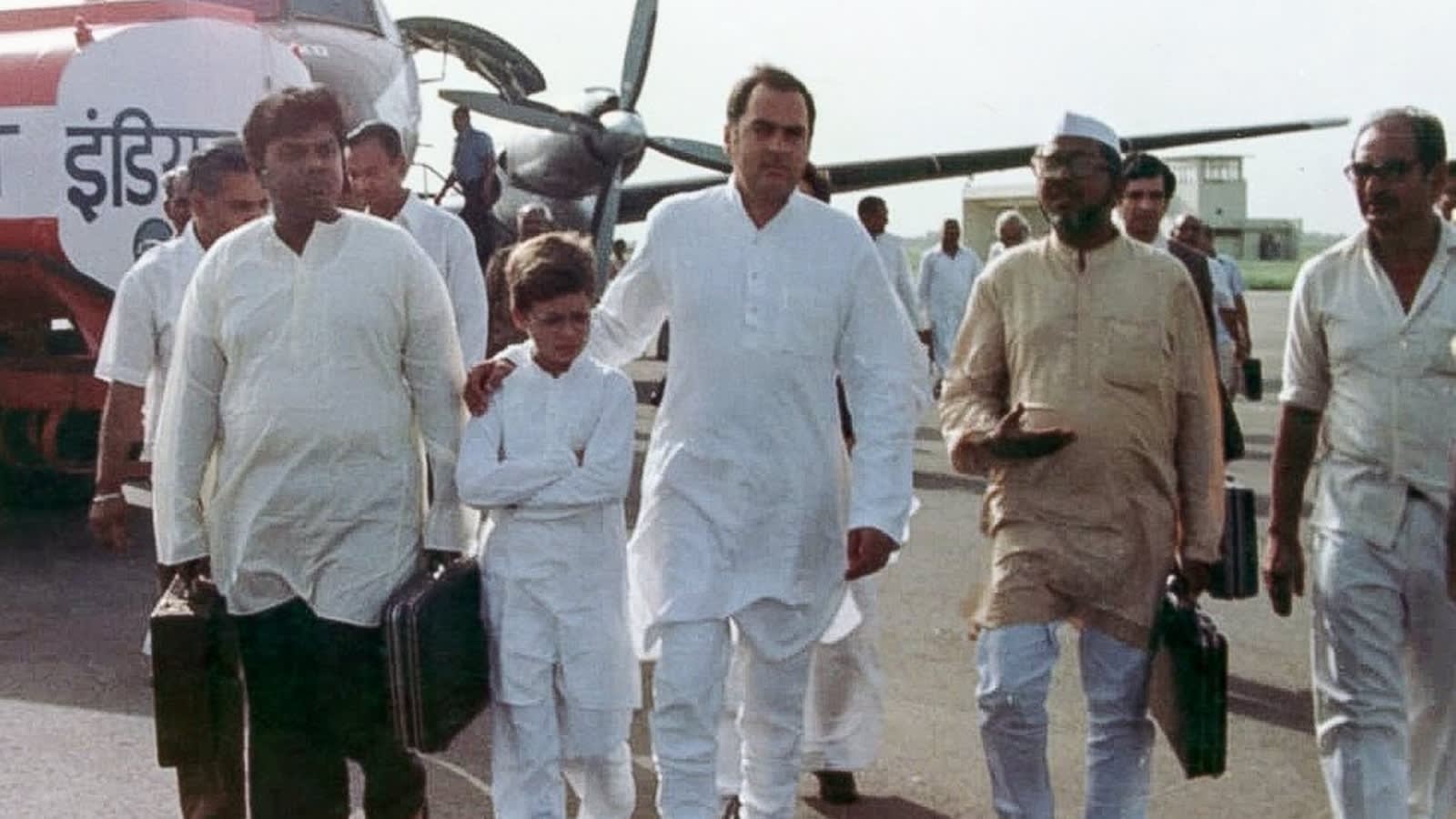
Sonia Gandhi's new memoir, 'Belonging: A Journey of Love,' offers a rare personal insight into her political life and private reflections. The book details her internal struggle over the Prime Minister post and describes her professional relationship with Prime Minister Narendra Modi.
A Personal Perspective: Sonia Gandhi’s 'Belonging'
Sonia Gandhi, a figure long shrouded in the complexities of India’s political landscape, has finally broken her silence through her memoir, Belonging: A Journey of Love. Published by HarperCollins India, the 544-page narrative serves as a departure from the external depictions that have defined her for decades. By stepping out from the narratives constructed by others, Gandhi provides an intimate account of her transition from a quiet life in an Italian town to the center of power in New Delhi.
The Burden of Duty and the Prime Ministerial Tussle
One of the most anticipated revelations in the memoir is her candid account of the 2004 political shift, where she faced immense pressure to accept the role of Prime Minister. Gandhi details a profound internal conflict, describing a part of her that rejected the position outright, while another part grappled with the heavy weight of duty. She poignantly notes that in those moments of decision, she longed for the presence of her late husband, Rajiv Gandhi, whose absence clearly shaped her approach to the immense responsibility forced upon her.
Navigating the Political Divide
Beyond her personal internal dialogue, the memoir sheds light on her relationship with her primary political adversary, Prime Minister Narendra Modi. Despite a decade of intense electoral competition, Gandhi reveals that their actual contact has been minimal. She characterizes their interactions as limited to formal, semi-official gatherings, such as meetings in the Speaker’s chamber, where their exchanges are strictly confined to a formal 'namaste.' This admission highlights the shift in political decorum compared to the past, where cross-party cordiality was more commonplace.
Acknowledging Common Ground
Despite the stark political differences, the memoir offers a nuanced view of the current Prime Minister. Gandhi explicitly acknowledges the trajectory of Narendra Modi’s life, noting his rise from an underprivileged background through the Rashtriya Swayamsevak Sangh (RSS). By recognizing this common ground, she adds a layer of complexity to their relationship, moving beyond the binary of simple political rivalry to reflect on the individual histories that shape India's leadership.
The Weight of History and Public Expectation
Throughout the book, the central theme remains the intersection of personal tragedy and public service. The memoir frames her entry into politics not as a calculated ambition, but as an outcome of devastating losses and the relentless pressure of public expectation. By documenting this journey, Gandhi provides a humanizing lens through which to view the Nehru-Gandhi family dynasty, emphasizing that her political career was an evolution born of necessity rather than design.
Conclusion: A Legacy Defined
Belonging: A Journey of Love stands as a significant historical document for those looking to understand the mechanics of Indian power. By reconciling her private self with her public life, Sonia Gandhi offers readers a rare look at the woman behind the political facade. As the memoir hits bookstores, it invites a deeper reflection on how personal history, loss, and the weight of duty continue to influence the trajectory of India’s political leaders.
Multiple Citing Sources