The black & white of why South Africa took singular step to destroy its nukes
Source Entity
PRANJAL PANDEY
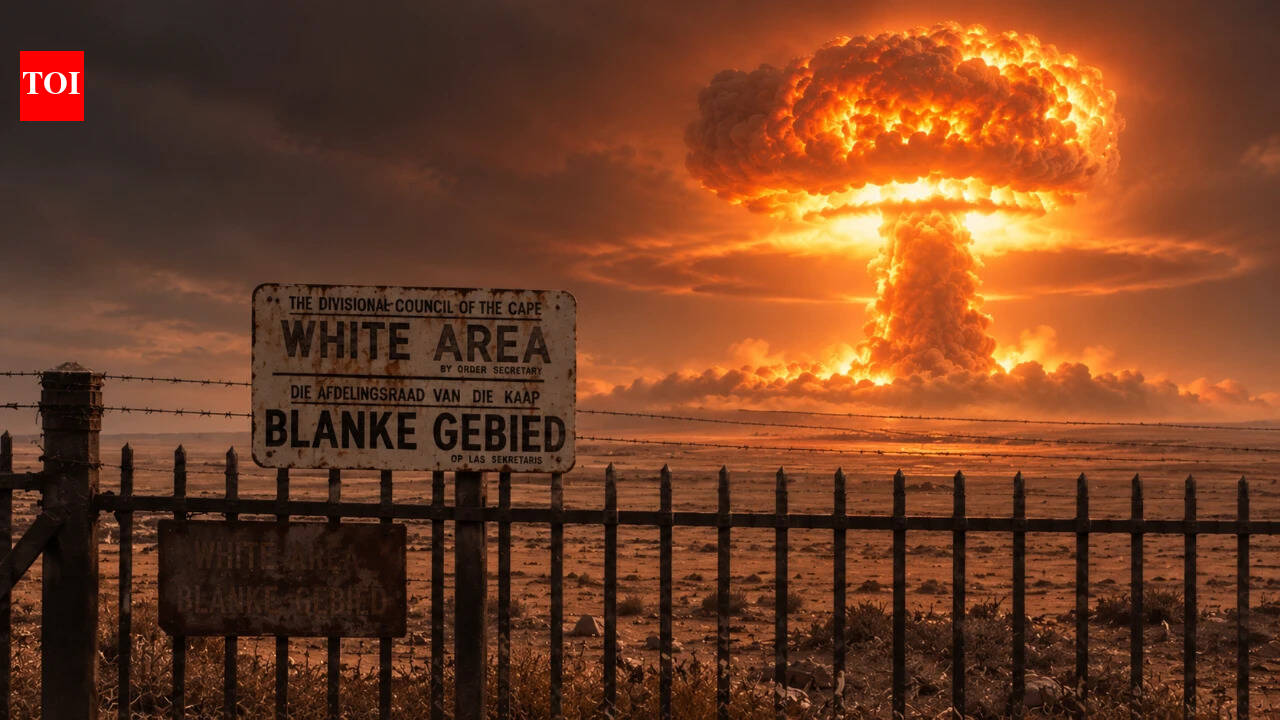
South Africa remains the only nation to have independently developed and subsequently dismantled its entire nuclear arsenal. This unprecedented move serves as a unique case study in global disarmament, driven by shifting Cold War dynamics and the pursuit of international legitimacy.
The Unprecedented Path of South African Nuclear Disarmament
South Africa occupies a singular position in modern history as the only nation to have independently developed a nuclear arsenal and then voluntarily dismantled it. While global powers like the United States, Russia, and China continue to engage in high-level dialogues regarding nuclear risk reduction, the South African experience remains a distinct outlier in the landscape of global security. This decision was not merely a matter of policy but a profound strategic pivot that fundamentally altered the nation's geopolitical identity.
The Strategic Calculus of the 'Bomb for Africa'
The development of South Africa's nuclear deterrent was deeply intertwined with the country's internal political landscape and its isolation during the late 20th century. Operating within what observers often called a 'gray zone' of international relations, the state sought to secure its borders against perceived existential threats. The program, often referred to as the 'Bomb for Africa,' was designed to serve as a survival mechanism, yet it ultimately became a liability that hindered the nation’s integration into the global community.
The End of the Cold War and Shifting Security
As the Cold War drew to a close, the international security environment underwent a dramatic transformation. The changing global order rendered the justification for a clandestine nuclear program increasingly obsolete. South Africa’s leadership recognized that the maintenance of these weapons was no longer a viable path to security. Instead, the strategic priority shifted toward ending the country's diplomatic isolation and fostering international rehabilitation through transparency and compliance with global norms.
International Rehabilitation and the NPT
Central to this transformation was the decision to join the Treaty on the Non-Proliferation of Nuclear Weapons (NPT). By dismantling its arsenal, South Africa essentially 'burned the bridge' to its nuclear past, choosing instead to align itself with the international community. This move was essential for re-entering the global fold, providing the necessary credibility to transition from a pariah state into a recognized participant in international diplomacy.
Analyzing the Legacy of Disarmament
Experts like Dr. Rashmi Rani Anand and Dr. Ashok Sharma have historically analyzed this transition as a critical case study in how domestic political shifts and external pressures converge to influence state-level disarmament. Unlike other nations that inherited or were coerced into giving up nuclear capabilities, South Africa’s path was entirely self-directed. This independent analysis highlights that the decision was as much about internal political survival and demographic change as it was about external security guarantees.
Future Implications for Global Security
Today, as leaders from the United States, Russia, and China renew calls for nuclear dialogue, the South African model provides a complex, albeit unique, reference point. While the circumstances of the 1990s are not perfectly replicable, the lesson remains that nuclear disarmament is inextricably linked to a nation’s broader strategic calculations and its desire for international legitimacy. South Africa’s history serves as a reminder that the path toward a non-nuclear future is often paved by the necessity of redefining one’s role on the global stage.