SpaceX Said $100 Billion Is Within Reach, Its Cash Flow Tells Another Story
Source Entity
Yahoo Finance
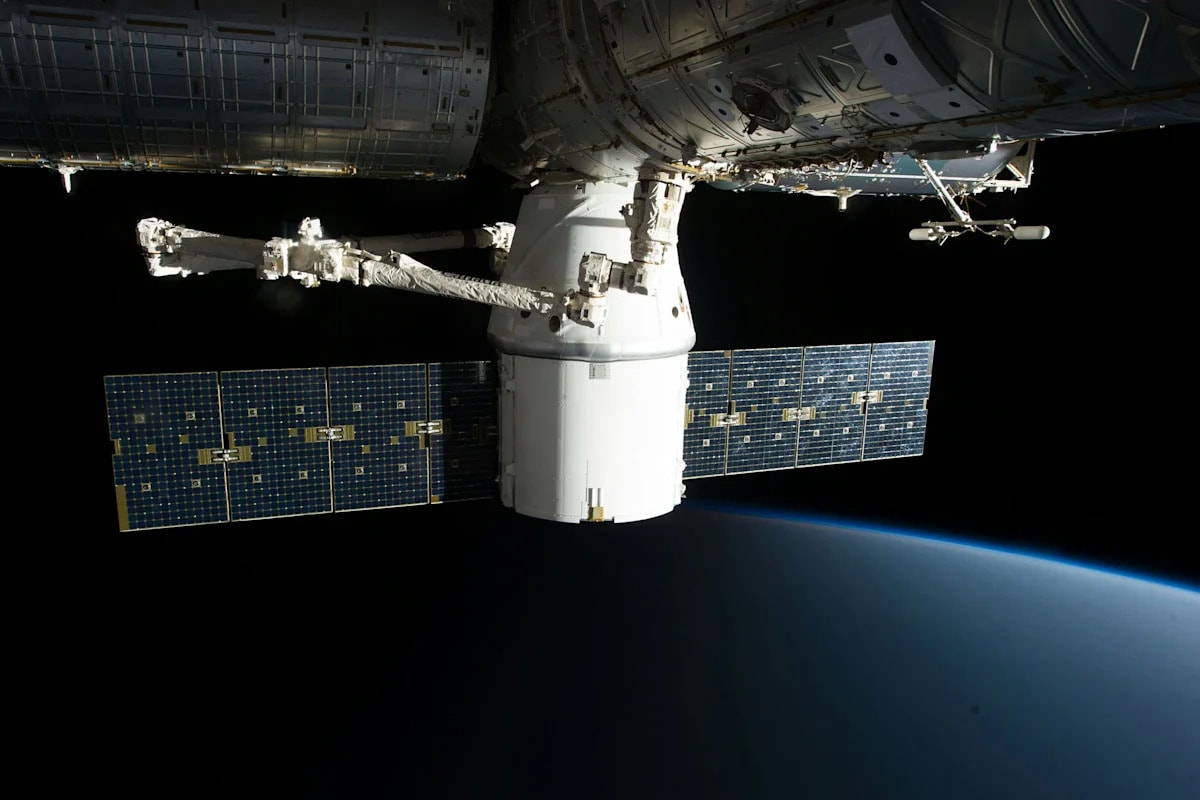
SpaceX is pushing for a $100 billion annual revenue run rate by year-end, bolstered by a $13 billion AI hosting deal. However, significant free cash flow deficits and technical hurdles for their orbital data center plans have tempered investor confidence.
The Dual Reality of SpaceX’s Financial Ambitions
Space Exploration Technologies Corp. (NASDAQ:SPCX) finds itself at a critical juncture in its post-IPO history. Following its June 2026 merger with xAI, the company has aggressively signaled its intent to achieve a $100 billion annual revenue run rate by the end of the year. This ambitious target is anchored by the rapid scaling of its compute business, most notably a $13 billion annualized AI hosting agreement that suggests the firm is pivoting heavily toward space-based infrastructure to support the global artificial intelligence boom.
The Friction Between Growth and Cash Flow
While the revenue targets are bold, the underlying financial mechanics paint a more complex picture. The company’s heavy investment in its AI division—seen as the engine for future growth—has resulted in a $1.3 billion quarterly loss. This expenditure effectively neutralized potential profitability for the period. Compounding these concerns is the company's free cash flow performance, which hit approximately negative $25 billion during the first half of 2026. This indicates that for all its technological prowess, SpaceX is currently in a hyper-growth phase that requires massive capital consumption to sustain its infrastructure build-out.
Operational Delays and Market Sentiment
Investor sentiment has reflected these internal pressures, with shares pulling back from a post-IPO high of $225 to the $148 range. Recent volatility was further exacerbated by the delay of the 14th Starship test flight. Initially scheduled for September 22, the mission was pushed to September 28. This orbital flight is pivotal, as it aims to deploy 26 Starlink V3 satellites—each capable of delivering a terabit per second of capacity—and serves as a critical proof-of-concept for the company’s launch reliability and hardware durability.
The Technological Hurdles of Orbital Computing
Beyond the immediate financial statements, SpaceX faces significant engineering challenges in realizing CEO Elon Musk’s vision for orbital AI data centers. While the company targets a late-2027 launch for these facilities, industry analysts remain skeptical, suggesting that 2030 is a more realistic horizon. The "four earthly problems" identified by experts include the difficulty of heat dissipation in a vacuum, shielding sensitive hardware from intense space radiation, the rapid obsolescence cycle of GPUs, and the massive logistical challenge of maintaining high-bandwidth ground-to-space connectivity.
Strategic Outlook and Future Trends
For SpaceX, the path to sustained profitability requires bridging the gap between its high-cost R&D phase and the realization of its satellite-based compute utility. The success of the upcoming orbital flight will be a bellwether for whether the company can maintain its current valuation. As the market weighs the long-term potential of space-based AI against immediate cash flow deficits, the company must prove that its massive capital expenditures will yield a sustainable competitive advantage in the burgeoning space-data economy.
Multiple Citing Sources