David Einhorn Says SpaceX Could Mark a Speculative Top. Morgan Stanley Sees 113% Upside
Source Entity
Yahoo Finance
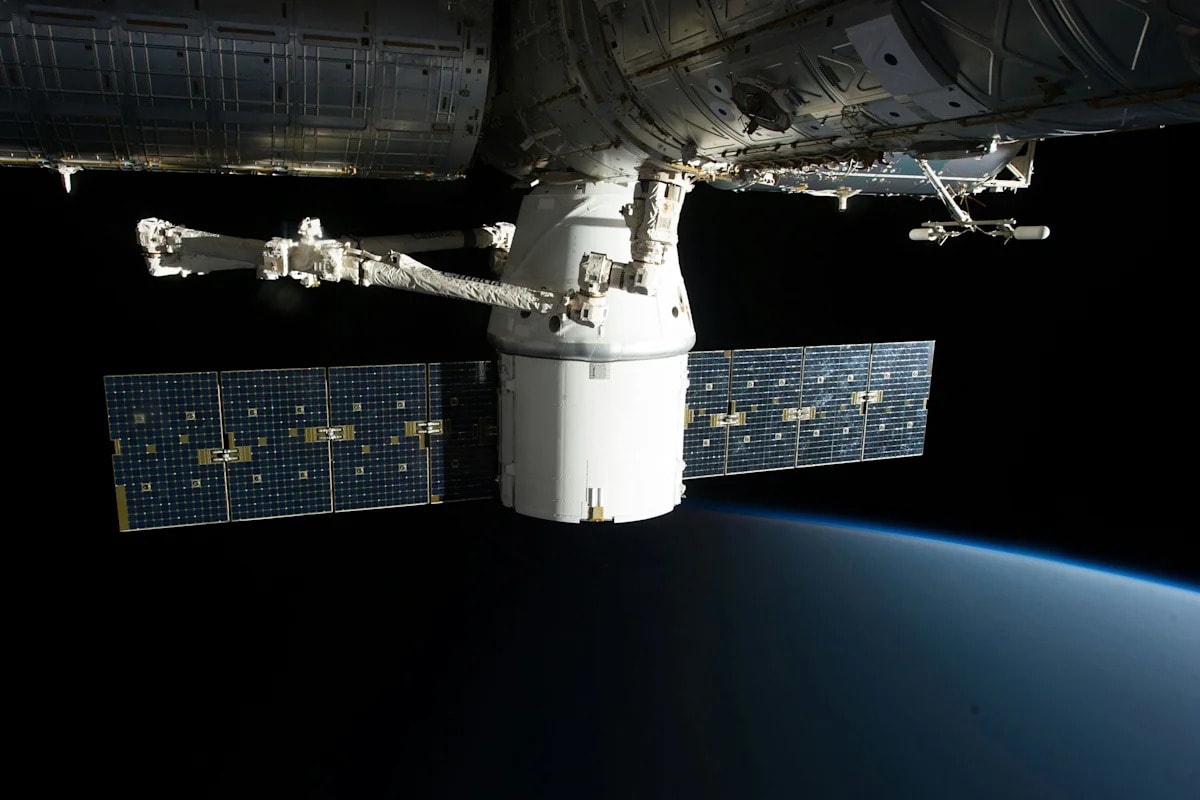
SpaceX faces a stark divide in market sentiment as analysts debate whether its post-IPO performance signals a speculative top or a unique buying opportunity. Meanwhile, the company is aggressively expanding into orbital AI data centers with Nvidia-powered satellites to secure a competitive edge.
The SpaceX Valuation Paradox: Bull vs. Bear
The recent public listing of Space Exploration Technologies Corp. (SPCX) has ignited one of the most polarizing debates in modern financial history. With the company going public on June 12 at $135 a share—raising $75 billion—market observers are sharply divided. David Einhorn of Greenlight Capital has cautioned that the firm’s $1.75 trillion valuation may serve as a definitive 'speculative top' for the current market cycle. Conversely, institutional heavyweights like Morgan Stanley and Citigroup maintain aggressive bullish outlooks, with Morgan Stanley citing a $300 price target and Citigroup projecting a staggering $12 trillion market capitalization, driven by the broader AI boom.
Financial Performance vs. Future Potential
This divergence is rooted in how investors interpret SpaceX's inaugural public quarterly results. The company reported $7.8 billion in revenue, yet this was offset by a $541 million net loss and a massive $18.4 billion in capital expenditure. The high spending reflects the company’s multi-pronged strategy to simultaneously scale rocket launches, its Starlink satellite constellation, and emerging space-based infrastructure. While bears view this 'burn rate' as a sign of unsustainable speculative excess, bulls argue that this spending represents the necessary foundation for a monopolistic hold on the orbital economy.
The Pivot to Orbital AI Data Centers
Beyond traditional aerospace, SpaceX is pivoting toward becoming a key player in the artificial intelligence sector. CEO Elon Musk has confirmed plans to launch AI-integrated satellites starting in late 2027, with the goal of reaching full operational scale by 2028. By utilizing Nvidia (NVDA) chips, these satellites are designed to function as orbital data centers that are lighter, cheaper, and denser than traditional ground-based racks. The ambition to deploy up to 1 million such satellites suggests that SpaceX is attempting to solve the latency and infrastructure bottlenecks currently facing ground-based AI providers.
The 'Uncopyable' Competitive Moat
What sets SpaceX apart, according to industry observers, is the integration of its launch vehicle capabilities with its satellite network. The company’s ability to control its own launch costs and cadence provides a vertical integration advantage that competitors struggle to replicate. By turning the vacuum of space into a distributed computing environment, SpaceX is attempting to move beyond being a mere transportation company and into a critical node of global AI infrastructure. This vision is the primary driver behind the 'astronomical' price targets set by Wall Street banks.
Future Trends and Market Risks
As SpaceX navigates its post-IPO phase, the company faces the dual challenge of achieving 'exit velocity' in its share price while managing the massive capital requirements of its orbital AI project. The primary risk remains the tension between its massive cash outflows and the long-term, unproven profitability of space-based data centers. If the company fails to demonstrate a clear path to profitability amid its heavy R&D spending, the warnings from skeptical investors like Einhorn may gain more traction. Ultimately, the next few years will determine whether SpaceX is the foundational infrastructure provider of the 21st century or a symptom of an over-leveraged market era.