With another huge infusion of cash, Stoke Space goes even bigger
Source Entity
Eric Berger
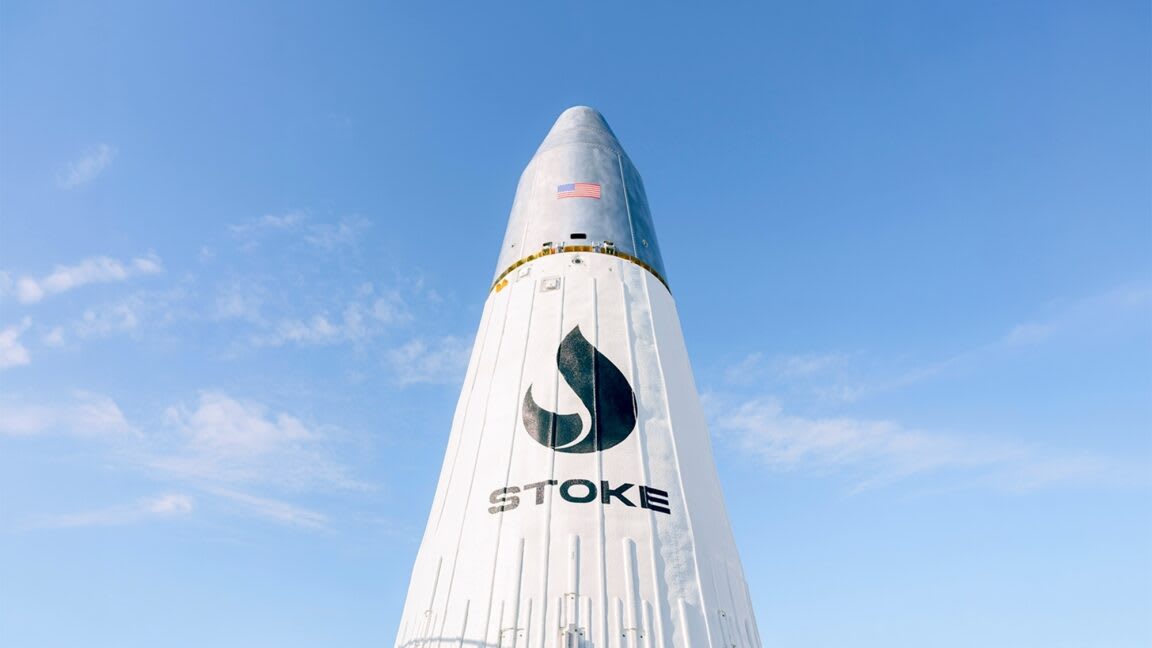
Stoke Space and The Exploration Company have secured massive funding rounds to accelerate the development of reusable launch vehicles. These investments signal a global shift toward diversifying space infrastructure to meet rising orbital demand.
The New Space Race: Capitalizing on Reusability
The space industry is currently witnessing a historic surge in private capital as investors look to solve the bottleneck of orbital access. Recent reports confirm that Washington-based Stoke Space has secured $1 billion in Series E funding, while Europe’s The Exploration Company (TEC) has raised $450 million. These figures highlight a growing consensus among global venture capitalists that the space economy’s expansion is tethered directly to the frequency and affordability of rocket launches.
Scaling for the Future: Stoke Space’s Billion-Dollar Bet
Stoke Space’s latest infusion brings its total capital raised to $2.3 billion, a remarkable milestone for a company yet to attempt its debut orbital flight. Led by Point72 Ventures and Spark Capital, this funding is explicitly earmarked for scaling production and development of the 'Block 2' Nova rocket. According to CEO Andy Lapsa, this larger vehicle is designed to lift 15 metric tons to low-Earth orbit, focusing on a fully reusable configuration that aims to drive down costs significantly.
European Ambitions and the SpaceX Factor
While Stoke Space focuses on the U.S. market, The Exploration Company is positioning itself as a leader in European space infrastructure. By securing the largest Series C round in the history of the European space sector, TEC is effectively challenging the current market dominance of SpaceX. The underlying narrative here is a realization that SpaceX, while a pioneer in reusability, cannot be the sole provider for a rapidly growing global demand for orbital transport.
The Economics of Reusable Infrastructure
Market analysts note that the industry is transitioning from a period of experimental prototyping to one of heavy industrialization. The focus on 'fully reusable' systems is not merely a technical preference but an economic necessity. By lowering the cost per kilogram to orbit, companies like Stoke Space and TEC intend to unlock new commercial ventures in manufacturing, logistics, and research that were previously cost-prohibitive.
Strategic Implications for Global Launch Capacity
This trend of massive capital influx suggests that the space industry is entering a phase of rapid infrastructure build-out. Investors are betting on a future where launch frequency mirrors that of commercial aviation. As companies move toward testing these next-generation vehicles, the success of their debut missions will be critical in determining whether these massive capital investments lead to sustained operational success or a correction in sector valuations.
Conclusion: A New Era of Competition
Ultimately, the parallel success of Stoke Space and The Exploration Company indicates that the race for space is no longer a monopoly. With significant backing from major investment firms, the coming years will be defined by an intense competition to prove that fully reusable, high-frequency launch systems can become the backbone of the modern global space economy.