AI Expert Stuart Russell's Jensen Huang Joke As Nvidia Case Snowballs| HTLS 2026
Source Entity
Latest News: Todays Latest News Headlines from India & World | Hindustan Times
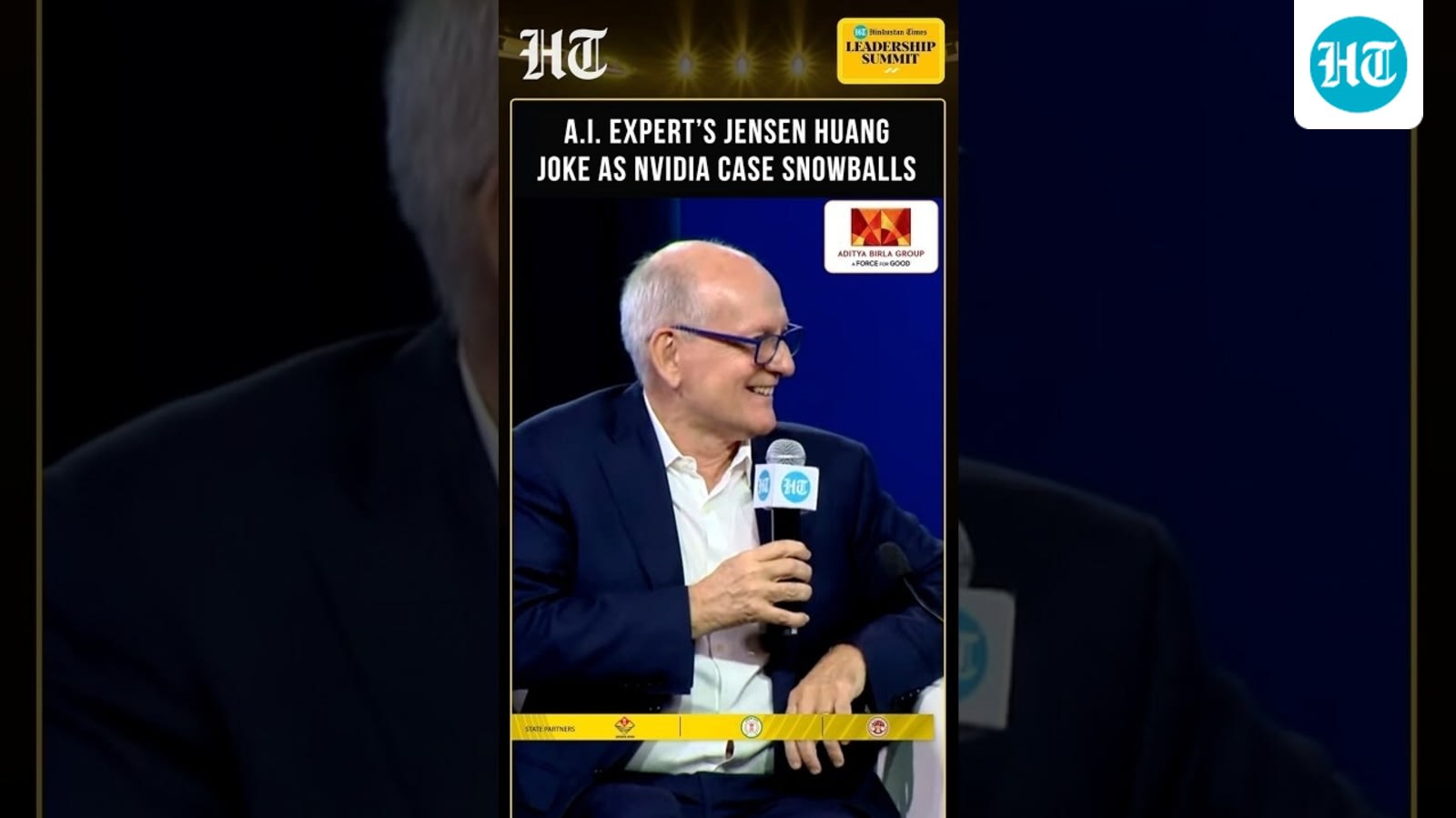
UC Berkeley professor Stuart Russell discussed AI risks and Nvidia's market role during the 2026 HT Leadership Summit. Simultaneously, External Affairs Minister S. Jaishankar confirmed that India-US trade deal negotiations are nearing completion.
The Intersection of AI Governance and Geopolitics at HTLS 2026
The 2026 HT Leadership Summit (HTLS) served as a critical platform for addressing two of the most significant pillars of modern global development: the rapid evolution of artificial intelligence and the strategic realignment of international trade. As AI expert and UC Berkeley professor Stuart Russell took the stage, the conversation shifted toward the profound risks inherent in increasingly powerful autonomous systems, underscored by a humorous mention of Nvidia CEO Jensen Huang.
Stuart Russell and the Nvidia Phenomenon
Professor Stuart Russell’s commentary, which lightheartedly referenced Jensen Huang, occurs against the backdrop of a "snowballing" case involving Nvidia. As the primary architect of the hardware powering the global AI revolution, Nvidia has become a focal point for regulators and ethicists alike. Russell’s focus on the risks of AI suggests a growing academic consensus that technical capability must be matched by robust safety guardrails, a sentiment that places the hardware providers at the center of the global AI safety debate.
The Economic Weight of AI Hardware
Nvidia’s dominance in the semiconductor space has made it the de facto gatekeeper of AI development. When experts like Russell discuss the risks of powerful systems, they are inherently discussing the infrastructure provided by firms like Nvidia. The "snowballing" nature of the current discourse indicates that the industry is moving past the phase of unbridled optimism and into a period of intense scrutiny regarding the societal impact of compute-intensive AI models.
Diplomatic Progress in India-US Trade
Parallel to these technological discussions, External Affairs Minister S. Jaishankar provided a positive update on the India-US trade relationship. By stating that the "bulk of the issues" in trade deal negotiations have been resolved and the nations are "reaching the finishing line," Jaishankar signaled a maturation of the bilateral economic partnership. This is particularly relevant as both nations seek to secure supply chains, especially in sectors critical to the AI ecosystem.
Broader Implications for Global Stability
The convergence of AI safety concerns and improved trade relations between India and the US highlights a strategic effort to foster innovation while managing risk. If India and the US finalize their trade agreement, it could facilitate a more seamless exchange of the very hardware and software that professors like Russell are currently analyzing for safety. This synergy between policy and technology is essential for maintaining a competitive edge in the global digital economy.
Future Trends and Concluding Thoughts
Looking ahead, the trajectory of AI development will likely be defined by the balance between rapid innovation and regulatory oversight. The events at HTLS 2026 suggest that industry leaders and policymakers are increasingly synchronized in their approach to these challenges. As Nvidia continues to scale its operations and India solidifies its trade ties with the US, the global landscape will likely see a more integrated, albeit cautious, advancement toward an AI-driven future.
Multiple Citing Sources
Verification Required?