Superhuman’s new auto-draft feature almost makes me like AI replies
Source Entity
Ivan Mehta
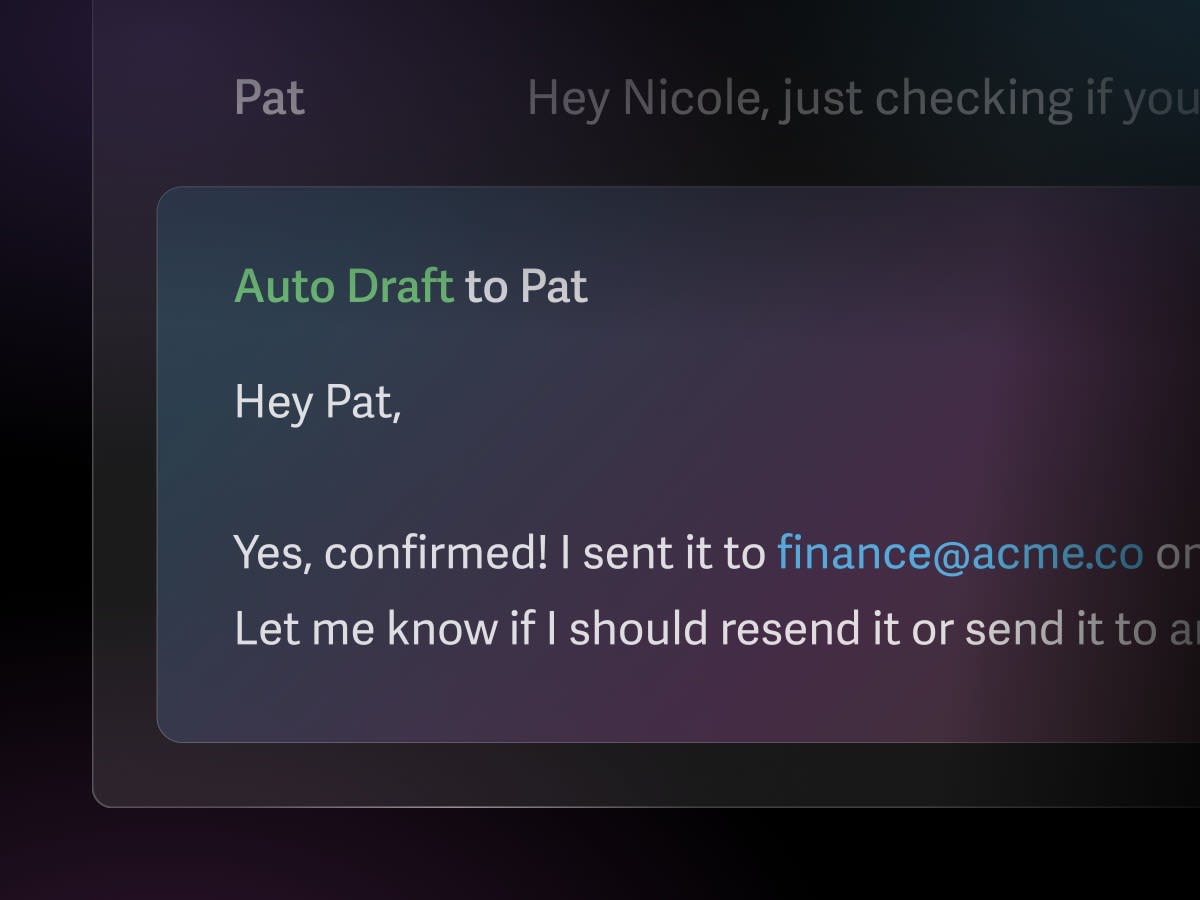
Superhuman’s latest AI email drafting feature is its most convincing yet, generating replies that often required little to no editing in our testing.
The Evolution of Email Productivity: Analyzing Superhuman's AI Auto-Draft
Superhuman has long positioned itself as the 'fastest email experience in the world,' catering to power users who view their inbox as a primary productivity bottleneck. The introduction of its latest AI auto-draft feature marks a significant pivot from mere speed-oriented shortcuts to intelligent content generation. While AI-generated text has often been criticized for being overly verbose, robotic, or lacking in nuance, early testing suggests that Superhuman's new tool has bridged the gap toward authenticity, producing replies that are convincing enough to require little to no editing. This development addresses a critical pain point for high-volume communicators: the cognitive load associated with phrasing repetitive yet professional responses.
Breaking the 'Uncanny Valley' of AI Writing
For years, AI writing assistants have struggled with the 'uncanny valley'—where text is almost correct but feels fundamentally 'off' to a human reader. Superhuman's ability to generate drafts that are 'most convincing yet' suggests a deeper integration of contextual awareness. By analyzing the preceding thread and likely leveraging user-specific style preferences, the tool moves beyond generic templates. This shift is crucial because, in professional correspondence, the tone is often as important as the information conveyed. When an AI can mimic a user's professional voice with high fidelity, the friction of 'polishing' an AI draft—which often takes as much time as writing from scratch—is finally removed.
Implications for the 'Inbox Zero' Philosophy
Superhuman's core user base is often obsessed with 'Inbox Zero,' a productivity methodology aimed at keeping the inbox empty to reduce stress and increase focus. The auto-draft feature accelerates this process by reducing the time spent in the 'drafting' phase of the workflow. By automating the initial composition, the user's role shifts from a writer to an editor. This transition is psychologically significant; it is generally faster and less taxing to verify and approve a well-written draft than to generate a blank page. This could lead to a dramatic increase in response velocity, potentially redefining professional expectations for how quickly a business communication should be handled.
Competitive Landscape and the AI Arms Race
This move places Superhuman in direct competition with tech giants like Google and Microsoft, both of which have integrated LLMs (Gemini and Copilot, respectively) into their email ecosystems. However, Superhuman's advantage lies in its specialized focus on the 'power user' experience. While Google and Microsoft offer broad, general-purpose AI tools, Superhuman optimizes for a specific workflow. The success of this auto-draft feature indicates that niche, high-end productivity tools can effectively implement AI by focusing on the specific nuances of a professional's daily habits rather than attempting to be a general-purpose assistant.
The Tension Between Efficiency and Authenticity
Despite the technical achievement, the rise of near-perfect AI replies introduces a philosophical tension regarding authenticity in digital communication. If both the sender and the receiver are using AI to draft and summarize messages, email risks becoming a dialogue between two machines, with humans merely acting as the final approval gates. However, the current trend suggests that efficiency will likely trump purity. As long as the output remains 'convincing' and accurate, the value provided by the time saved outweighs the perceived loss of personal touch, especially in transactional or operational business communications.
Future Trends: Toward Agentic Email Management
Looking forward, the trajectory of features like Superhuman's auto-draft leads toward 'agentic' email management. We are moving from AI that suggests text to AI that manages outcomes. The next logical step is for the system to not only draft the reply but to cross-reference calendars, suggest specific meeting times based on priority, and potentially handle the scheduling loop entirely. Superhuman's current success in drafting is the foundational step in building trust with the user; once a user trusts the AI to write in their voice, they are far more likely to trust it to act on their behalf.
Summary
Superhuman's new AI auto-draft feature represents a milestone in the practical application of LLMs within professional software. By focusing on high-fidelity, low-edit outputs, it solves the primary hurdle of AI writing—the editing overhead. This feature not only reinforces Superhuman's position as a leader in productivity software but also signals a broader shift toward a future where AI handles the bulk of digital correspondence, leaving humans to focus on high-level strategic decision-making.