New York becomes first US state to freeze large data center construction over rising power costs and water use concerns
Source Entity
Latest News: Today's Latest News Headlines from India & World | Hindustan Times | Hindustan Times
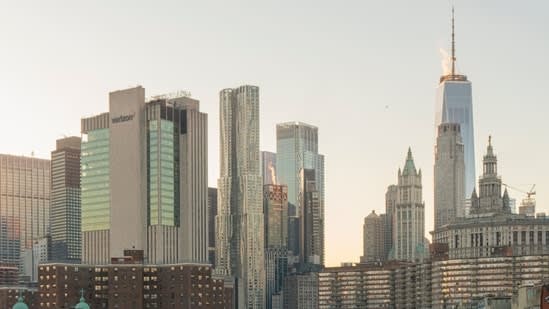
New York has become the first US state to implement a one-year moratorium on the construction of large data centers, citing critical concerns over rising electricity costs, unsustainable water usage, and the massive energy demands triggered by the AI boom.
New York's Strategic Pivot: Addressing the AI Infrastructure Crisis
New York has taken an unprecedented step in the landscape of American technological infrastructure by becoming the first state to freeze the construction of large-scale data centers for a period of one year. This moratorium is a direct response to a convergence of systemic pressures: skyrocketing power costs, critical water scarcity concerns, and the exponential increase in energy demand driven by the proliferation of Artificial Intelligence (AI). By hitting the pause button, New York is signaling that the physical requirements of the digital age are beginning to clash with the ecological and economic realities of urban and regional planning.
The AI Energy Paradox
The primary catalyst for this decision is the sheer scale of energy consumption required by modern AI workloads. Unlike traditional cloud computing, the training and deployment of Large Language Models (LLMs) require specialized hardware, such as GPUs, which consume significantly more power and generate more heat than standard servers. As tech giants race to build out AI capabilities, the resulting demand on the electrical grid has reached a tipping point. New York's decision reflects a growing realization that the existing power grid cannot scale at the same velocity as AI software development without risking stability or forcing an unsustainable increase in energy prices for residents and small businesses.
Water Scarcity and Cooling Challenges
Beyond electricity, the environmental toll of data centers—specifically their water footprint—has become a central point of contention. Large data centers rely heavily on evaporative cooling systems to prevent hardware from overheating, often consuming millions of gallons of water per day. In an era of increasing climate volatility and fluctuating water tables, the state's decision to freeze construction underscores a shift toward prioritizing resource conservation over rapid industrial expansion. This move forces a critical re-evaluation of cooling technologies, potentially pushing the industry toward more sustainable liquid cooling or air-cooling innovations that do not deplete local water supplies.
Economic Implications and Power Cost Volatility
From an economic perspective, the freeze is a defensive measure against rising power costs. When massive data centers enter a local market, they create an immense surge in demand that can drive up wholesale electricity prices. For a state like New York, which balances a diverse economy of finance, healthcare, and manufacturing, allowing unchecked data center growth could jeopardize the affordability of energy for other critical sectors. By implementing this one-year freeze, the state is creating a necessary window to analyze the long-term economic impact and develop a framework where tech growth does not come at the expense of general economic stability.
A Blueprint for Other States?
New York's role as the 'first mover' in this policy shift is likely to set a precedent for other tech hubs across the United States. States like Virginia, Texas, and Ohio, which currently host massive concentrations of data centers, are facing similar strains on their grids and water resources. This moratorium serves as a case study in regulatory intervention, suggesting that the 'build first, regulate later' approach to the AI gold rush is no longer viable. We can expect other state governments to monitor New York's results closely, potentially leading to a national trend of 'resource-contingent' zoning for technology infrastructure.
Conclusion: Balancing Innovation with Sustainability
In summary, New York's construction freeze is not an anti-technology move, but rather a necessary recalibration. It highlights the physical limitations of the digital revolution, proving that the cloud is not an ethereal entity but one grounded in heavy industrial requirements. The coming year will be pivotal; if New York can successfully integrate more efficient energy sources or mandate greener construction standards, it will provide a sustainable roadmap for the AI era. Ultimately, this event marks the beginning of a new chapter where technological ambition must be balanced with the finite limits of the planet's natural resources.
Verification Required?