Superhuman pushes its Go assistant everywhere
Source Entity
Ivan Mehta
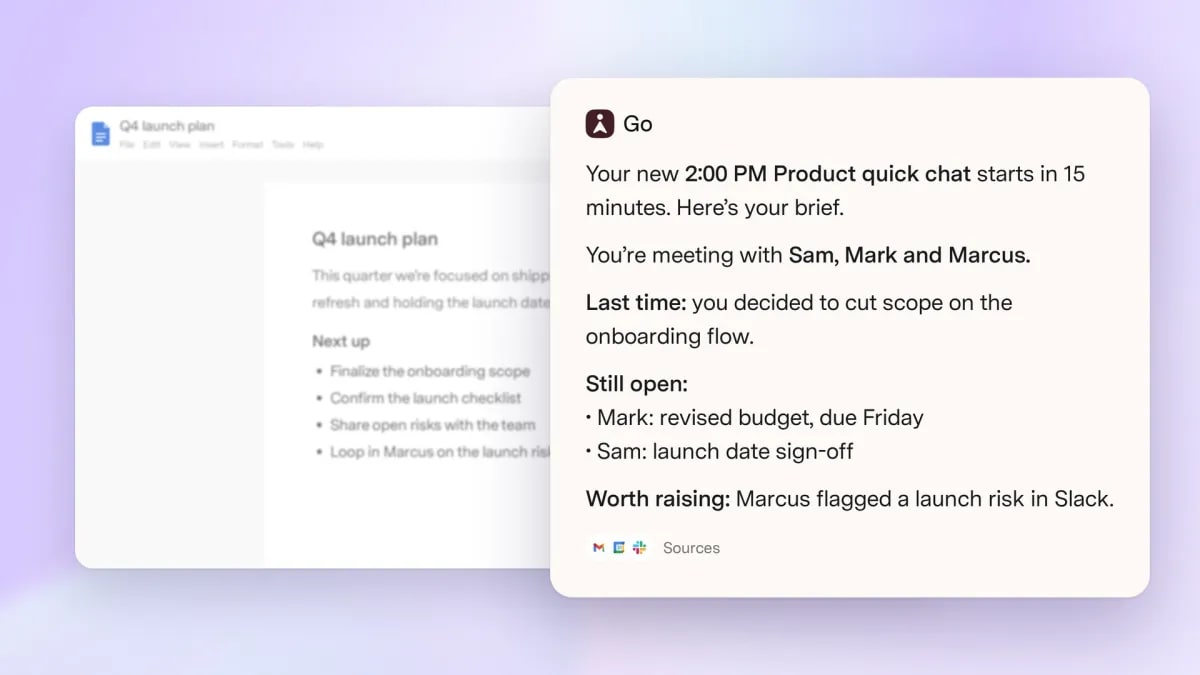
Superhuman is expanding its Go AI assistant by integrating it directly into Docs and Mail to provide context-aware automation. The company is revamping its onboarding process to allow deeper third-party tool integration and personalized prompt suggestions.
The Evolution of Superhuman's AI Ecosystem
Superhuman, the productivity platform formerly known as Grammarly, is undergoing a significant strategic pivot by positioning its 'Go' assistant as the central engine across its entire software suite. By embedding this AI agent directly into Docs and Mail, the company is moving away from siloed features toward a unified, context-aware workflow. This shift represents a broader industry trend where productivity applications are evolving into integrated AI ecosystems rather than simple utility tools.
Deepening Contextual Intelligence
The core value proposition of the new rollout is the ability for the Go assistant to learn context across multiple applications. By allowing the AI to ingest data from various integrated tools during the onboarding process, Superhuman aims to reduce the friction often associated with generic AI responses. This personalized approach is designed to ensure that prompts are not merely reactive but are tailored to the specific professional environment and historical data of the individual user.
Redesigning the User Onboarding Experience
To facilitate this level of personalization, Superhuman is revamping its onboarding flow. Users are now encouraged to connect their preferred third-party tools upfront, creating a data-rich environment for the AI to function effectively. This proactive data loading is a critical step in overcoming the limitations of early-stage AI assistants, which often suffered from a lack of user-specific context, leading to the criticism the company faced following its rebranding last year.
The Shift Toward Ubiquitous Assistants
The decision to make the Go assistant available inline across Docs and Mail reflects a transition toward 'ubiquitous computing' within productivity suites. By placing AI at the user's fingertips, Superhuman is attempting to minimize context switching—the process of jumping between apps to perform tasks. This design philosophy suggests that the future of enterprise software lies in agents that inhabit the interface rather than standing as external chatbots.
Strategic Implications and Future Outlook
While the company has faced scrutiny over previous feature rollouts, this push represents a doubling down on the agentic AI model. By enabling third-party agent integrations, Superhuman is positioning itself as a platform rather than a standalone app. If successful, this strategy could set a new standard for how AI assistants manage cross-platform workflows, potentially forcing competitors to accelerate their own integration timelines to remain relevant in an increasingly automated professional landscape.