Supreme Court agrees to list all petitions challenging HC decision in Bhojshala case
Source Entity
India Latest News: Top National Headlines Today & Breaking News | The Hindu
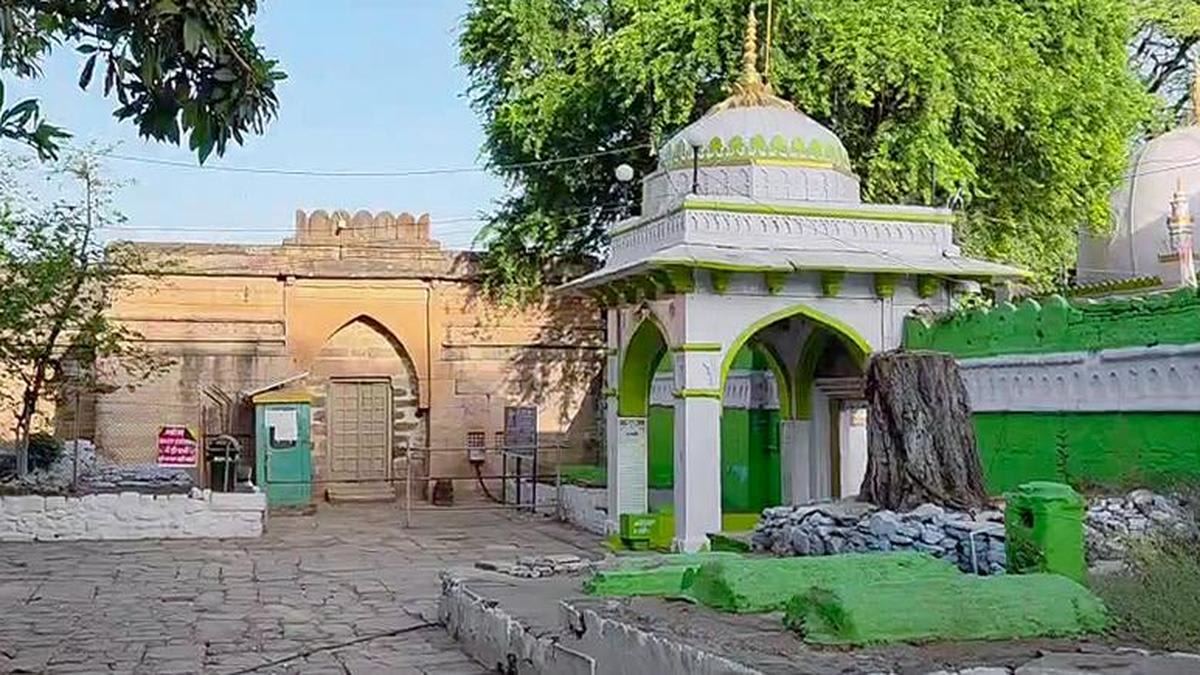
The Hindu community considers Bhojshala a temple dedicated to Goddess Saraswati, while the Muslim side calls the 11th-century monument the Kamal Maula Mosque
Legal Escalation in the Bhojshala Dispute
The Supreme Court of India's decision to list petitions challenging a High Court ruling on the Bhojshala complex marks a critical escalation in one of the country's most enduring religious and architectural disputes. The Bhojshala, located in Madhya Pradesh, serves as a flashpoint for competing historical narratives, with the Hindu community asserting it is a temple dedicated to Goddess Saraswati and the Muslim community maintaining it is the Kamal Maula Mosque. By agreeing to hear these petitions, the apex court has stepped into a complex web of faith, archaeology, and jurisprudence, signaling that the legal resolution of this site's identity remains far from settled.
Historical Context and the Core Conflict
To understand the gravity of the Supreme Court's involvement, one must examine the 11th-century origins of the monument. The site is characterized by architectural features that both sides claim support their respective narratives. For the Hindu claimants, the structure's design and remnants suggest a temple built during the reign of King Bhoja. Conversely, the Muslim claimants point to the site's long-standing use as a mosque. This duality has led to decades of friction, characterized by alternating periods of access and restrictive court orders, making the site a symbol of the broader struggle over historical memory and religious ownership in India.
The Role of the Judiciary and the High Court Decision
The current move to the Supreme Court follows a contested decision by the High Court, which sought to manage the status of the complex. In cases of this nature, the judiciary is often tasked with balancing the 'status quo' to prevent communal unrest while simultaneously seeking a definitive legal title. The petitions now before the Supreme Court likely challenge the High Court's interpretation of evidence or its directives regarding the management and access to the site. The Supreme Court's intervention is crucial because its ruling will set a binding precedent that could either provide a final resolution or further complicate the administration of the site.
Broader Implications for Communal Harmony
This case does not exist in a vacuum; it mirrors a wider trend of litigating historical grievances in Indian courts, reminiscent of the Ayodhya dispute. The legal outcome of the Bhojshala case has implications far beyond the borders of Madhya Pradesh. A decision favoring one side over the other could either be seen as a victory for historical justice or as a catalyst for social tension. Therefore, the court's approach—whether it relies heavily on archaeological evidence from the Archaeological Survey of India (ASI) or adheres to a framework of shared usage—will be closely watched as a barometer for how the state handles pluralism and religious conflict.
Predicting Future Legal Trends
Looking ahead, it is likely that the Supreme Court will emphasize a rigorous, evidence-based approach to resolve the deadlock. We can expect the court to call for detailed reports on the site's structural evolution and perhaps appoint a neutral committee to oversee the complex until a final verdict is reached. The trend in recent years suggests that the judiciary is moving toward definitive titles rather than ambiguous shared-access arrangements, which may lead to a conclusive ruling on whether the site is primarily a temple or a mosque.
Conclusion
The Supreme Court's agreement to list the Bhojshala petitions underscores the necessity of a legal finality to end a centuries-old dispute. While the emotional and religious stakes are high, the judicial process remains the only viable mechanism to resolve the conflict without risking widespread instability. The eventual verdict will not only determine the fate of the 11th-century monument but will also reflect the court's commitment to reconciling historical truth with contemporary social harmony.
Verification Required?