Supreme Court stays Madras HC’s blanket ban on cow, calf slaughter in Tamil Nadu
Source Entity
Latest News: Today's Latest News Headlines from India & World | Hindustan Times | Hindustan Times
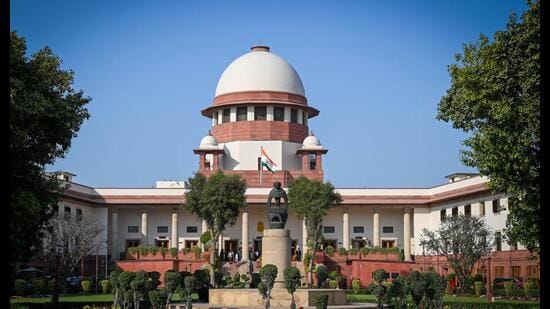
The SC issued notice on a special leave petition filed by the Tamil Nadu government challenging the May 27 Madras High Court order
Supreme Court Intervenes in Tamil Nadu Cow Slaughter Dispute
In a significant legal development, the Supreme Court of India has stepped in to stay a blanket ban on the slaughter of cows and calves in Tamil Nadu. This intervention comes after the Madras High Court had issued a restrictive order on May 27, which sought to prohibit the slaughter of these animals entirely within the state. The Supreme Court's decision to grant a stay follows a Special Leave Petition (SLP) filed by the Tamil Nadu state government, signaling a clash between judicial directives and executive policy regarding animal welfare and livestock management.
The Legal Friction: High Court vs. State Government
The core of this legal battle lies in the Madras High Court's decision to impose a comprehensive ban, which the Tamil Nadu government argued exceeded the necessary regulatory scope or conflicted with existing state laws. By filing a Special Leave Petition, the state government has asked the apex court to review the constitutionality and practicality of such a blanket prohibition. The Supreme Court's action of issuing a notice indicates that the court finds merit in examining whether the High Court's order overstepped its jurisdiction or failed to account for the specific legislative framework already in place in Tamil Nadu.
Broader Legal Context of Cattle Slaughter in India
To understand the gravity of this case, one must look at the fragmented nature of cattle slaughter laws across India. Unlike some nations with uniform animal welfare laws, India's regulations are a patchwork of state-specific legislation. While several northern states have strict prohibitions on cow slaughter rooted in cultural and religious sentiments, southern states like Tamil Nadu have historically maintained different standards, often focusing on the age of the animal or the purpose of the slaughter. A 'blanket ban' is a drastic measure that removes these nuances, often leading to legal challenges based on the right to carry on trade and business.
Socio-Economic Implications for Tamil Nadu
Beyond the legal technicalities, the Madras High Court's ban had profound implications for the local economy. Tamil Nadu possesses a robust leather and meat processing industry that relies on a regulated supply of livestock. A total ban on the slaughter of cows and calves threatens the livelihoods of thousands of workers, from livestock traders to butchers and tannery operators. By staying the ban, the Supreme Court has effectively provided temporary economic relief to these sectors, preventing a sudden collapse of supply chains that would have occurred had the High Court's order remained in force.
The Function of the 'Stay' and the Road Ahead
It is critical to note that the Supreme Court has not yet delivered a final judgment on the merits of the case; rather, it has issued a 'stay.' In legal terms, this means the Madras High Court's order is suspended while the Supreme Court hears the arguments from both sides. This prevents "irreparable harm" from occurring during the litigation process. The upcoming hearings will likely center on the balance between animal rights—often cited by petitioners in the High Court—and the state's right to govern its own agricultural and commercial policies.
Conclusion and Future Outlook
This case underscores the ongoing tension between judicial activism and legislative authority in India. The final ruling will likely set a precedent for how strictly 'blanket bans' can be applied to livestock in states that do not have an explicit constitutional or legislative mandate for such prohibitions. As the Supreme Court deliberates, the outcome will determine whether Tamil Nadu continues its tradition of regulated slaughter or moves toward a more restrictive regime, balancing cultural sensitivities with economic realities.
Verification Required?