Bike & car stunt show at Surat college leads to police case
Source Entity
The Indian Express
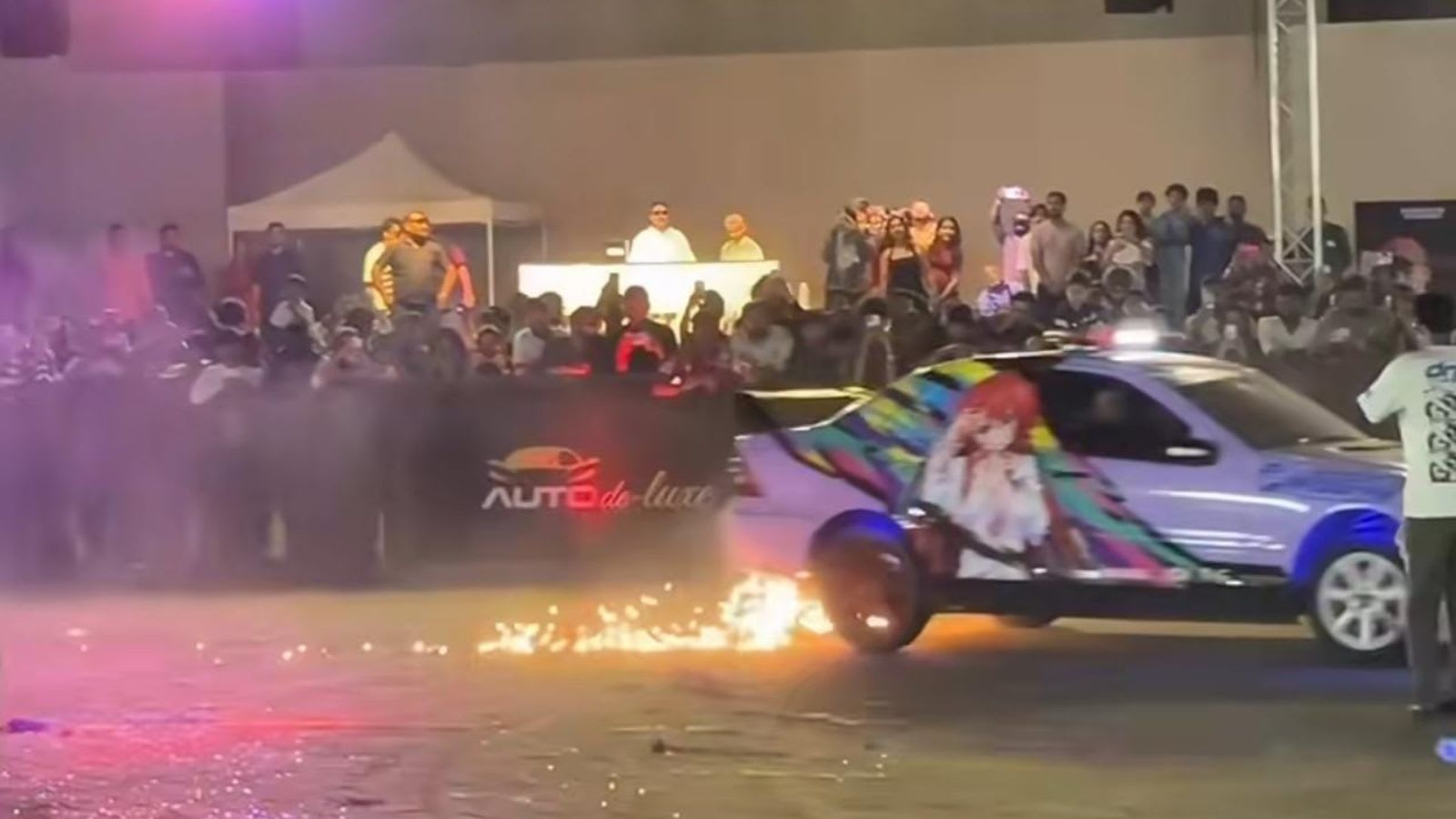
An unauthorized stunt show at Auro University in Surat led to a police case and the arrest of organizer Alpesh Rabari. Authorities confirmed the event proceeded without mandatory safety permits, drawing hundreds of attendees.
Unauthorized Stunt Show Sparks Legal Action in Surat
A recent high-octane event at Auro University in Surat has culminated in a significant legal intervention after a car and bike stunt show, branded as 'The Drift Jam,' proceeded without the required regulatory oversight. The event, held on the evening of September 27, drew a crowd of approximately 800 attendees who had purchased tickets priced at Rs. 499 each. However, the spectacle, which featured modified vehicles brought in from Pune, has resulted in a formal police investigation and the arrest of the primary organizer, Alpesh Rabari, a resident of Ahmedabad.
The Failure of Regulatory Compliance
At the heart of the controversy is the blatant disregard for established safety protocols and municipal permitting processes. Ichhapore police inspector S.A. Shah confirmed that the organizers failed to secure the necessary clearances from both the police and fire departments. In any public gathering involving high-risk activities like automotive drifting or stunt riding, these permits are not merely bureaucratic hurdles; they are critical safeguards designed to ensure crowd control, emergency medical access, and structural safety. By bypassing these requirements, the organizers placed both the performers and the audience in an environment of significant, unmitigated risk.
The Role of Social Media in Accountability
The incident gained prominence largely due to the virality of videos documenting the stunts on social media platforms. In the modern digital landscape, such platforms act as both a promotional tool for unauthorized events and a catalyst for public accountability. Once the footage of the 'Drift Jam' surfaced, it drew immediate attention from law enforcement, demonstrating how digital documentation can rapidly trigger investigations into public safety violations. The shift from a private event to a public police case highlights the difficulty of hosting 'underground' or unregulated exhibitions in an era where every attendee acts as a potential witness.
Implications of Modified Vehicle Usage
The involvement of modified bikes and cars sourced from Pune raises further questions regarding vehicle compliance and road safety standards. Modified vehicles often fall outside the purview of standard insurance and safety certifications, and utilizing them in a high-speed, high-density environment like a university campus exacerbates the potential for catastrophic failure. The logistical effort involved in transporting these vehicles from another city suggests a level of premeditation that makes the failure to obtain official permits even more concerning from a liability standpoint.
Future Trends and Institutional Responsibility
This incident serves as a cautionary tale for educational institutions and event organizers alike. Auro University, as the host site, faces the broader implication of how external events are vetted before being granted space on campus. Moving forward, authorities are likely to tighten scrutiny on event applications, particularly those involving high-risk demonstrations. As urban centers like Surat continue to see an increase in youth-oriented automotive subcultures, the balance between fostering such interests and ensuring public safety remains a critical challenge for local governance and institutional administrators.