5 stabbings in 45 minutes: How face tech helped Surat police track down phone snatcher
Source Entity
Kamal Saiyed
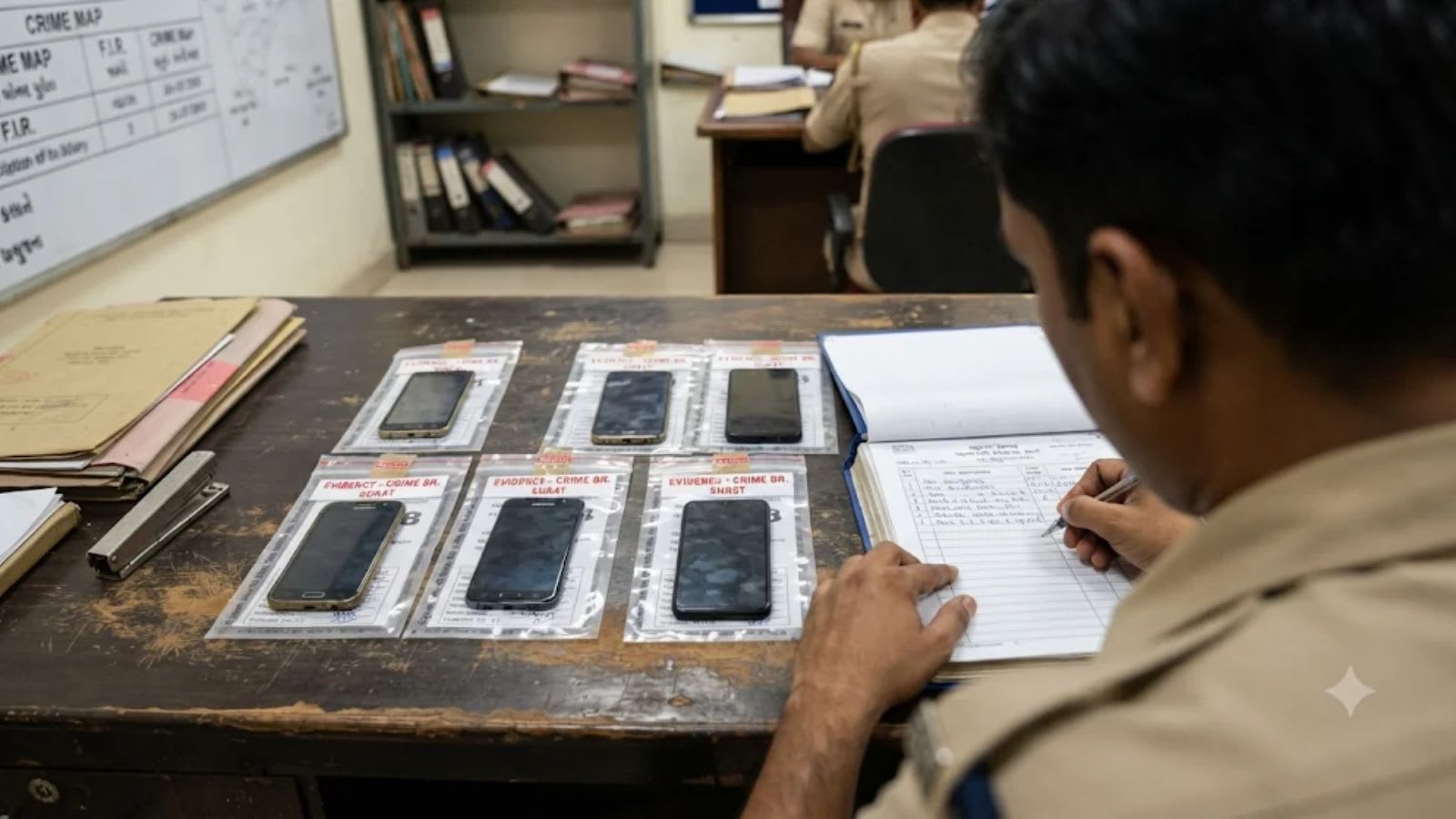
Surat police successfully apprehended a phone snatcher named Parvez Ansari after he committed five violent robberies in under an hour. Authorities utilized advanced CCTV and facial recognition technology to track the suspect, who also injured a police constable during the arrest.
Swift Justice in Surat: Leveraging Technology Against Urban Crime
In a recent display of rapid law enforcement response, the Surat Police successfully apprehended Parvez Ansari, a suspect involved in a string of violent mobile phone robberies. The incident, which unfolded over a harrowing 45-minute window, highlights the evolving challenges of urban security and the increasing reliance on digital surveillance infrastructure to maintain public order in rapidly expanding Indian cities.
The Anatomy of a Violent Spree
The crime spree occurred between 4:10 am and 4:55 am, specifically targeting the Mahidharpura, Varachha, and Katargam areas of Surat. According to police reports, Ansari and an accomplice utilized a motorbike to facilitate their movements, allowing them to strike five different victims in quick succession. The deliberate nature of the attacks—stabbing victims in the legs and back while avoiding vital organs—suggests a calculated attempt to incapacitate targets long enough to secure their mobile devices without necessarily resulting in immediate fatalities.
The Role of Surveillance Infrastructure
The apprehension of the suspect was largely credited to the integration of CCTV footage and facial recognition technology. As urban centers like Surat continue to grow, the deployment of high-definition surveillance networks has become a primary tool for law enforcement. By analyzing the visual data captured at the various crime scenes, investigators were able to synthesize a profile of the perpetrators, eventually allowing them to intercept Ansari during a confrontation that resulted in a stabbing injury to a police constable.
Migratory Trends and Urban Policing
The background of the accused, identified as a migrant from Jharkhand, touches upon the broader socio-economic complexities of metropolitan policing. Cities like Surat serve as major industrial and commercial hubs, attracting large labor populations. While this migration is essential for the economy, it creates unique challenges for local authorities regarding monitoring and community integration. Police forces are increasingly tasked with balancing the need for proactive patrolling with the logistical difficulty of tracking transient populations.
Implications for Future Security Trends
This event underscores a shift toward technology-driven policing. Moving forward, the successful use of facial recognition to track suspects across multiple precincts in under an hour will likely encourage further investment in smart-city surveillance projects. Such tools are becoming indispensable for modern police departments, as they provide an empirical basis for identifying repeat offenders in environments where traditional foot patrols might be insufficient to cover vast urban territories.
Conclusion: A Deterrent for Future Crime
The swift capture of Parvez Ansari serves as a critical case study in the efficacy of modern investigative techniques. While the incident remains a stark reminder of the risks posed by mobile phone theft and associated physical violence, the ability of the Surat Police to close the loop on these crimes within such a short timeframe provides a necessary deterrent. As technology continues to integrate with ground-level police work, the capacity for law enforcement to respond to localized crime waves will likely see significant improvements in the coming years.