Sweden opposition holds slender lead in tight election, projection shows a
Source Entity
Agencies
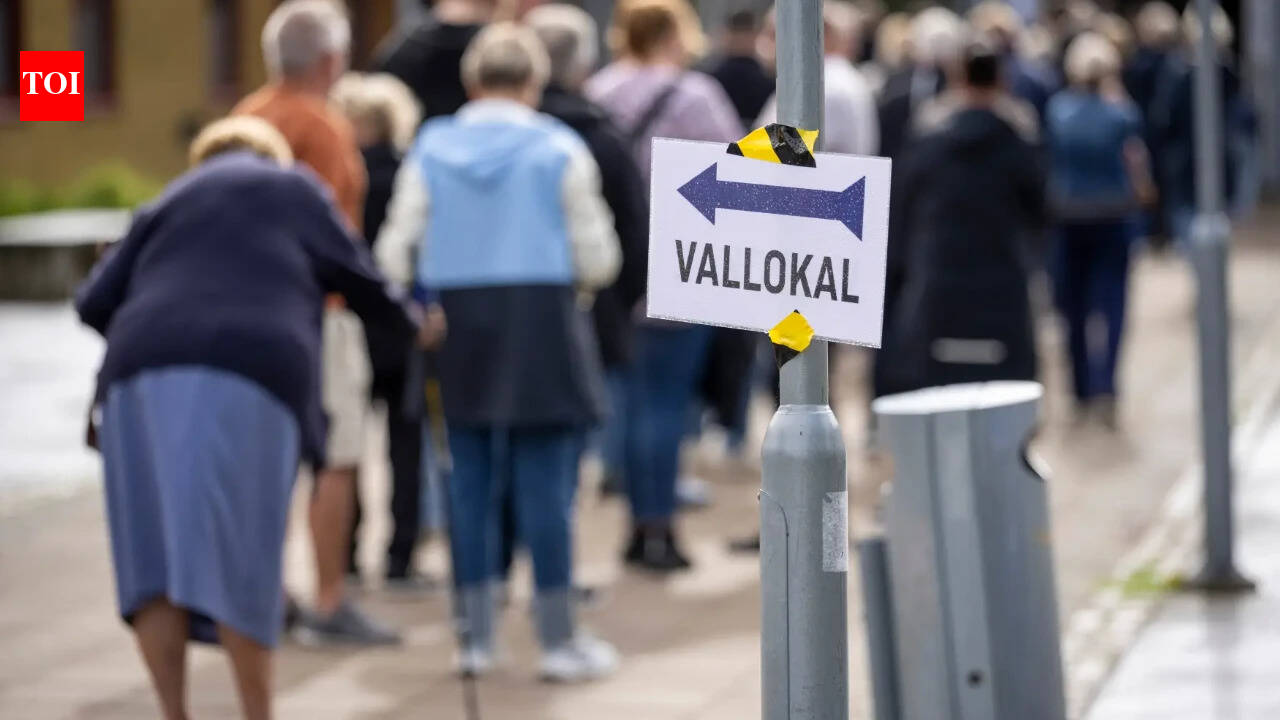
Sweden's recent parliamentary election resulted in a dead heat, with the left-wing opposition holding a razor-thin one-seat lead over the right-wing coalition. The outcome remains uncertain as final ballots are counted, potentially shifting the nation's political trajectory.
A Nation at a Crossroads: Analyzing the Swedish Election Deadlock
The recent parliamentary election in Sweden has culminated in a political scenario that is as rare as it is precarious. With preliminary results showing the left-wing bloc, led by the Social Democrats, holding a razor-thin 175-seat majority against the 174-seat coalition of Prime Minister Ulf Kristersson, the nation finds itself in a state of suspended animation. As the Swedish Election Authority continues to process the final ballots, the country faces the prospect of a government determined by a single seat in the 349-member Riksdag.
The Historical Dominance of the Social Democrats
To understand the gravity of this election, one must look at the historical weight of the Social Democrats. Having been a cornerstone of Swedish governance since the end of World War II, the party has long defined the nation’s social contract. Magdalena Andersson’s campaign has centered on this legacy, framing the choice as a referendum on the future spirit of Swedish cooperation versus a potential shift toward a government influenced by the Sweden Democrats (SD).
The Rise of the Sweden Democrats
Central to the tension in this election is the evolution of the Sweden Democrats. Once a fringe party founded by figures with ties to Nazi sympathizers in the 1980s, the SD has undergone a significant transformation in the public eye. By pivoting their platform toward urgent concerns regarding violent crime and immigration, they have surged to become the country's second-largest party. Their newfound political viability has forced traditional parties to confront a new reality where their influence can no longer be ignored, challenging the traditional liberal consensus of Swedish politics.
Coalition Dynamics and Governance
Sweden’s political landscape is defined by a two-bloc system, with four parties on the left and four on the right. This structural setup inherently favors coalition and minority governments, which are common in the Swedish system. However, the current parity—separated by a mere 20,000 votes in early counts—pushes this system to its limit. Prime Minister Ulf Kristersson has indicated that he intends to explore all possibilities, suggesting that the path to forming a stable government will be arduous regardless of the final seat count.
Broader Implications and Future Trends
Despite the intense domestic debate, the election is unlikely to alter Sweden's fundamental geopolitical stance. The nation remains committed to its pro-Western and pro-Ukraine trajectory, a policy that appears to transcend the current domestic divide. However, the internal debate regarding the nation's drift away from traditional liberal values remains the primary point of contention. The outcome will decide whether Sweden continues to lean into its historical model or pivots toward the populist-conservative agenda championed by the right-wing bloc.
Conclusion: A Waiting Game
As the nation awaits the final tally, the uncertainty is palpable. With 92 percent of the vote counted, the one-seat difference acts as a stark reminder of the deep polarization currently affecting the Swedish electorate. The coming days of ballot counting will not only determine the next Prime Minister but will also signal the future direction of a Nordic nation of 10.6 million people as it navigates a complex and evolving political landscape.