‘Judge understood father’s pain': IB staffer Ankit Sharma's family on Tahir Hussain conviction
Source Entity
Latest News: Today's Latest News Headlines from India & World | Hindustan Times | Hindustan Times
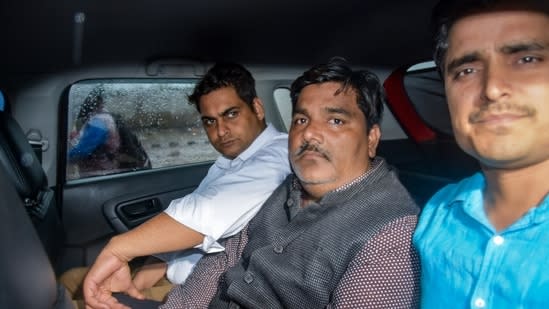
Ex-AAP councillor Tahir Hussain was held guilty of murder, promoting enmity between different religions, and rioting with deadly weapon.
Justice Delivered: The Conviction of Tahir Hussain
In a significant judicial development, the court has found former Aam Aadmi Party (AAP) councillor Tahir Hussain guilty of murder, rioting with deadly weapons, and promoting enmity between different religious groups. This verdict centers on the brutal killing of Ankit Sharma, an Intelligence Bureau (IB) staffer, during the violent unrest that gripped Northeast Delhi in 2020. The conviction brings a semblance of closure to the Sharma family, who have spent years navigating the grueling legal process to seek justice for their son. The family's reaction, stating that the "judge understood the father's pain," underscores the deep emotional toll of the crime and the perceived fairness of the judicial outcome.
The Gravity of the Crime and Legal Findings
The conviction of Tahir Hussain is not merely a verdict on a single act of violence but a recognition of a coordinated effort to incite communal hatred. The court's findings highlight that Hussain did not act in isolation but played a pivotal role in orchestrating riots and promoting enmity between different religions. The specific charge of murder relates to the death of Ankit Sharma, whose killing became a symbol of the extreme brutality witnessed during the 2020 Delhi riots. By convicting Hussain on multiple counts, including rioting with deadly weapons, the judiciary has sent a clear message that inciting violence for communal gain will be met with severe legal consequences.
Political Implications and Accountability
Tahir Hussain's former position as an AAP councillor adds a layer of political complexity to the case. The intersection of political influence and communal violence often complicates the pursuit of justice, as perpetrators may feel shielded by their affiliations. This verdict serves as a critical precedent, demonstrating that political stature does not grant immunity from the law. The case has long been a point of contention in Delhi's political landscape, with various parties using the delays and eventual outcome to debate the efficacy of law enforcement and the neutrality of the legal system in handling high-profile political figures.
Historical Context of the Delhi Riots
To understand the weight of this conviction, one must look back at the February 2020 Delhi riots, which were characterized by widespread arson, looting, and targeted killings. The violence left dozens dead and hundreds injured, leaving a lasting scar on the social fabric of the national capital. The murder of Ankit Sharma was one of the most harrowing incidents of that period, reflecting the targeted nature of the attacks. For years, the victims' families have campaigned for swift justice, arguing that the slow pace of trials in riot-related cases often undermines the deterrent effect of the law.
Broader Implications for Communal Harmony
The judgment in this case extends beyond the immediate victims. By convicting an individual for "promoting enmity between different religions," the court has reinforced the legal boundaries regarding hate speech and the incitement of violence. In an era where polarized narratives are often amplified by social media, such judicial interventions are essential to maintain the rule of law. This case emphasizes that the state's primary duty is to protect its citizens from communal aggression and to hold those who manipulate religious sentiments for violent ends accountable.
Future Trends and Judicial Precedent
Looking forward, this conviction is likely to accelerate the trial processes for other accused individuals involved in the 2020 riots. It sets a rigorous standard for evidence and accountability in cases involving communal violence. We can expect a trend where the judiciary increasingly scrutinizes the role of local leaders and political operatives in inciting mobs. For the legal community, this case provides a roadmap for prosecuting crimes that combine individual acts of murder with broader charges of inciting public disorder, ensuring that the masterminds behind the violence are punished as severely as the executors.
Summary
The conviction of Tahir Hussain for the murder of Ankit Sharma and the promotion of communal enmity marks a pivotal moment in the legal aftermath of the Delhi riots. By bridging the gap between the crime and the punishment, the court has provided essential closure to the bereaved family and reaffirmed the principle that no individual, regardless of political standing, is above the law. This verdict stands as a deterrent against future communal incitement and a victory for the rule of law in India.
Verification Required?