Cauvery is not a flood discharge channel for Karnataka to open at will, say Tamil Nadu farmers
Source Entity
India Latest News: Top National Headlines Today & Breaking News | The Hindu
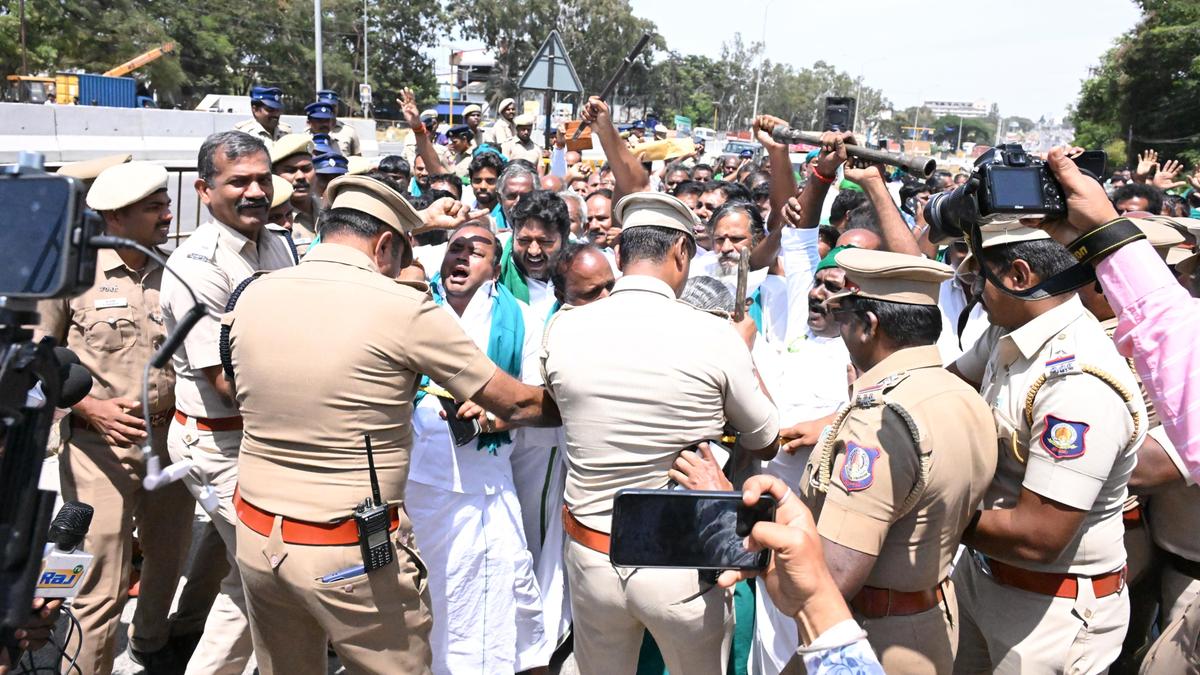
Tamil Nadu farmers have launched protests and marched to the border to oppose the Mekedatu project and criticize Karnataka's management of the Cauvery river's water discharge, highlighting the ongoing inter-state water conflict.
The Escalating Cauvery Conflict: Farmers' Resistance and the Mekedatu Impasse
The recent mobilization of hundreds of farmers marching toward the border marks another volatile chapter in the perennial conflict between Karnataka and Tamil Nadu over the Cauvery river. The core of the current unrest lies in the farmers' assertion that the river should not be treated as a mere "flood discharge channel" for Karnataka to open at its convenience. This sentiment reflects a deep-seated fear among the agricultural communities of Tamil Nadu that the water flow is being managed unilaterally by the upstream state, leading to inconsistent water availability for irrigation in the downstream delta regions.
Historical Context of the Cauvery Dispute
To understand the gravity of this protest, one must look at the decades-long legal and political battle over the Cauvery. The river is the primary lifeline for millions of farmers in both states, and the dispute centers on the sharing of its waters during lean years. Despite various tribunals and a landmark 2018 Supreme Court judgment that redefined the water-sharing quotas, implementation remains a flashpoint. The tension is not merely about the volume of water but about the timing and regulation of its release, which is exactly what the current protests are targeting.
The Mekedatu Project: A Strategic Bone of Contention
Central to the farmers' grievances is the proposed Mekedatu project, a balancing reservoir that Karnataka intends to build across the river in the Chamarajanagar district. From Karnataka's perspective, the project is essential for ensuring drinking water for Bengaluru and regulating flow. However, Tamil Nadu views the project as a strategic move to divert water and control the flow entirely, potentially starving the downstream farmers of their rightful share. The march to the border is a symbolic and physical manifestation of the fear that once the Mekedatu project is completed, Tamil Nadu will lose its leverage and its water security.
Analyzing the "Flood Discharge" Narrative
The specific claim that the river is being used as a "flood discharge channel" is a critical analytical point. Farmers are arguing that Karnataka releases massive amounts of water during heavy rains to prevent dam overflows—which can cause flash floods downstream—but fails to store and release that water systematically during the dry months. This "all or nothing" approach to water management is seen as a failure of cooperative federalism and a disregard for the agricultural cycle of the Tamil Nadu delta, where steady, regulated flow is more valuable than sporadic flood-level discharges.
Socio-Political Implications and Regional Stability
This water dispute transcends agriculture and enters the realm of high-stakes regional politics. In both Karnataka and Tamil Nadu, the Cauvery issue is a powerful emotive tool used during election cycles to galvanize voters. The mobilization of farmers to the border increases the pressure on state governments to take hardline stances, often making diplomatic compromise more difficult. The socio-economic impact is severe; when water is unavailable, crop failures lead to farmer distress and economic instability in the agrarian belts of both states, creating a cycle of poverty and resentment.
Future Trends and the Path to Resolution
Looking forward, the conflict is likely to be exacerbated by climate change and erratic monsoon patterns. As rainfall becomes more unpredictable, the competition for every drop of water will intensify. The trend suggests that unless there is a shift toward data-driven, transparent water management—perhaps through a more empowered Cauvery Water Management Authority (CWMA)—the protests will continue. The future depends on whether the two states can move from a "zero-sum game" mentality to a cooperative model of watershed management that prioritizes ecological health and equitable distribution over political victory.
Conclusion
In summary, the march by Tamil Nadu farmers is not an isolated event but a symptom of a systemic failure to resolve the Mekedatu impasse and the broader water-sharing conflict. By challenging the manner in which Karnataka manages water discharge, the farmers are demanding a predictable and fair system of distribution. Until a technical and political consensus is reached regarding the Mekedatu project and the regulation of flow, the border regions will likely remain sites of tension and protest.
Verification Required?