No caste, communal or political activities will be allowed in Tamil Nadu schools, Madras High Court told
Source Entity
India Latest News: Top National Headlines Today & Breaking News | The Hindu
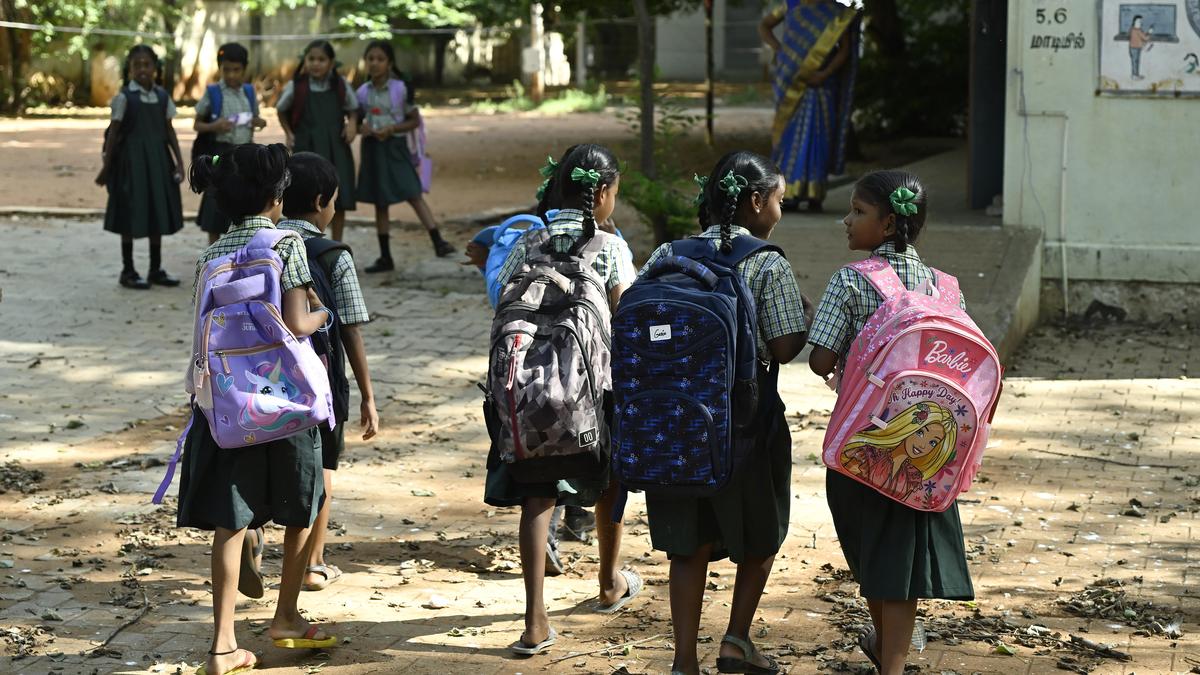
Advocate General Vijay Narayan says, the aim of the School Education Department is to foster unity and togetherness among 1,03,98,748 students pursuing education in 57,671 schools across the State
Safeguarding Educational Sanctity: Tamil Nadu's Stand Against Sectarianism in Schools
In a significant move to preserve the neutrality and inclusivity of educational environments, the Madras High Court was recently informed that the Tamil Nadu government will strictly prohibit any activities related to caste, communalism, or politics within its schools. Advocate General Vijay Narayan, representing the state, emphasized that the primary objective of the School Education Department is to foster a sense of unity and togetherness. With a staggering 1,03,98,748 students enrolled across 57,671 schools, the scale of this directive underscores the government's commitment to insulating the youth from the divisive influences of identity politics.
The Imperative of a Neutral Learning Environment
The prohibition of caste-based and communal activities is a critical step in ensuring that schools remain safe havens for intellectual growth rather than battlegrounds for social stratification. By removing these influences, the state aims to prevent the early internalization of prejudices that often lead to systemic discrimination. When students are encouraged to interact without the baggage of caste or religious labels, the educational process shifts from mere rote learning to the development of empathy and social cohesion. This directive recognizes that the classroom is where the foundations of citizenship are laid, and any infiltration of sectarian agendas can jeopardize the democratic ideal of equality.
Addressing the Legacy of Identity Politics
To understand the depth of this move, one must consider the historical context of identity politics in Tamil Nadu and India at large. For decades, caste and communal identities have played a pivotal role in social and political mobilization. While these movements have often sought justice and representation, their manifestation within educational institutions can sometimes lead to polarization or the marginalization of specific groups. By explicitly banning political and communal activities, the state is attempting to decouple the pursuit of education from the pressures of external political affiliations, ensuring that the school remains a space for academic excellence rather than political indoctrination.
Administrative Challenges and Implementation
Implementing such a sweeping directive across nearly 58,000 institutions presents a massive administrative challenge. The School Education Department will need to establish clear guidelines on what constitutes 'political' or 'communal' activity to avoid arbitrary enforcement. This includes monitoring not only formal school events but also the informal interactions and student organizations that may operate under the radar. The role of the Madras High Court in this process is vital, as it provides judicial oversight to ensure that the ban is applied fairly and does not infringe upon the fundamental rights of students while still maintaining the necessary discipline to prevent divisive activities.
Long-term Societal Implications and Future Trends
Looking forward, this policy is likely to have a profound impact on the social fabric of the state. If successfully implemented, the reduction of sectarian influence in schools could lead to a generation of citizens who are more inclined toward meritocracy and inclusive social interaction. We may see a trend where other states in India adopt similar frameworks to combat the rising tide of polarization in educational sectors. Furthermore, this could lead to a more standardized approach to 'value education,' where the focus is on universal human rights and constitutional values rather than narrow communal identities.
Conclusion: A Vision for Unified Education
Ultimately, the statement made by Advocate General Vijay Narayan reflects a vision of education as a unifying force. By shielding over 10 million students from the divisive nature of caste, communal, and political frictions, Tamil Nadu is prioritizing the psychological and social well-being of its youth. The success of this initiative will depend on the consistent application of these rules and the ability of educators to promote a culture of togetherness. In doing so, the state aims to transform its vast network of schools into engines of social harmony and intellectual liberation.
Verification Required?