Women take the controls as farms embrace new tech in Telangana
Source Entity
India Latest News: Top National Headlines Today & Breaking News | The Hindu
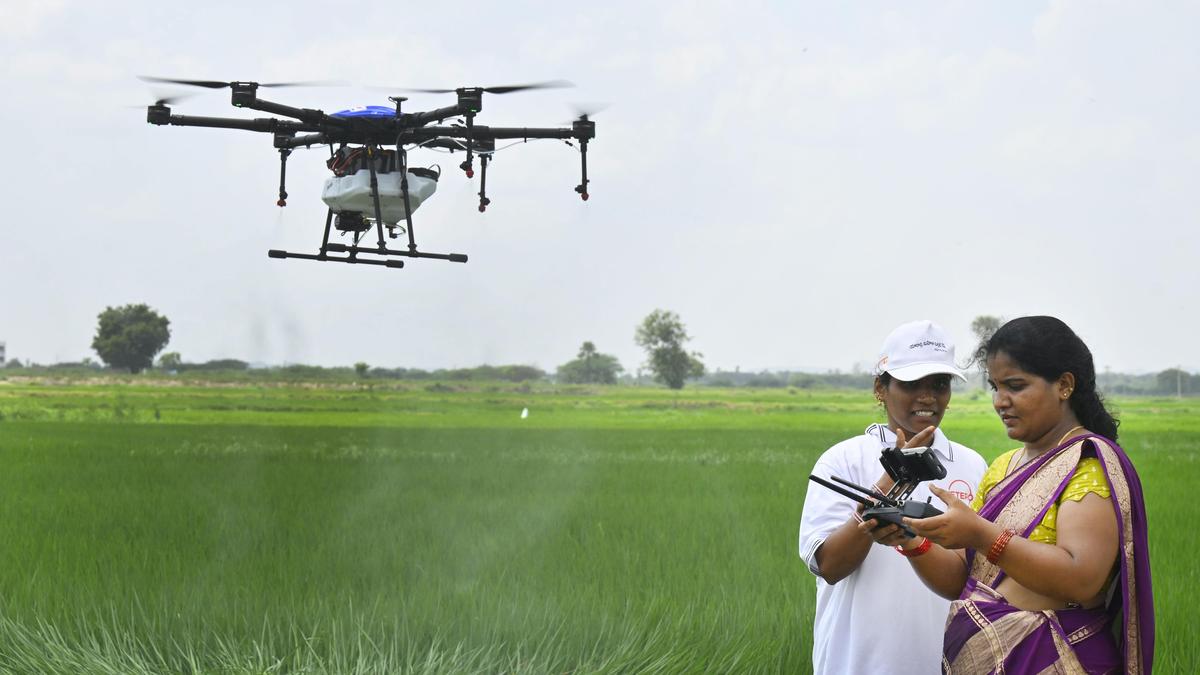
Women in Telangana's self-help groups are transforming agriculture by becoming drone pilots for crop spraying. This shift reduces health risks from manual pesticide exposure while creating new, technology-driven business opportunities for rural women.
The Technological Revolution in Telangana's Agriculture
In the rural landscape of Telangana, a profound shift is occurring as women from self-help groups (SHGs) transition from traditional agricultural labor to high-tech drone operations. In Motakondur village, Yadadri-Bhuvanagiri district, farmers like 33-year-old Usirika Sandhya are redefining their roles by taking control of drone technology to manage crop health. This transition represents a significant departure from conventional farming practices, moving toward a model where technology acts as an enabler for both efficiency and economic independence.
Mitigating Health Risks through Innovation
One of the most critical drivers behind this adoption is the urgent need to address the health hazards associated with manual pesticide application. Historically, farmers have faced significant physical strain and long-term health complications due to prolonged exposure to chemicals. By utilizing drones, Sandhya and her peers can perform complex spraying tasks in mere minutes, effectively shielding their family members—such as Sandhya’s husband, Mahesh—from the dangerous, back-breaking labor that has plagued the agricultural sector for generations.
Empowering Women via Self-Help Groups
Self-help groups (SHGs) have traditionally served as the backbone of rural social and financial support in India. However, the integration of drone technology is elevating these groups into the realm of professional agricultural services. By training as drone pilots, these women are not only acquiring high-value technical skills but are also transforming their SHGs into viable, independent business entities that provide specialized services to the broader farming community.
Efficiency and the Future of Farming
Beyond individual health benefits, the deployment of drones is revolutionizing the logistical efficiency of paddy farming. The speed and precision offered by drone technology allow for uniform pesticide application, which ensures healthier crops and reduces chemical wastage. As more women adopt these tools, it sets a precedent for a more sustainable and technologically proficient agricultural ecosystem in Telangana.
Broader Implications and Long-Term Trends
This movement signifies a broader trend where technology-led agriculture becomes a catalyst for gender equality in rural India. As these women master the controls of sophisticated machinery, they challenge traditional gender norms, proving that technological proficiency is not limited by geography or background. Looking ahead, this trend suggests that the future of rural development will be built upon a foundation of digital literacy and technical training, positioning these women as essential stakeholders in the state's agricultural economy.
Conclusion
The initiative in Yadadri-Bhuvanagiri is more than a mere adoption of new equipment; it is a structural evolution of rural labor. By successfully integrating drones into their operations, Telangana's women are safeguarding their health, boosting agricultural productivity, and carving out a new, empowered identity within the agricultural sector. As this model scales, it holds the potential to reshape the socio-economic fabric of rural India.
Verification Required?