Tesla’s stock is leading S&P 500 gainers as investors prepare for a Cybercab launch
Source Entity
William Gavin
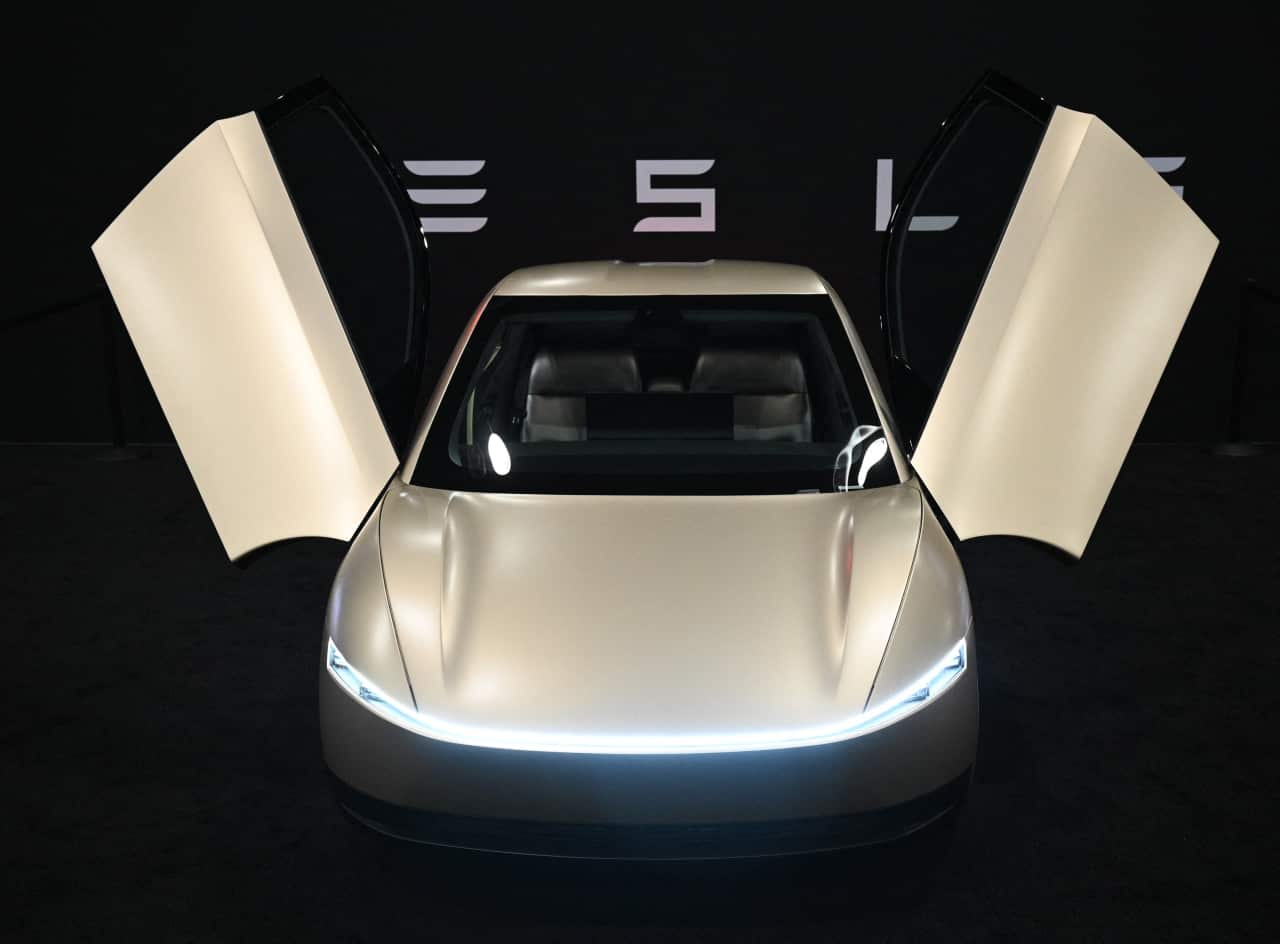
Tesla shares are surging as the company nears the launch of its autonomous Cybercab. This vehicle design represents a radical departure from traditional automotive engineering by removing steering wheels and pedals.
The Shift Toward Autonomous Transport
Tesla’s recent surge in stock performance within the S&P 500 reflects growing investor confidence in the company’s pivot toward a fully autonomous future. By focusing on the upcoming launch of the 'Cybercab,' Tesla is signaling a transition from a hardware-focused automotive manufacturer to a leader in specialized robotics and autonomous transportation systems. This movement aligns with the broader industry trend of integrating artificial intelligence into vehicle control systems to replace human intervention.
Redefining Automotive Ergonomics
The most striking aspect of the forthcoming Cybercab is the explicit removal of the steering wheel and pedals. For over a century, these components have been the fundamental interface between human drivers and machines. By eliminating them, Tesla is betting heavily on the maturity of its Full Self-Driving (FSD) software and sensor suite. This design choice implies that the vehicle is intended exclusively for autonomous operation, effectively removing the possibility of manual override and cementing the company's commitment to a driverless ecosystem.
Market Implications and Investor Sentiment
Investors have reacted positively to these developments, viewing the Cybercab as a catalyst for future revenue streams derived from autonomous ride-sharing networks. As Tesla climbs to lead S&P 500 gainers, the market is pricing in the potential for a high-margin service model that operates 24/7 without the need for human labor. This shift is critical for Tesla, as it seeks to differentiate itself from traditional automakers who are struggling to bridge the gap between semi-autonomous driver assistance and true robotic autonomy.
Engineering and Regulatory Challenges
While the market is optimistic, the transition to a steering-wheel-less vehicle faces significant hurdles. Engineering a vehicle without manual controls requires redundant systems to ensure safety in the event of software failure. Furthermore, the regulatory environment remains complex; transportation authorities globally are still establishing the legal frameworks required for vehicles that cannot be steered by a human. The success of the Cybercab will depend as much on legislative approval as it does on the underlying technology.
Future Trends in Urban Mobility
Looking ahead, the launch of the Cybercab could fundamentally reshape urban planning and public transit. If Tesla successfully deploys these vehicles at scale, it may lead to a decrease in private vehicle ownership in dense urban centers, favoring a subscription-based mobility model. This evolution would not only change how consumers interact with their vehicles but also how cities allocate space for parking and traffic management. The Cybercab stands as a potential inflection point in the history of modern transportation.
Verification Required?