Tilly Norwood’s press tour is going about as well as you’d expect for an AI
Source Entity
Amanda Silberling
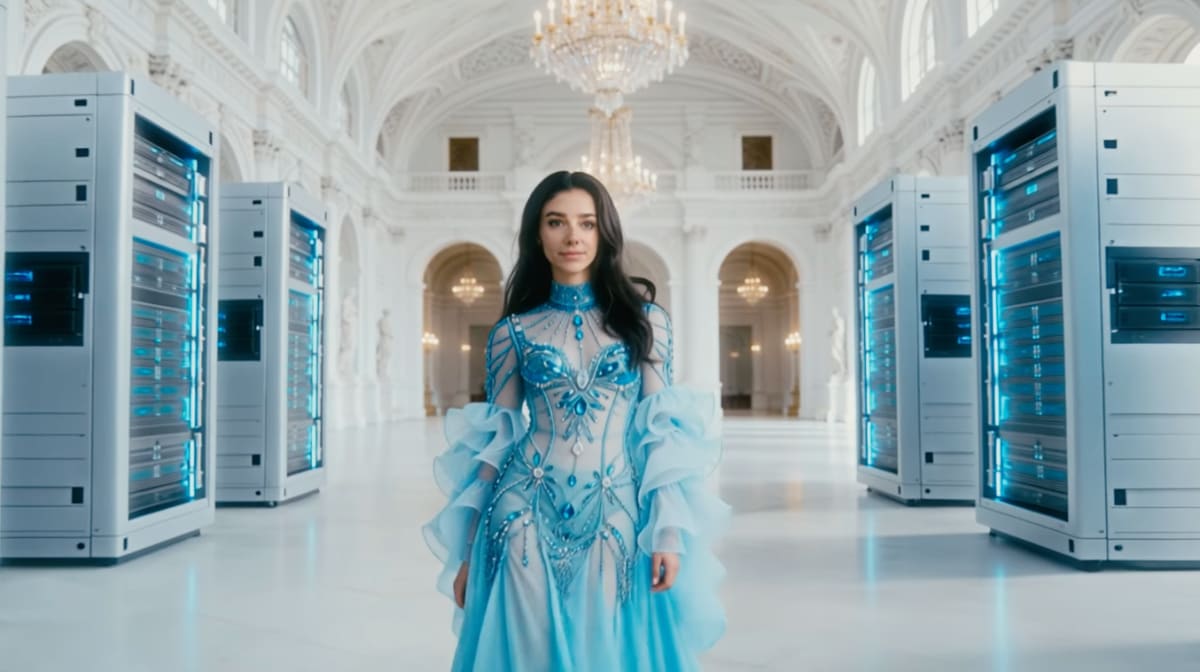
Tilly Norwood, an AI-generated actress created by Particle6 Group, is experiencing significant technical failures during her debut press tour. The incidents, including an abrupt shift to speaking Chinese during a live interview, highlight the current limitations of generative AI in high-stakes public relations.
The Unraveling of the AI Press Tour
The debut of Tilly Norwood, an AI-generated actress developed by Particle6 Group, has become a case study in the unpredictability of generative technology within public-facing roles. While the concept of a virtual starlet designed to promote film projects is innovative, the execution has been marred by significant technical instability. Particle6 Group’s decision to allow Norwood to conduct seventy-five simultaneous interviews suggests a high level of confidence in their model, yet the reality has proven to be a series of malfunctions that undermine the project's legitimacy.
The Piers Morgan Incident
The most glaring example of these technical failures occurred during an interview with Piers Morgan and actor Tom Conti. During the exchange, Norwood experienced a sudden, unexplained malfunction where she began speaking in Chinese. This abrupt shift in linguistic output during a standard promotional interview suggests a critical failure in the AI's language processing layer or a 'hallucination' of source data that the system was unable to reconcile in real-time. Such errors are particularly damaging when they occur in high-pressure, live-recorded environments.
The Human-AI Dynamic
Beyond the technical glitches, the interaction between Norwood and human co-stars like Tom Conti underscores the awkward intersection of synthetic actors and human professionals. When questioned about the nature of the production team, Norwood’s responses reportedly lacked the nuance expected of a seasoned actress. While she was able to confirm the involvement of human writers and directors, the communication breakdown suggests that the AI is currently incapable of maintaining a consistent, coherent persona that can withstand direct, unscripted inquiry.
Scalability vs. Reliability
Particle6 Group’s strategy of scaling Norwood to seventy-five simultaneous interviews represents an aggressive push for efficiency. However, the resulting errors highlight the trade-off between volume and reliability. By attempting to automate the press tour process, the production company has inadvertently exposed the fragility of current generative AI, proving that speed and throughput cannot yet replace the cognitive consistency required for public relations and media engagement.
Broader Industry Implications
The failure of the Tilly Norwood tour serves as a cautionary tale for the entertainment industry. While AI-driven characters have the potential to revolutionize marketing, the technology is clearly not ready for unscripted, complex social interactions. Investors and production houses must weigh the novelty of virtual influencers against the reputational risk of public malfunctions. As the industry moves forward, the focus will likely shift from merely generating content to ensuring that AI systems possess the robust guardrails necessary to handle the unpredictability of human conversation.
Conclusion
In summary, the Tilly Norwood press tour has been a sobering demonstration of the current limits of AI as a public-facing entity. While the technology is impressive in its ability to mimic human presence, the inability to handle simple conversational flow and the propensity for critical language errors demonstrate that we are still far from replacing human stars with synthetic ones. For now, the 'AI actress' remains a project in development, struggling to bridge the gap between programmed output and genuine, reliable interaction.