Trump bans news outlets CNN, MS NOW, Politico from White House
Source Entity
TRISHA MAHAJAN
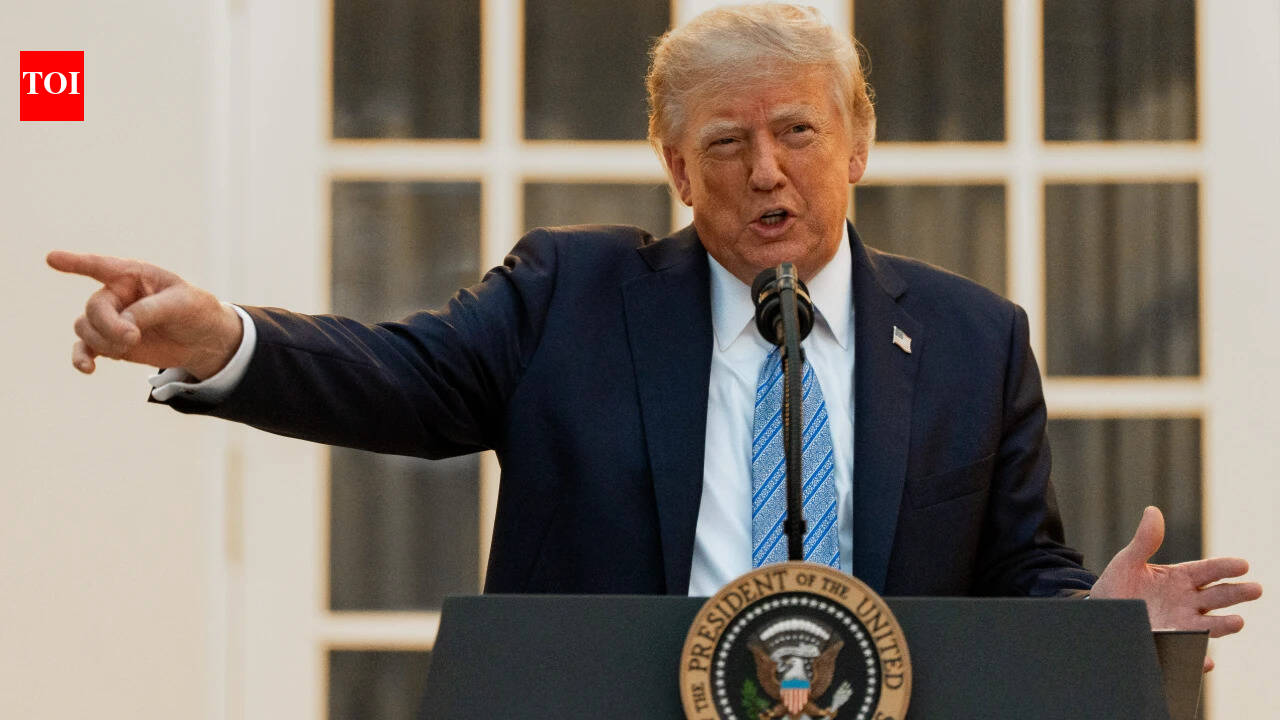
President Donald Trump has announced an immediate ban on CNN, MS NOW, and Politico from the White House, citing their alleged production of 'fake news.' The move, communicated via Truth Social, faces significant questions regarding enforcement and potential legal challenges from press freedom advocates.
The White House Media Ban: A New Front in Executive-Press Relations
President Donald Trump has initiated a significant escalation in his administration’s relationship with the press by announcing an immediate ban on three prominent news organizations: CNN, MS NOW, and Politico. The announcement, delivered via the president's Truth Social platform, characterizes these outlets as purveyors of "fake news," "fiction," and "lies." This move represents a dramatic departure from standard executive-press protocols and underscores the deep-seated ideological friction that has defined much of Trump’s public interaction with the media establishment.
The Justification for Exclusion
The core of the president's rationale rests on his perception of these outlets as fundamentally adversarial. By labeling them as "fake news," the administration is attempting to delegitimize their reporting processes. Specifically, Trump targeted MS NOW—noting its transition from MSNBC—and Politico, which he accused of benefiting from improper government financial support during the previous Biden administration. Despite these strong accusations, the president has not provided specific examples of the "fictional" reporting that triggered this immediate punitive action, leaving the precise criteria for the ban ambiguous.
Ambiguity and Operational Realities
While the directive was issued as "effective immediately," the practical implementation of such a ban remains unclear. As of the initial reports, journalists from the affected outlets were still observed on White House grounds, suggesting a potential disconnect between the president's social media declaration and the logistical reality of White House press operations. Questions remain regarding whether this ban will result in the revocation of press credentials, physical barring from the premises, or a cessation of press briefings for these organizations. The lack of clarity has created a period of uncertainty for the White House press corps.
Legal and Constitutional Implications
The move is widely expected to trigger significant legal challenges. Press freedom organizations and the legal teams of the affected media houses are likely to argue that such a ban infringes upon the First Amendment and the role of the press as an independent monitor of government power. Historically, the White House has served as a public forum where the press is granted access to fulfill its duty to inform the citizenry. Any attempt to systematically exclude specific outlets based on their editorial viewpoint sets a contentious legal precedent that courts will likely be asked to adjudicate.
Future Trends and Media Polarization
This action signals a potential shift toward a more insular communications strategy. By threatening further bans against other outlets, the president is signaling a willingness to leverage his executive authority to shape the media landscape. This strategy suggests that the administration may increasingly bypass traditional press scrutiny in favor of direct communication channels like Truth Social. As the administration continues to challenge the credibility of mainstream journalism, the divide between the White House and the press is expected to widen, potentially leading to a more fractured information environment where access is strictly managed by the executive branch.
Multiple Citing Sources