Trump's 25% Brazil tariff: Why now, what triggered it and what happens next? Explained
Source Entity
Latest News: Today's Latest News Headlines from India & World | Hindustan Times | Hindustan Times
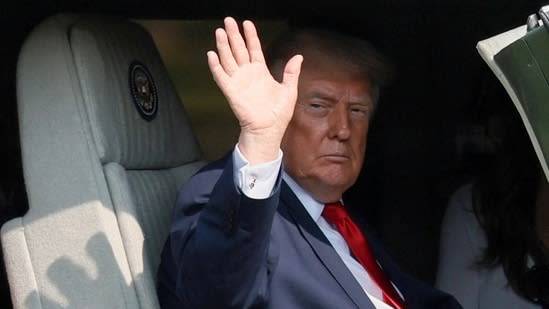
The Trump administration has imposed a 25% tariff on select Brazilian imports following a USTR investigation, signaling a tightening of trade policy and potential economic friction between the US and Brazil.
Analysis of the US-Brazil Trade Escalation: The 25% Tariff
The announcement that the Trump administration has imposed a 25% tariff on select Brazilian imports marks a significant pivot in the economic relationship between the United States and one of Latin America's largest economies. This move, triggered by a formal investigation by the Office of the United States Trade Representative (USTR), underscores a return to a more aggressive 'America First' trade posture. By leveraging tariffs as a primary tool of economic diplomacy, the administration aims to address perceived trade imbalances or unfair trade practices identified during the USTR's probe, signaling that market access to the US will be contingent upon strict adherence to US-defined fair trade standards.
The Mechanics of the USTR Investigation
To understand why this happened now, one must look at the role of the USTR. The USTR is tasked with negotiating trade agreements and resolving disputes. The investigation leading to these tariffs likely focused on specific sectors where the US believes Brazil has employed unfair subsidies or restrictive market practices. Historically, USTR investigations—often conducted under Section 301 of the Trade Act of 1974—allow the US to take unilateral action if it finds that a foreign country's acts are unreasonable or discriminate against US commerce. The 25% figure is a steep penalty designed not just to protect domestic industries but to force Brazil to the negotiating table to alter its trade policies.
Economic Impact on Brazilian Exports
Brazil's economy is heavily reliant on the export of raw materials and agricultural products, as well as specific industrial goods like aircraft and steel. If the 'select imports' targeted by these tariffs include steel or aluminum, Brazil's industrial sector could face a severe contraction. A 25% price increase makes Brazilian goods significantly less competitive compared to domestic US products or imports from countries not subject to these tariffs. This could lead to a surplus of goods within Brazil, potentially depressing local prices but harming the profit margins of major Brazilian exporters and reducing the country's overall GDP growth.
Implications for US Consumers and Supply Chains
While the tariffs are intended to protect US workers and industries, the broader economic implication often involves 'cost-push inflation.' US companies that rely on Brazilian inputs—such as specialized steel for automotive manufacturing or agricultural components—will likely see their costs rise. These costs are rarely absorbed by the companies; instead, they are passed down to the American consumer in the form of higher retail prices. Furthermore, the sudden disruption of established supply chains may force US firms to seek alternative suppliers hastily, which can lead to short-term production delays and operational inefficiencies.
Geopolitical Shifts and the BRICS Factor
Beyond the immediate financial impact, this move has profound geopolitical consequences. Brazil is a key member of the BRICS bloc (Brazil, Russia, India, China, and South Africa). By alienating Brazil through aggressive trade barriers, the US may inadvertently push Brasilia closer to Beijing. China is already a massive trading partner for Brazil; if the US market becomes too costly, Brazil will likely accelerate its pivot toward Asian markets, strengthening the economic ties within the BRICS alliance and potentially weakening US influence in the Western Hemisphere.
Future Outlook and Potential Resolution
Looking ahead, these tariffs will likely serve as a bargaining chip. The administration's goal is rarely the permanent exclusion of a partner's goods, but rather the extraction of concessions. We can expect a period of high-tension diplomatic negotiations where the US demands specific policy changes—perhaps regarding intellectual property, agricultural subsidies, or market access for US tech firms—in exchange for a reduction or removal of the 25% levy. If Brazil retaliates with its own tariffs on US goods (such as soy or corn), a full-scale trade war could ensue, further destabilizing regional trade.
Summary
In conclusion, the imposition of a 25% tariff on Brazilian imports is a calculated strategic move by the Trump administration to rectify trade grievances identified by the USTR. While it may provide short-term protection for specific US sectors, it risks inflating consumer prices and pushing Brazil toward a closer economic partnership with China. The resolution of this conflict will depend on whether both nations can reach a bilateral agreement that satisfies the US demand for 'fair trade' without crippling the Brazilian export economy.
Verification Required?