Trump wants to split the MMR vaccine. Experts say that's unlikely — and comes with consequences
Source Entity
US Top News and Analysis
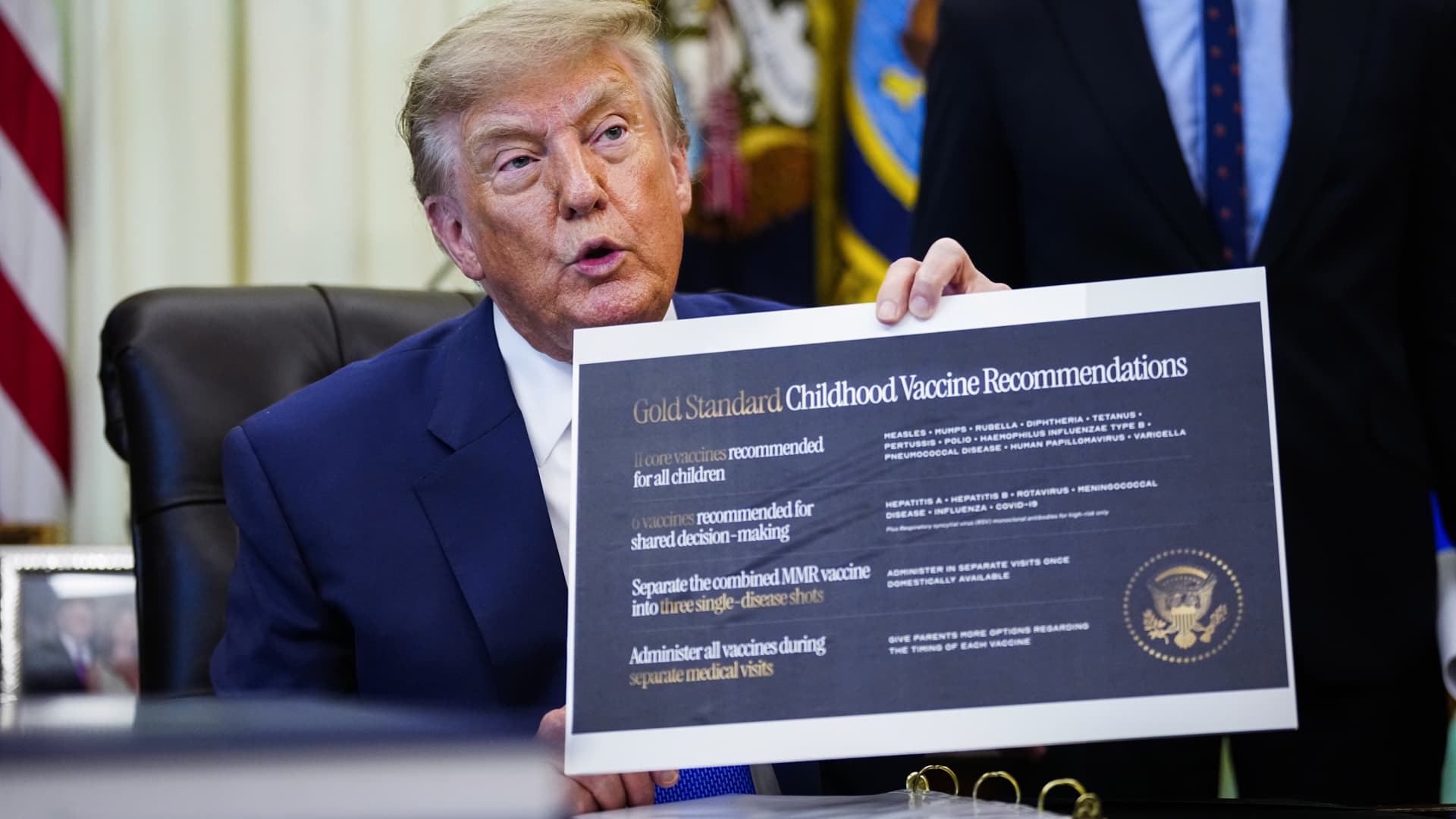
President Trump's executive order to split the MMR vaccine into three separate doses faces intense backlash from medical experts and pharmaceutical groups. Professionals warn the move lacks scientific justification, threatens public health, and poses significant logistical hurdles for pediatric immunization.
The Controversy Surrounding MMR Vaccine Decoupling
President Donald Trump has issued an executive order mandating that the combined Measles, Mumps, and Rubella (MMR) vaccine be separated into three individual shots. This directive, supported by Health Secretary Robert F. Kennedy Jr., is predicated on the claim that the combined vaccine could be "quite lethal." However, the medical and scientific communities have universally rejected this assertion, labeling it as entirely devoid of evidence and fundamentally disconnected from established vaccine science.
Scientific Consensus vs. Executive Policy
The scientific consensus remains clear: the MMR vaccine has undergone rigorous, large-scale testing and is proven to be both safe and effective in its current combined form. Experts have characterized the President's claims as "completely false" and "misleading," noting that there is no data suggesting any physiological benefit to administering these vaccines separately. The medical community views this intervention as a dangerous departure from evidence-based public health policy, specifically citing the lack of expertise in medicine or science among those driving this new directive.
Logistical and Public Health Implications
Beyond the lack of scientific merit, experts warn that the logistical burden of splitting the vaccine is substantial. Requiring three separate medical appointments instead of a single, efficient visit creates significant barriers to access. Healthcare professionals anticipate that this change will inevitably lead to increased rates of delayed or missed vaccinations. When children miss their scheduled immunizations, the community-wide immunity threshold risks being compromised, potentially triggering outbreaks of preventable diseases.
The Stance of Pharmaceutical and Medical Organizations
The response from the pharmaceutical industry and leading medical bodies has been swift and critical. Major industry groups have rejected the feasibility of the order, while the American Academy of Pediatrics (AAP) has officially condemned the move as "dangerous" and "disheartening." The AAP is currently engaged in legal challenges against previous federal vaccine policy shifts, signaling a deepening conflict between the current administration and the clinical leadership tasked with protecting child health.
Future Trends and Potential Consequences
The clash between political directives and the established medical establishment marks a volatile period for public health infrastructure. As the administration continues to push agendas that diverge from clinical standards, the potential for a decline in pediatric vaccination rates remains a primary concern. The long-term trajectory suggests a continued, adversarial relationship between federal health authorities and the broader medical community, which may lead to further litigation and a fracturing of standard medical practice across the United States.