Trump signs order to limit childhood vaccines and split MMR shots
Source Entity
BBC News
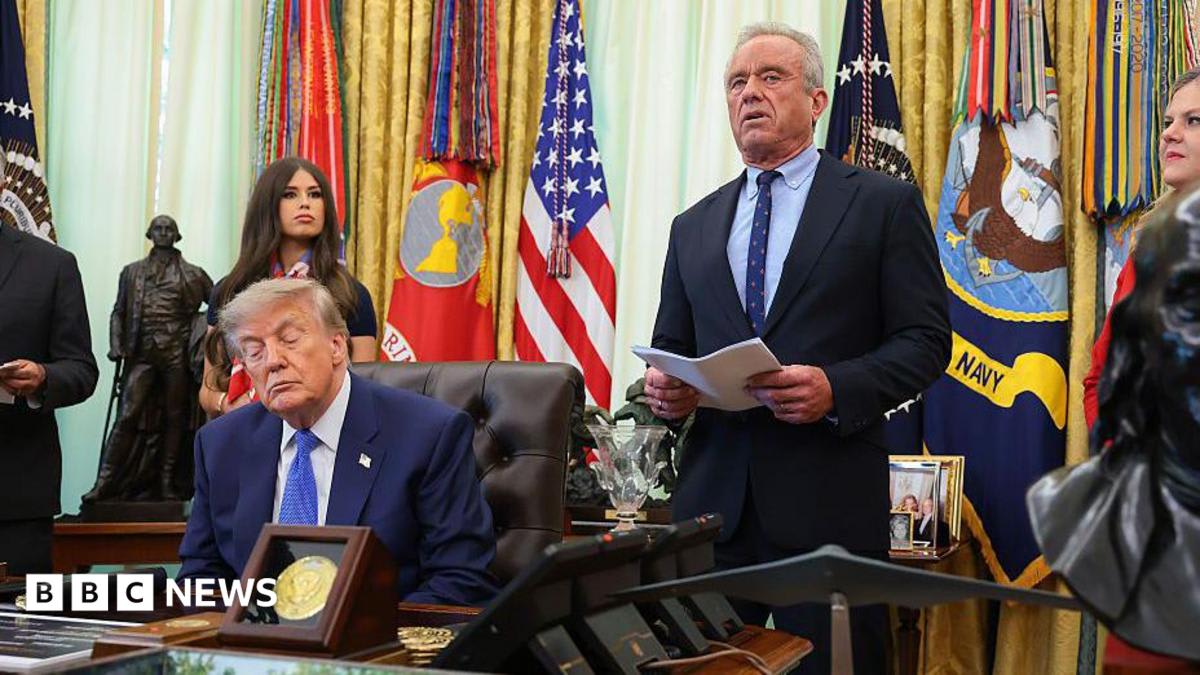
President Trump has signed an executive order reducing recommended childhood vaccines from 18 to 11 and mandating the separation of MMR shots. The policy, driven by HHS Secretary Robert F. Kennedy Jr., relies on debunked claims linking vaccines to autism.
The Shift in Federal Vaccination Policy
On August 10, 2026, President Donald Trump signed a significant executive order aimed at restructuring the federal recommendations for childhood immunizations. The directive mandates a reduction in the number of recommended childhood vaccines from 18 to 11 and requires that the measles, mumps, and rubella (MMR) vaccine be separated into three distinct shots administered across separate medical visits. This policy shift is spearheaded by the administration’s Health and Human Services (HHS) Secretary, Robert F. Kennedy Jr., a prominent figure known for his long-standing skepticism regarding vaccine safety.
Theoretical Basis and Scientific Contradiction
The administration’s justification for this policy rests on the assertion that the current vaccine schedule is overly burdensome on a child's immune system. President Trump, during the signing ceremony, suggested that the rise in autism rates correlates with the expansion of the vaccine schedule over the last few decades. However, this assertion stands in direct contradiction to an overwhelming consensus within the global medical and scientific communities. Multiple large-scale, peer-reviewed studies have consistently found no causal link between vaccines—including the MMR shot—and the development of autism.
The Role of HHS Leadership
The appointment of Robert F. Kennedy Jr. as the head of the Department of Health and Human Services has signaled a departure from traditional public health consensus. By prioritizing the views of a vocal vaccine skeptic, the current administration is actively challenging the standards established by organizations such as the American Academy of Pediatrics. This executive action represents a unilateral move to reshape public health guidelines without the support of new clinical data or evidence-based research, marking a contentious moment in federal health policy.
Broader Implications for Public Health
The recommendation to split the MMR vaccine and reduce the total number of routine shots introduces significant logistical and medical challenges. Public health experts argue that spacing out immunizations over more frequent visits increases the risk of lower compliance rates, as families may struggle to maintain the necessary schedule. Historically, high vaccination rates have been the cornerstone of preventing outbreaks of communicable diseases; any policy that encourages a reduction in coverage could potentially jeopardize herd immunity, leaving children vulnerable to preventable illnesses.
Future Trends and Political Context
This executive order reflects a broader trend of political skepticism toward established medical expertise and federal health institutions. By framing the reduction of vaccines as a return to a "healthier" past, the administration is tapping into a specific subset of public sentiment that distrusts standard medical mandates. Moving forward, the implementation of these guidelines will likely face intense scrutiny from medical associations and could lead to a fragmented public health landscape, where federal recommendations diverge sharply from the clinical practices advocated by pediatricians and infectious disease specialists.
Multiple Citing Sources