Trump signs executive order calling for fewer childhood vaccines, falsely linking shots to autism
Source Entity
US Top News and Analysis
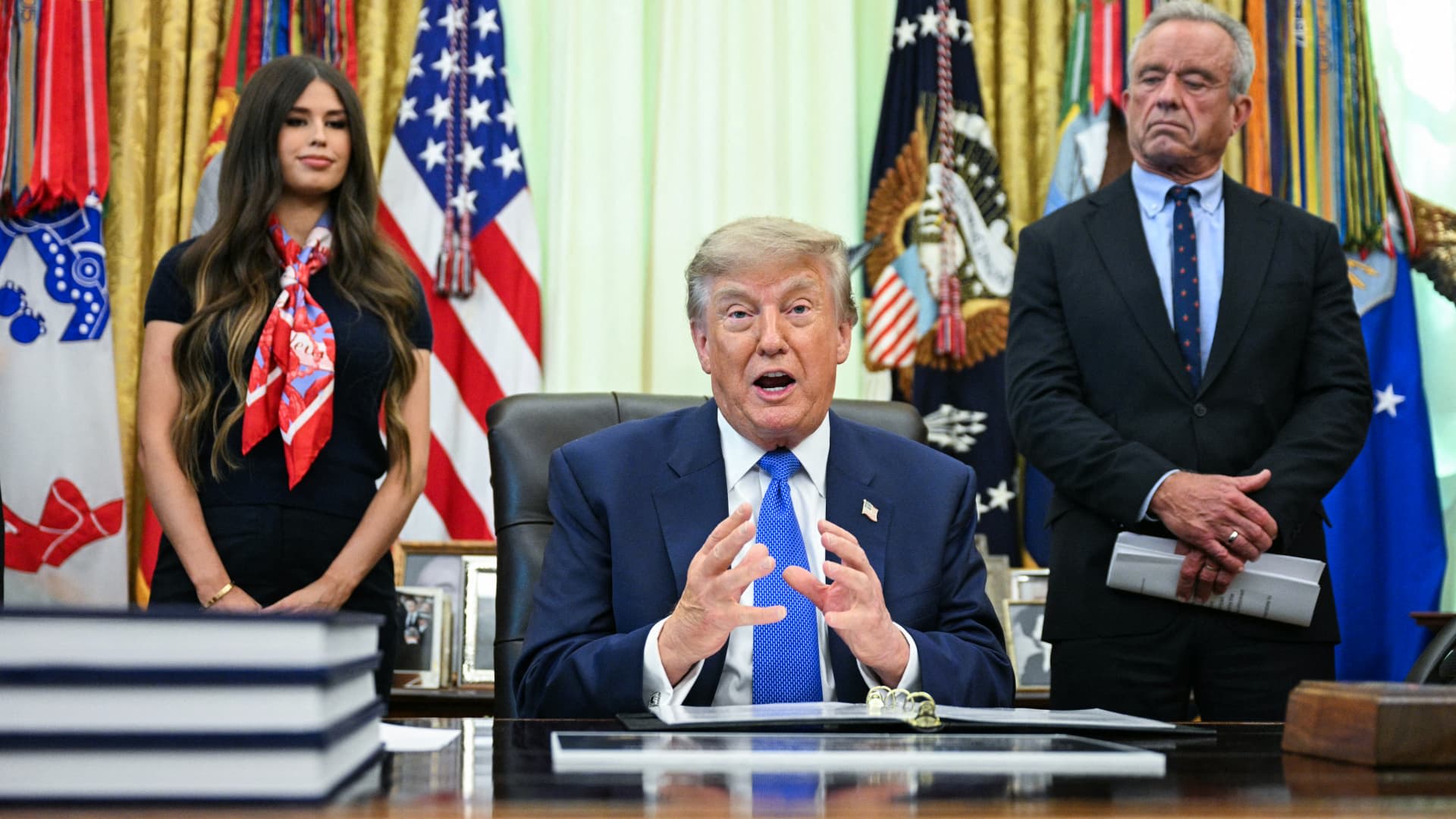
President Trump has signed an executive order aimed at reducing the recommended number of childhood vaccines and splitting the MMR shot. The policy, supported by HHS Secretary Robert F. Kennedy Jr., relies on debunked claims linking vaccines to autism.
Executive Order Reshapes Childhood Immunization Policy
On August 10, 2026, President Donald Trump signed a significant executive order in the Oval Office, fundamentally altering federal recommendations for childhood vaccinations. The directive mandates a reduction in the number of recommended vaccines from the current 18—as established by the American Academy of Pediatrics—to 11. Furthermore, the order calls for the deconstruction of the combined measles, mumps, and rubella (MMR) vaccine, recommending that these immunizations be administered as separate shots across multiple medical visits.
The Role of HHS Secretary Robert F. Kennedy Jr.
The policy shift is being spearheaded by Secretary of Health and Human Services Robert F. Kennedy Jr., a figure long identified with vaccine skepticism. His appointment and subsequent influence over the Department of Health and Human Services have signaled a pivot in public health philosophy. The executive order is framed by the administration as a return to a simpler era of pediatric care, which the President claims will lead to better health outcomes for children, despite the lack of clinical evidence supporting this assertion.
Scientific Context and Debunked Claims
The foundation of this executive order rests upon claims that have been extensively studied and refuted by the global scientific community. President Trump explicitly linked the current vaccination schedule to the prevalence of autism, a correlation that has been debunked by numerous peer-reviewed studies. Furthermore, the administration’s concern that the current schedule “overwhelms” the immune system contradicts established immunological science, which indicates that children's immune systems are capable of handling the antigens present in the existing vaccine schedule.
Implications for Public Health Infrastructure
By moving to split the MMR vaccine and reducing the total number of recommended shots, the administration is effectively altering the standard of care for pediatric medicine in the United States. Public health experts have expressed concern that this move could complicate the logistical delivery of healthcare and potentially lead to lower compliance rates as the number of required doctor visits increases. The shift represents a move away from the consensus-based recommendations traditionally issued by federal health agencies.
Future Trends and Societal Impact
Looking forward, this policy creates a significant tension between federal executive authority and the established guidelines of pediatric professional organizations. As states and medical providers navigate these new federal recommendations, the divide between administrative policy and clinical evidence is likely to widen. The long-term impact on herd immunity and the prevalence of preventable childhood diseases remains a subject of intense scrutiny by the medical community, as the nation enters a new phase of vaccine policy influenced by political rather than epidemiological guidance.
Multiple Citing Sources