Is a Stock Market Crash Likely Under President Donald Trump? History Weighs In With an Answer Wall Street May Not Like.
Source Entity
Yahoo Finance
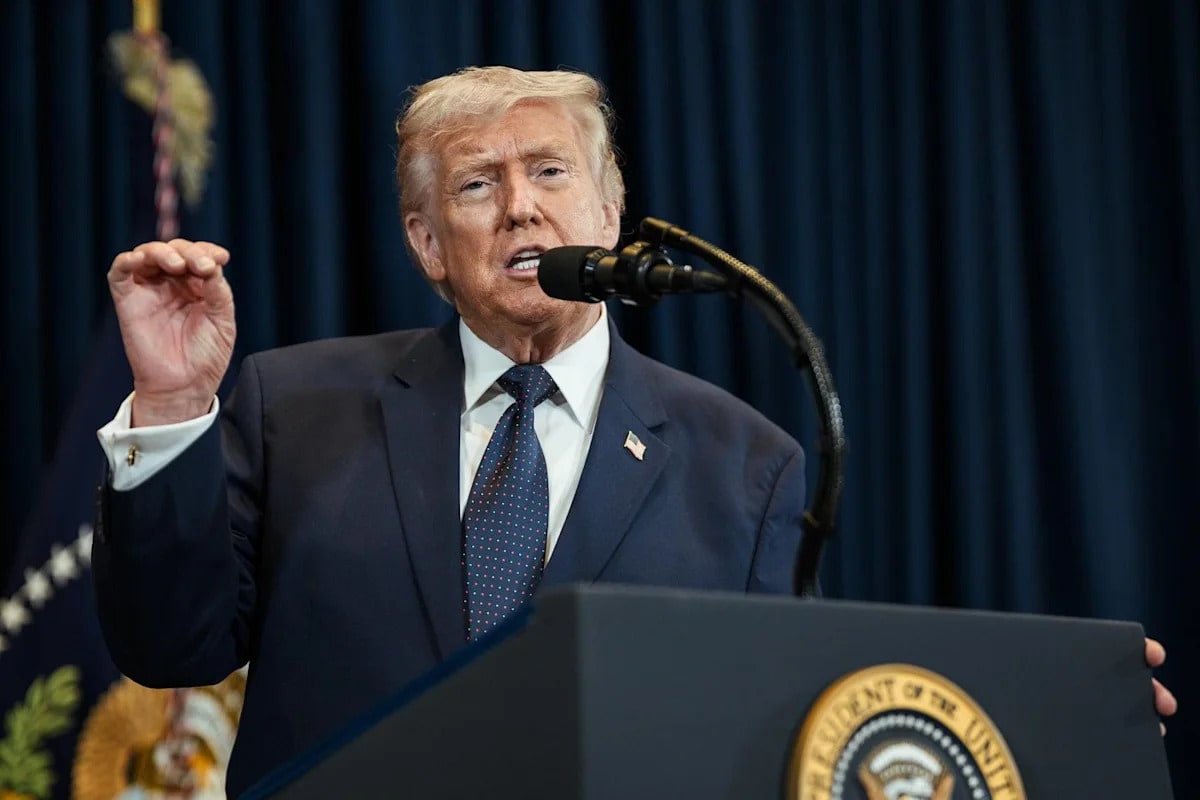
President Donald Trump's tariff policies have fueled intense stock market volatility, despite historical trends showing strong overall returns during his tenure. Investors currently face a complex landscape characterized by geopolitical tensions, trade wars, and concerns over an potential AI bubble.
The Paradox of Trump-Era Market Volatility
President Donald Trump’s tenure has been defined by a unique paradox: while the stock market has consistently delivered outsize returns compared to historical averages dating back to the late 1890s, the environment remains exceptionally difficult for investors to navigate. The core of this challenge lies in the unpredictable nature of his tariff policies, which have triggered multi-trillion-dollar swings in market valuation. A prime example occurred following the April 2025 'Liberation Day' tariff announcement, which saw the S&P 500 plummet 4.8% in a single session, driven largely by a sharp correction in the 'Magnificent Seven' technology giants.
The Shift Toward Micro-Volatility
While the broader indices often recover with surprising speed—as seen when the markets erased the April 2025 losses within just six trading days—the underlying structure of market risk has fundamentally changed. Volatility is no longer uniform; it has migrated from the index level down to individual stocks. Data from CBOE Global Markets reveals that the gap between average single-stock volatility and index volatility reached an all-time high of 31% in July 2026. This suggests that while the 'market' may appear resilient, individual investors are experiencing a level of whiplash that makes long-term positioning increasingly perilous.
Historical Context and Policy Drivers
To understand the current bull market, one must look back at the structural changes initiated during Trump’s earlier political career, specifically the Tax Cuts and Jobs Act of 2017. By permanently lowering the peak marginal corporate income tax rate to 21%, the administration provided a massive tailwind for corporate buybacks and earnings growth. This policy, combined with the organic evolution of artificial intelligence, created a powerful engine for growth that has largely sustained investor optimism despite the periodic shocks introduced by trade protectionism.
The Confluence of Macroeconomic Headwinds
As we look toward the seasonal pressures of September—historically the weakest month for equities, often referred to as the 'September Effect'—the market is facing a convergence of unprecedented challenges. Beyond the traditional seasonal weakness, investors are grappling with sticky inflation, rising energy costs, and high yields on U.S. Treasury bonds. These economic pressures are being exacerbated by geopolitical instability, including a trade war with Canada and an active conflict between the U.S. and Iran, all while the specter of ballooning national debt looms over the fiscal landscape.
Future Trends and Investor Outlook
Looking ahead, the market remains caught between the promise of technological innovation and the reality of policy-induced uncertainty. Fears regarding the sustainability of the AI bubble continue to influence investor sentiment, mirroring historical patterns of speculation. As analysts look for signals similar to the 2009 'Double Down' indicators that preceded the rise of companies like Nvidia, the market is signaling a return to 'total conviction' strategies. However, given the current volatility landscape, investors must balance the potential for high rewards against a volatile, policy-driven environment that is increasingly difficult to forecast.
Multiple Citing Sources