3-billion-year-old Lalbagh rock at risk from proposed Hebbal tunnel, warns GSI
Source Entity
The Indian Express
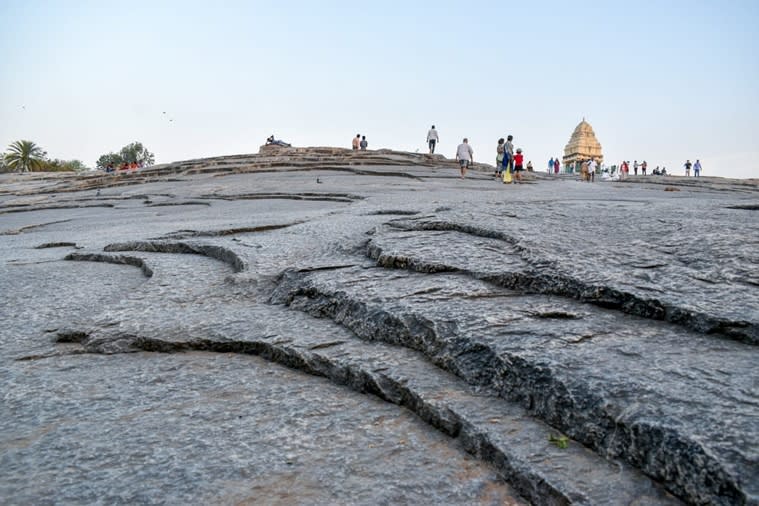
The Geological Survey of India has warned the Karnataka High Court that a proposed 16.7-km tunnel in Bengaluru could jeopardize a 3-billion-year-old geological monument. The project's tunnel boring shafts are slated for excavation dangerously close to the fragile Peninsular Gneiss formation in Lalbagh.
The Geological Crisis Beneath Lalbagh
The proposed 16.7-km Hebbal underground tunnel project in Bengaluru has hit a significant legal and scientific roadblock. The Geological Survey of India (GSI) has officially alerted the Karnataka High Court that the construction plans threaten the integrity of the Peninsular Gneiss rock formation located within the historic Lalbagh Botanical Garden. This formation, estimated to be over 3 billion years old, is not merely a local landmark but a designated Geological Monument of immense scientific value, representing the foundational crust of the Indian subcontinent.
Scientific Significance of the Peninsular Gneiss
To understand the gravity of the GSI's warning, one must appreciate the geological rarity of the site. The Peninsular Gneiss is a complex of granitic rocks that serves as a chronological record of Earth’s early history. By being classified as a Geological Monument, it is legally and scientifically protected as a site of irreplaceable heritage. Any structural disturbance caused by modern engineering, such as heavy tunnel boring, risks permanent damage to this ancient crustal record, potentially erasing billions of years of geological data that researchers rely upon to understand planetary evolution.
Engineering Risks and Urban Planning
The GSI’s intervention stems from a detailed analysis of the project's technical documentation, specifically the Detailed Project Report (DPR). The agency highlighted that the placement of shafts for Tunnel Boring Machines (TBMs) is fundamentally incompatible with the preservation of the monument. Digging in such close proximity to the gneiss formation introduces risks of vibrations, soil displacement, and structural destabilization that could lead to irreversible fracturing of the rock face, rendering the protective status of the site moot.
Legal Implications and the PIL Process
This dispute has been brought to the forefront through a Public Interest Litigation (PIL) filed by actor-activist Prakash Belawadi. The legal battle underscores a growing tension in rapidly urbanizing Indian cities between the demand for advanced infrastructure and the duty to preserve environmental and historical heritage. The Karnataka High Court is now tasked with weighing the necessity of the 16.7-km tunnel against the non-negotiable preservation of a site that predates the existence of complex life on Earth.
Future Trends in Infrastructure Development
This incident serves as a critical case study for future urban planning projects in India. As cities like Bengaluru expand, the intersection of deep-tunnel infrastructure and fragile geological sites will become increasingly common. The GSI’s involvement sets a precedent that developmental projects must prioritize rigorous geological impact assessments over logistical convenience. Moving forward, authorities will likely be required to integrate more stringent environmental safeguards and potentially reroute major infrastructure to avoid areas of high geological sensitivity.
Conclusion
The warning from the GSI acts as a stark reminder that urban progress cannot occur in a vacuum, especially when it encroaches upon the planet's oldest physical records. While the Hebbal tunnel is intended to alleviate urban congestion, the potential loss of the 3-billion-year-old Peninsular Gneiss represents a sacrifice that the scientific community and heritage advocates are clearly unwilling to accept. The court's decision will be a landmark moment for balancing modern connectivity with the stewardship of Earth's deep history.