Trump threatens ban on US firms building AI data centres overseas
Source Entity
BBC News
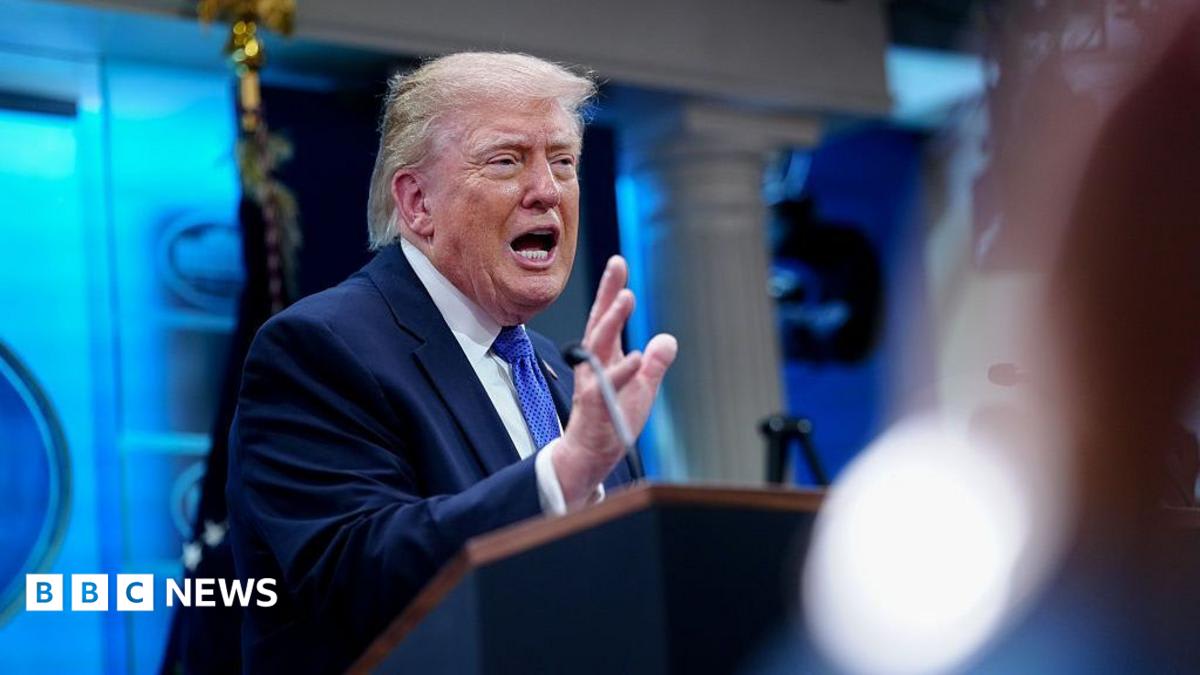
President Trump has threatened a 'tremendous tax' on U.S. firms that build AI data centers abroad, aiming to keep critical infrastructure domestic. The policy announcement was unexpected by his staff and faces significant public opposition due to local concerns over data center placement.
The Strategic Pivot: Protecting U.S. AI Infrastructure
President Donald Trump has announced a significant shift in industrial policy, declaring that U.S. technology companies will be prohibited from building artificial intelligence (AI) data centers in foreign countries. During a recent White House press conference, the President threatened to impose a "tremendous tax" on any firm that chooses to offshore this critical infrastructure. This move reflects a broader administration goal of maintaining U.S. sovereignty over the physical architecture that powers modern AI, effectively framing data centers as national security assets rather than mere commercial real estate.
Policy Formation and Internal Communication
Notably, the announcement appeared to be an ad-hoc policy shift rather than the result of a long-standing interagency process. President Trump candidly admitted during the briefing that the policy was "news" to his own staff, noting he had not yet discussed the specifics with his administration. This spontaneous approach highlights the President’s direct style of governance, though it leaves industry stakeholders and policy analysts waiting for concrete details regarding how such a tax or ban would be legally implemented or enforced.
The Geopolitical Stakes
This policy is deeply rooted in the current geopolitical competition between the United States, China, and Russia. Following a historic trilateral summit, the administration’s rhetoric suggests a fear that if U.S. firms do not build these facilities domestically, "China will take all of them." By insisting that data centers remain within U.S. borders, the administration is prioritizing the prevention of technological leakage and ensuring that the massive computing power required for AI development remains under American jurisdiction.
Domestic Challenges and Public Sentiment
Despite the administration's push to keep infrastructure domestic, the proposal faces a complex landscape of public opinion. Data centers are increasingly viewed as invasive by local communities. Data from the CNBC All-America Economic Survey indicates that 64% of registered voters oppose the construction of AI data centers within 10 miles of their homes. This creates a significant political friction point: while the White House is encouraging communities to host these facilities and negotiate financial benefits with developers, the actual residents often view these structures as detrimental to their local environment.
Future Trends and Corporate Implications
Looking ahead, technology companies now face a dual challenge: satisfying the administration's mandate to keep infrastructure local while navigating the "not in my backyard" (NIMBY) sentiment prevalent in many U.S. regions. The President’s explicit praise for firms like Anthropic suggests that the administration may seek to incentivize "friendly" developers to lead this domestic expansion. However, the success of this policy will likely depend on the government's ability to streamline permitting processes and overcome the significant public resistance that currently threatens to stall the rapid scaling of domestic AI infrastructure.
Multiple Citing Sources