Trump slams Iran and Cuba, boasts about record in United Nations speech
Source Entity
US Top News and Analysis
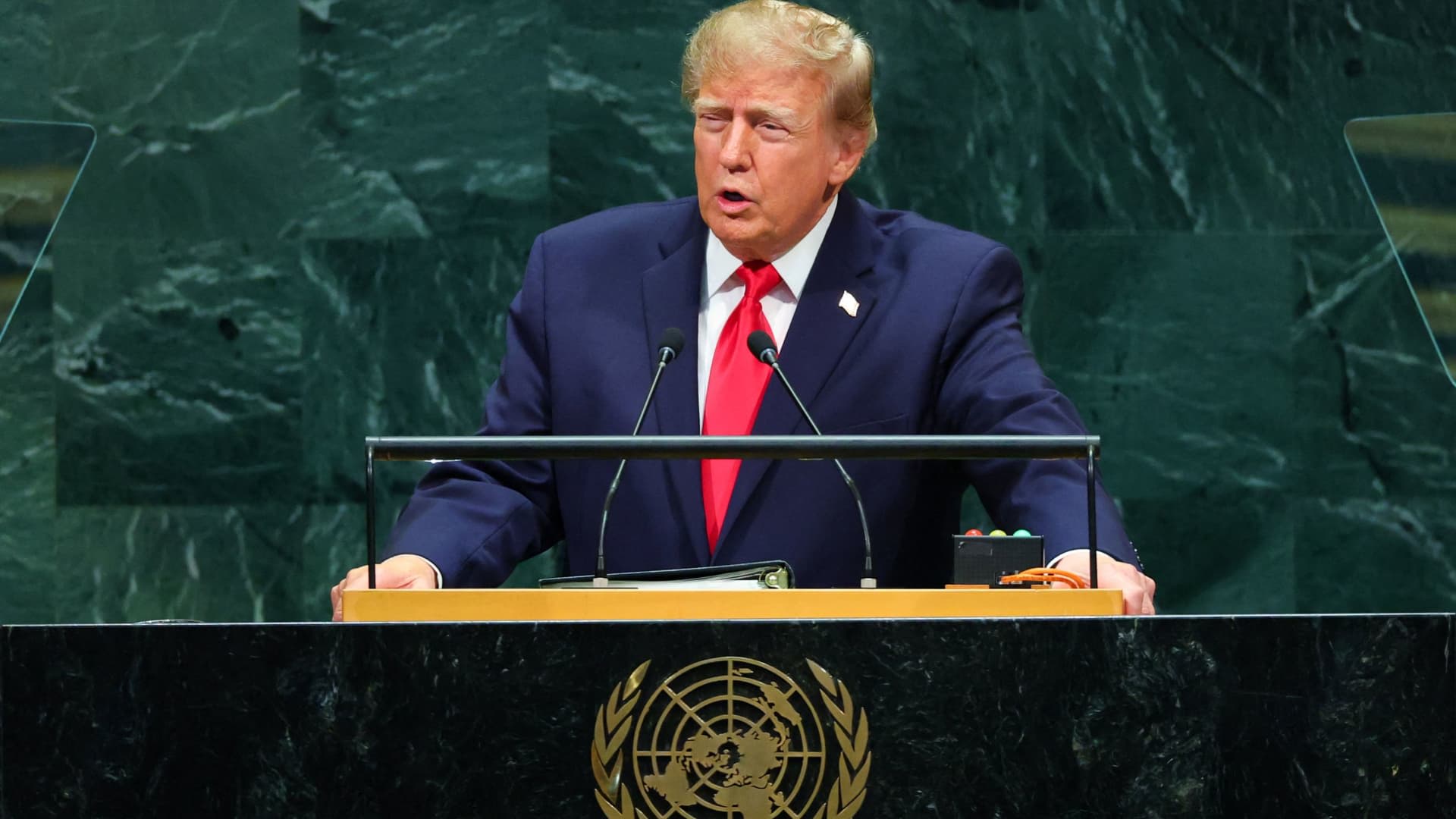
President Trump addressed the UN General Assembly, criticizing Iran and Cuba while highlighting his administration's foreign policy challenges. He discussed the ongoing conflict with Iran, suggesting a resolution may follow the upcoming midterm elections.
Trump Addresses Global Threats at the UN General Assembly
President Donald Trump delivered a high-stakes address at the United Nations General Assembly in Manhattan, framing his administration's foreign policy through a lens of defensive nationalism. By explicitly calling out Iran and Cuba, the President signaled a shift toward a more aggressive posture in the Western Hemisphere, emphasizing that the United States will not tolerate the establishment of foreign threats near its borders. This rhetoric underscores a broader doctrine of hemispheric security that prioritizes American sovereignty and regional stability against perceived external influence.
The Stance on Iran and Nuclear Proliferation
Central to the President’s speech was his defense of the ongoing military engagement with Iran. Trump alleged that the Islamic Republic’s strategic objective involved the development of a sophisticated missile arsenal, which he characterized as a precursor to a rapid pursuit of nuclear weapons. This narrative serves to justify the administration’s current military strategy, framing the conflict as a necessary preventive measure against regional nuclear escalation, despite the absence of a clear resolution after eight months of hostilities.
Strategic Uncertainty and the 'Big Decision'
As the conflict enters its eighth month, the administration faces the critical challenge of determining its next steps. President Trump’s remarks regarding a looming "big decision"—balancing the possibility of a diplomatic deal against the threat of total annihilation—highlight the volatile nature of the current geopolitical standoff. This dual-track approach suggests that the White House is keeping its options open, maintaining maximum pressure while keeping a diplomatic exit ramp visible should the Iranian leadership choose to negotiate.
The Impact of U.S. Domestic Politics on Foreign Policy
Perhaps most notable was the President’s attempt to link international negotiations to the American domestic political calendar. By asserting that Iran is awaiting the results of the Nov. 3 midterm elections before committing to a deal, Trump brought the intersection of domestic partisan politics and global diplomacy to the forefront of the UN stage. His claim that it "doesn't make sense" for Iran to delay suggests an attempt to project confidence that his administration’s leverage will remain potent regardless of the electoral outcome.
Clarifying the Political Landscape
In a moment of rhetorical correction, the President addressed the misconception that his own political future was at stake in the midterms. By clarifying, "What they don't realize is that I'm not running," he sought to insulate his foreign policy authority from the domestic electoral cycle. This maneuver aims to reassure international partners and adversaries alike that his "America First" policy remains the consistent, guiding framework of U.S. global engagement for the remainder of his term.
Conclusion
The President’s UN address serves as a definitive statement of his administration's current foreign policy priorities. By weaving together regional defense in the Western Hemisphere, the existential stakes of the Iranian conflict, and the influence of domestic electoral cycles, Trump has articulated a vision of global engagement that is both assertive and deeply tied to his broader political platform. As the world watches for the "big decision" following the midterms, the international community remains focused on whether this strategy will yield a landmark deal or further escalation.
Multiple Citing Sources