Peace talks over, business mode on: Trump unveils $17 billion Asia deals
Source Entity
ARYAN SINGH
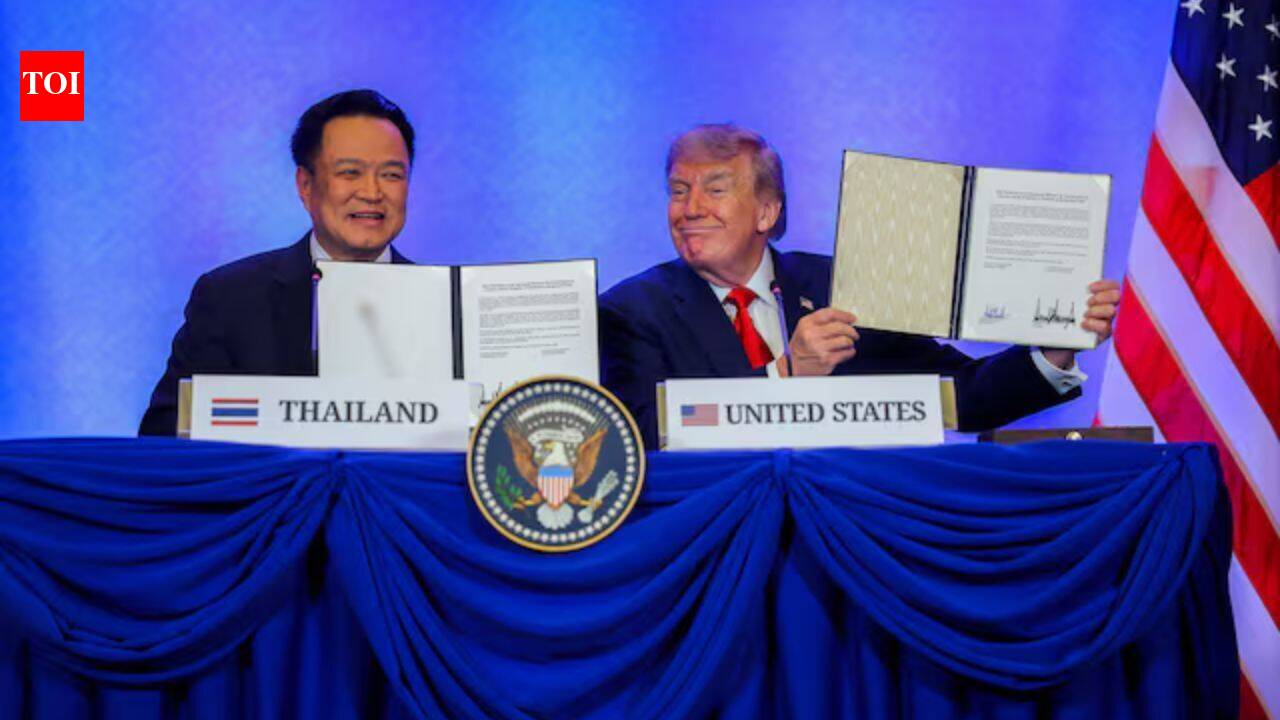
President Donald Trump has announced a $17 billion investment and trade package across Southeast Asia, focusing on defense, aviation, energy, and AI. The deal includes major commitments with the Philippines and Thailand to bolster regional strategic and economic ties.
Strategic Realignment: The $17 Billion Southeast Asia Package
President Donald Trump has pivoted from diplomatic negotiations to a robust economic agenda in Southeast Asia, unveiling a $17 billion package designed to deepen the United States' footprint in the region. This initiative, which encompasses diverse sectors from defense and aviation to energy and artificial intelligence, signifies a strategic recalibration of American foreign policy. By moving beyond traditional diplomatic discourse into tangible commercial and security agreements, the administration aims to solidify its presence in a region that is increasingly central to global geopolitical stability.
The Philippines: A Hub for Aviation and Defense
The centerpiece of this initiative is the Philippines, which has secured the largest portion of the funding at $12 billion. This allocation is primarily directed toward the acquisition of Boeing aircraft and significant military financing. By facilitating these major aviation and defense contracts, the U.S. is not only supporting the modernization of the Philippine military but also anchoring the regional aviation supply chain to American manufacturers, a move that reinforces long-standing security alliances while simultaneously boosting U.S. industrial exports.
Thailand and the Defense-Trade Nexus
Thailand’s involvement highlights a dual-track strategy involving both reciprocal trade negotiations and military hardware acquisition. The interest in procuring High Mobility Artillery Rocket Systems (HIMARS) indicates a clear intent by Bangkok to enhance its operational capabilities through U.S.-made technology. This defense-focused engagement, coupled with the pursuit of a reciprocal trade agreement, suggests a desire to balance economic growth with national security modernization, utilizing the U.S. partnership as a primary vehicle for achieving these domestic objectives.
Regional Expansion into Energy and AI
The scope of the $17 billion package extends beyond traditional security to include Indonesia, Malaysia, and Brunei. These nations are slated to participate in collaborative projects focused on energy infrastructure and artificial intelligence. By integrating these emerging economies into a U.S.-led technology framework, the initiative addresses the growing global demand for AI development and energy security. This move signals a forward-looking strategy that views Southeast Asia not just as a consumer market, but as a critical partner in the future of the digital and green energy economies.
Broader Implications and Future Trends
This massive investment package represents a significant shift toward 'business-first' diplomacy. By bundling defense, commercial aviation, and high-tech investments, the U.S. is creating a multifaceted interdependency that is harder to dismantle than traditional aid packages. Looking ahead, this approach is likely to set a precedent for future regional engagements, where the stability of the Indo-Pacific is increasingly tied to the success of collaborative industrial and technological ventures. The success of this policy will depend on the sustained implementation of these agreements and the ability of Southeast Asian nations to effectively integrate these high-tech systems into their existing infrastructure.