Trump, Putin and Xi release 'peace declaration' after historic meeting
Source Entity
BBC News
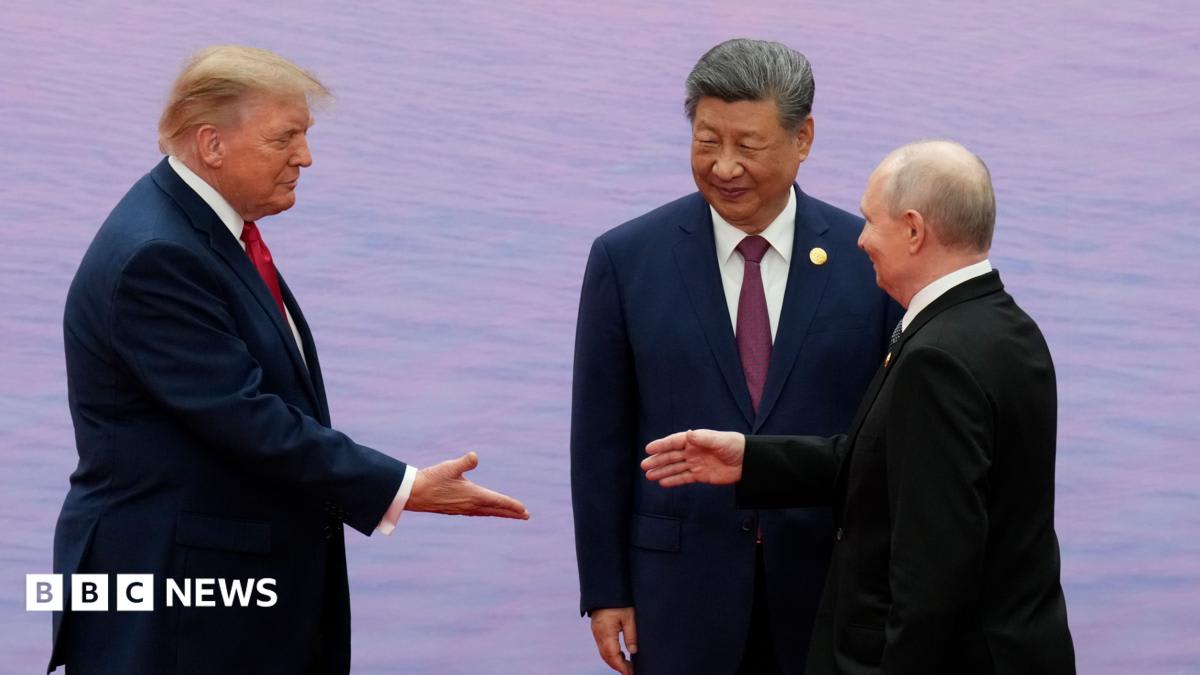
US President Donald Trump, President Xi Jinping, and President Vladimir Putin are convening in Shenzhen during the APEC summit to address nuclear arms control and ongoing global conflicts. The high-stakes meeting aims to navigate trade tensions, tech rivalries, and the resolution of the Ukraine and Iran wars.
A New Geopolitical Pivot: The Shenzhen Summit
The gathering of US President Donald Trump, Chinese President Xi Jinping, and Russian President Vladimir Putin in Shenzhen marks a potential inflection point in 21st-century diplomacy. Occurring alongside the APEC Economic Leaders Summit, this trilateral dialogue seeks to address a fractured international landscape defined by overlapping crises. By bringing together the world's most influential nuclear powers, the meeting reflects an urgent necessity to establish a framework for stability in an era of heightened geopolitical volatility.
The Challenge of Nuclear Proliferation
At the core of the agenda is the daunting task of nuclear arms control. President Trump has identified three-way talks as a primary objective, aiming to bridge the strategic divides between Washington, Moscow, and Beijing. Historically, arms control has been a bilateral endeavor; moving toward a trilateral structure acknowledges China’s growing nuclear capabilities and the necessity of including all major powers to prevent a new, unconstrained arms race. Success here would signal a historic shift in how global superpowers manage their most lethal assets.
Navigating Regional Wars: Ukraine and Iran
Beyond strategic weaponry, the leaders are tasked with addressing two major conflicts: the ongoing war in Ukraine and the nine-month-old conflict involving Iran. These wars have exerted immense pressure on global energy markets and international security architectures. The involvement of these three specific leaders suggests that any path toward de-escalation requires a consensus among the primary backers and influencers of the involved regions, moving beyond localized diplomacy to a 'Yalta 2.0' style of high-level power brokering.
Tech Rivalries and Trade Tensions
The summit also serves as a crucible for economic and technological disputes. With U.S.-China relations under strain—particularly due to Washington’s scrutiny of Nvidia’s chip sales to China—the leaders must navigate the intersection of national security and economic growth. This 'tech race,' combined with broader trade tensions, complicates the diplomatic environment, as each nation seeks to balance competitive domestic agendas with the global need for stable supply chains and economic cooperation.
The Impact of Personal Diplomacy
This meeting highlights the tension between personal relationships and entrenched strategic interests. While the optics of a welcome banquet in Shenzhen suggest a return to high-level engagement, the reality remains that deep-seated geopolitical rivalries persist. Whether the rapport between Trump, Xi, and Putin can overcome the structural friction of their respective national interests is the central question of the summit, with outcomes likely to define the global order for the coming decade.
Conclusion: A Future in Flux
The Shenzhen summit represents a critical attempt to manage an increasingly multipolar world. From the escalation of tensions between China and Japan to the persistent energy market pressures caused by global conflict, the leaders are operating in a high-stakes environment. While the challenges are immense, the very act of these three powers convening to discuss nuclear security and regional stability offers a rare, albeit narrow, window for de-escalating the most dangerous trends in contemporary international relations.
Multiple Citing Sources