Trump, Putin, Xi's Historic Meet In China Today: What's On Agenda?
Source Entity
NDTV News Search Records Found 1000
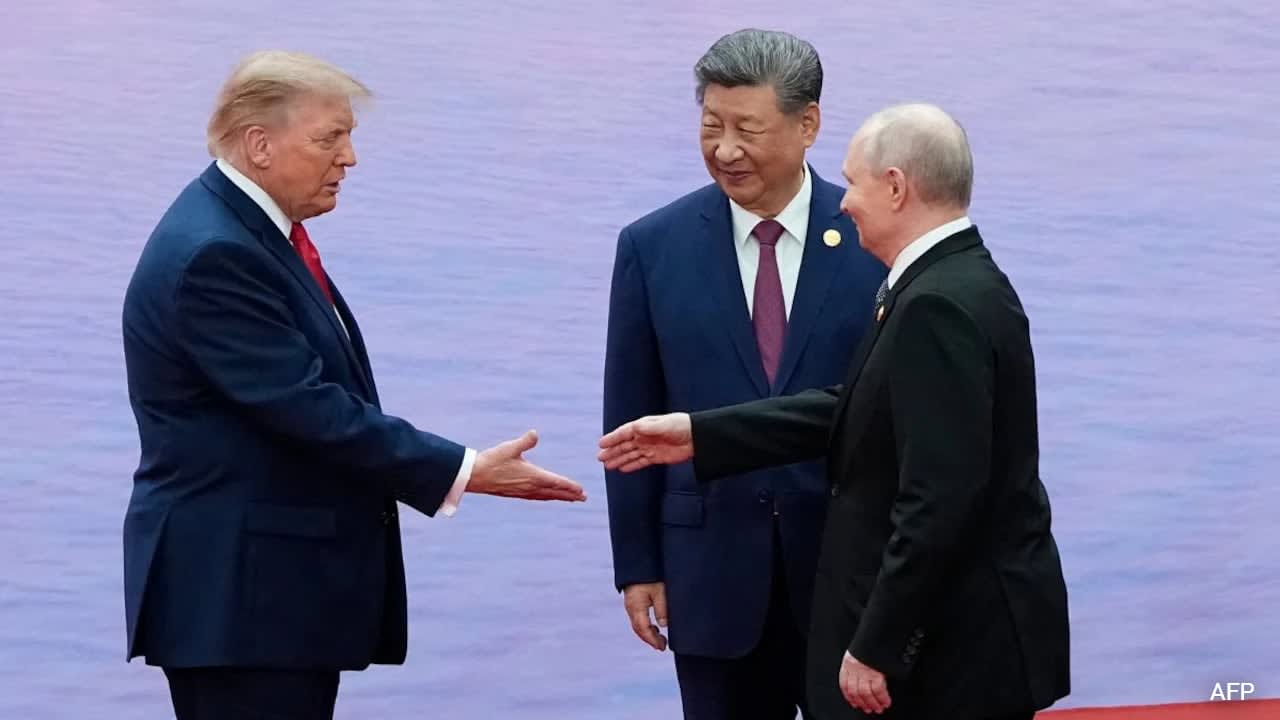
US President Donald Trump, Xi Jinping, and Vladimir Putin are convening in Shenzhen during the APEC summit to address nuclear arms control and ongoing global conflicts. The meeting aims to navigate complex trade tensions and geopolitical instability affecting the international order.
A New Geopolitical Pivot: The Shenzhen Trilateral Summit
The gathering of US President Donald Trump, Chinese President Xi Jinping, and Russian President Vladimir Putin in Shenzhen represents a pivotal moment in contemporary international relations. Scheduled alongside the APEC Economic Leaders Summit, this trilateral engagement seeks to address the most pressing security challenges of the current era, including nuclear proliferation and the escalation of regional wars. By convening in China, these leaders are attempting to address the fraying threads of global stability that have been strained by years of intensifying competition.
The Nuclear Challenge
At the forefront of the agenda is the urgent need for a new framework for nuclear arms control. President Trump has explicitly identified the initiation of three-way talks as a top priority. Historically, arms control has functioned through bilateral treaties between the US and Russia; however, the emergence of China as a significant nuclear actor necessitates a more complex, multilateral approach. The success of these discussions will determine whether the world enters a new era of strategic stability or remains vulnerable to an unchecked arms race.
Navigating Regional Conflicts: Ukraine and Iran
Beyond nuclear concerns, the summit is tasked with addressing two major conflicts: the ongoing war in Ukraine and the nine-month-old war involving Iran. These conflicts are not merely regional; they are primary drivers of global economic volatility, particularly concerning energy prices and supply chain security. The ability of the three leaders to find common ground—or at least a mechanism for de-escalation—will be a critical test of their diplomatic influence and the potential for a new "Yalta-style" consensus on global security.
Trade, Technology, and Structural Rivalries
Adding layers of difficulty to these security dialogues are the persistent trade disputes and technological rivalries that define the current US-China relationship. Washington's ongoing scrutiny of Nvidia’s chip sales to China exemplifies the friction in the tech sector, which has become inseparable from national security concerns. The Shenzhen meeting must reconcile these aggressive economic policies with the necessity of cooperation on global issues, a balancing act that remains inherently precarious.
The Shadow of Escalating Tensions
The context of this meeting is further complicated by rising tensions between China and Japan, as well as the broader instability within the Asia-Pacific region. As the skyline of Shenzhen lights up for the APEC Summit, the optics of the event serve as a backdrop to a world in flux. The participants are not just discussing policy; they are attempting to define the parameters of the global order for the coming decade.
Conclusion: A Future in the Balance
Whether the Shenzhen summit will yield substantive breakthroughs or serve as a symbolic gesture remains to be seen. The convergence of nuclear arms control, war mitigation, and tech-driven trade wars suggests that the international system is at a turning point. If Trump, Xi, and Putin can move beyond their personal strategic interests to forge a collaborative path, the summit could indeed reshape the global order. If not, the world may continue to drift toward greater fragmentation and instability.
Multiple Citing Sources
Verification Required?