Trump Heads To China For Trilateral Meeting With Xi Jinping, Vladimir Putin
Source Entity
NDTV News Search Records Found 1000
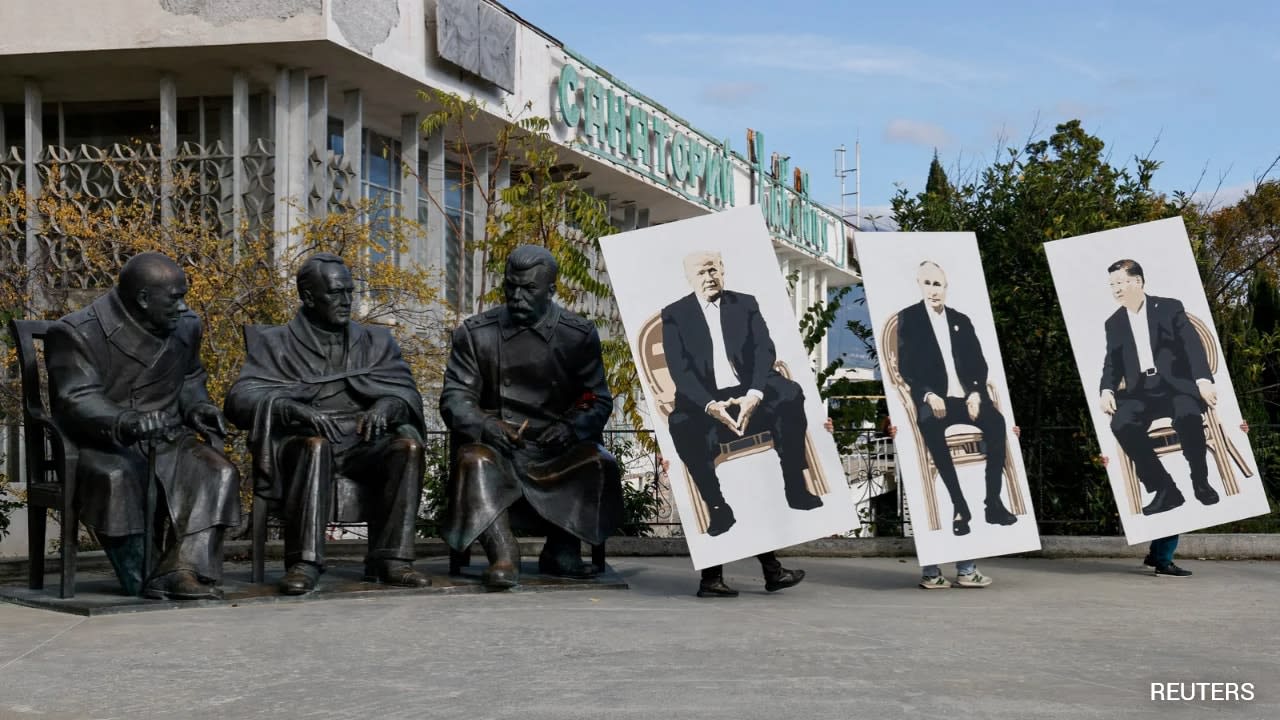
US President Donald Trump, Xi Jinping, and Vladimir Putin are convening in Shenzhen during the APEC summit to address nuclear proliferation and ongoing global conflicts. The high-stakes meeting aims to navigate complex trade tensions, AI competition, and regional wars in Ukraine and Iran.
A New Geopolitical Realignment: The Shenzhen Trilateral
The gathering of US President Donald Trump, Chinese President Xi Jinping, and Russian President Vladimir Putin in Shenzhen marks a watershed moment in contemporary diplomacy. Occurring alongside the APEC Economic Leaders Summit, this trilateral meeting invokes historical parallels to the Yalta Conference, suggesting an ambitious attempt by the world's three most powerful nuclear states to establish a new framework for global stability. As these leaders convene, the primary objective is to address the existential threats posed by nuclear arms proliferation and the destabilizing nature of current global conflicts.
The Nuclear Paradox
Central to the agenda is the daunting challenge of nuclear arms control. President Trump has identified the initiation of three-way talks as a top priority, acknowledging that limiting nuclear arsenals is an inherently difficult task given the diverging strategic interests of Washington, Moscow, and Beijing. Bringing these three powers to a consensus requires overcoming deep-seated mistrust and the reality that each nation views its nuclear deterrent as the ultimate guarantor of national sovereignty in an increasingly multipolar world.
Managing Active Conflicts
Beyond the nuclear sphere, the summit serves as a critical forum for discussing the wars in Ukraine and Iran. With the conflict in Iran entering its ninth month and continuing to exert upward pressure on global energy prices, the urgency for a diplomatic breakthrough is palpable. The involvement of these three specific leaders is essential, as their respective influence over the belligerents could determine whether these conflicts escalate further or move toward a negotiated settlement.
Strategic Competition and Tech Rivalries
The atmosphere in Shenzhen is further complicated by the intersection of personal relationships and rigid strategic interests. The summit occurs against a backdrop of escalating tensions, including China’s strained relations with Japan and the ongoing friction regarding US-China trade. Furthermore, the race for artificial intelligence dominance and Washington's scrutiny of high-end chip sales—specifically concerning companies like Nvidia—adds a layer of technological protectionism that complicates broader diplomatic cooperation.
Implications for the Global Order
This meeting represents more than just a diplomatic photo opportunity; it is a stress test for the global order. As the world watches, the ability of these leaders to pivot from adversarial posturing to collaborative problem-solving will dictate the trajectory of international relations for the coming decade. If successful, the Shenzhen talks could provide a roadmap for managing the complex interplay of security, trade, and technology that defines the 21st century.
Conclusion
Ultimately, the Shenzhen summit serves as a microcosm of the current global condition: fragile, interconnected, and desperate for leadership. Whether these three powers can transcend their immediate rivalries to secure a more stable future remains to be seen. The success of this high-level engagement will likely be measured by the concrete progress made on nuclear non-proliferation and the containment of regional wars that threaten global economic and security stability.
Multiple Citing Sources
Verification Required?