Xi, Putin slam Western protectionism and sanctions as Trump arrives in China for high-stakes talks
Source Entity
The Indian Express
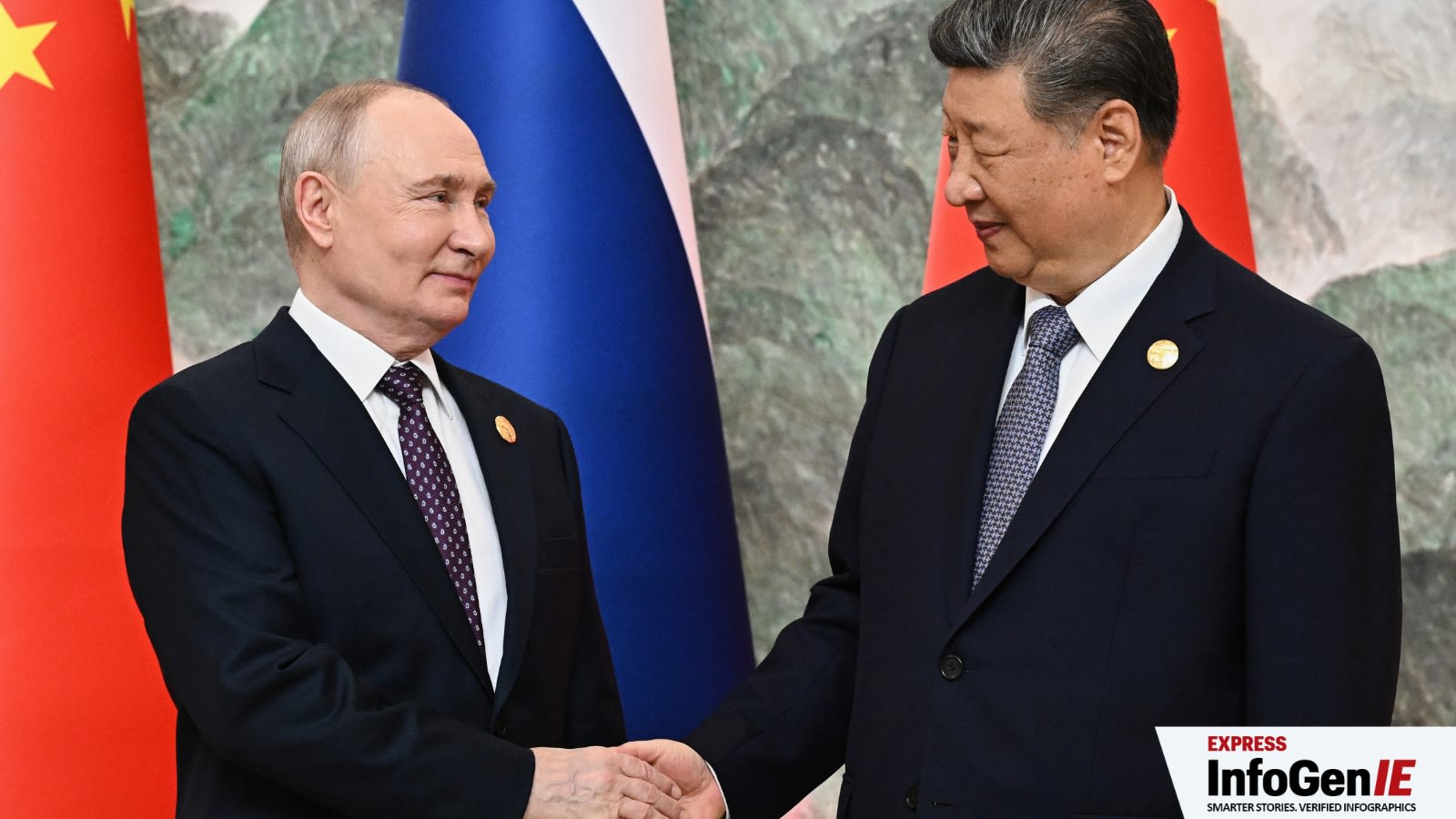
US President Donald Trump, Chinese President Xi Jinping, and Russian President Vladimir Putin are convening in Shenzhen for a high-stakes trilateral summit. The leaders are addressing urgent global crises, including nuclear arms control and ongoing conflicts in Ukraine and Iran.
A New Global Architecture: The Shenzhen Trilateral
The gathering of US President Donald Trump, Chinese President Xi Jinping, and Russian President Vladimir Putin in Shenzhen represents a pivotal moment in contemporary geopolitics. Convening alongside the APEC Economic Leaders Summit, this trilateral dialogue seeks to address a fractured global landscape defined by systemic instability and the erosion of post-Cold War diplomatic norms. By bringing together the world's three most influential nuclear powers, the summit attempts to establish a new framework for security cooperation in an era of heightened great-power competition.
The Nuclear Imperative
At the core of the agenda is the urgent necessity of nuclear arms control. President Trump has identified the negotiation of a three-way arms limitation framework as a primary objective of his diplomatic efforts. As the global non-proliferation regime faces unprecedented strain, the inclusion of China—a nation rapidly modernizing its nuclear arsenal—alongside traditional powers like the United States and Russia, is essential for maintaining strategic stability. This move marks a departure from bilateral treaties of the past, signaling an acknowledgment that modern nuclear deterrence requires multilateral consensus.
Navigating Regional Conflicts
Beyond nuclear strategy, the summit aims to address two active theaters of conflict: the ongoing Russia-Ukraine war and the nine-month-old Iran conflict. The latter has exerted significant pressure on global energy markets, complicating economic recovery efforts for the APEC bloc. The ability of these three leaders to exert influence over these conflicts could determine whether the world descends into further regional proxy wars or finds a path toward de-escalation and diplomatic resolution.
Economic and Technological Rivalries
The atmosphere in Shenzhen is further complicated by deep-seated economic tensions. The U.S.-China trade relationship remains fragile, exacerbated by Washington’s recent scrutiny of chip sales involving companies like Nvidia. This technological rivalry, often dubbed the 'AI race,' creates a dual challenge: it forces leaders to balance national security interests in semiconductor supply chains with the desire for global economic integration. The Shenzhen talks must reconcile these competitive impulses with the necessity of maintaining a functioning global trade order.
Historical Parallels and Future Implications
Drawing comparisons to the Yalta Conference, observers are questioning whether this meeting will lead to a 'Yalta 2.0'—a new division of global spheres of influence. While the historical context of Yalta involved the post-WWII reconstruction of a shattered world, the Shenzhen meeting faces a more interconnected but deeply polarized reality. The personal dynamics between the three leaders will be tested against the rigid strategic interests of their respective nations.
Conclusion
Ultimately, the success of this summit will be measured by its ability to provide a roadmap for crisis management. As the Asia-Pacific region faces rising tensions between China and Japan alongside broader global instability, the Shenzhen meeting serves as a crucial pressure valve. Whether these leaders can move beyond rhetoric to establish concrete mechanisms for conflict resolution and arms control will define the trajectory of global diplomacy for the remainder of the decade.
Multiple Citing Sources