Trump shakes hands with Putin and Xi ahead of historic talks in China
Source Entity
BBC News
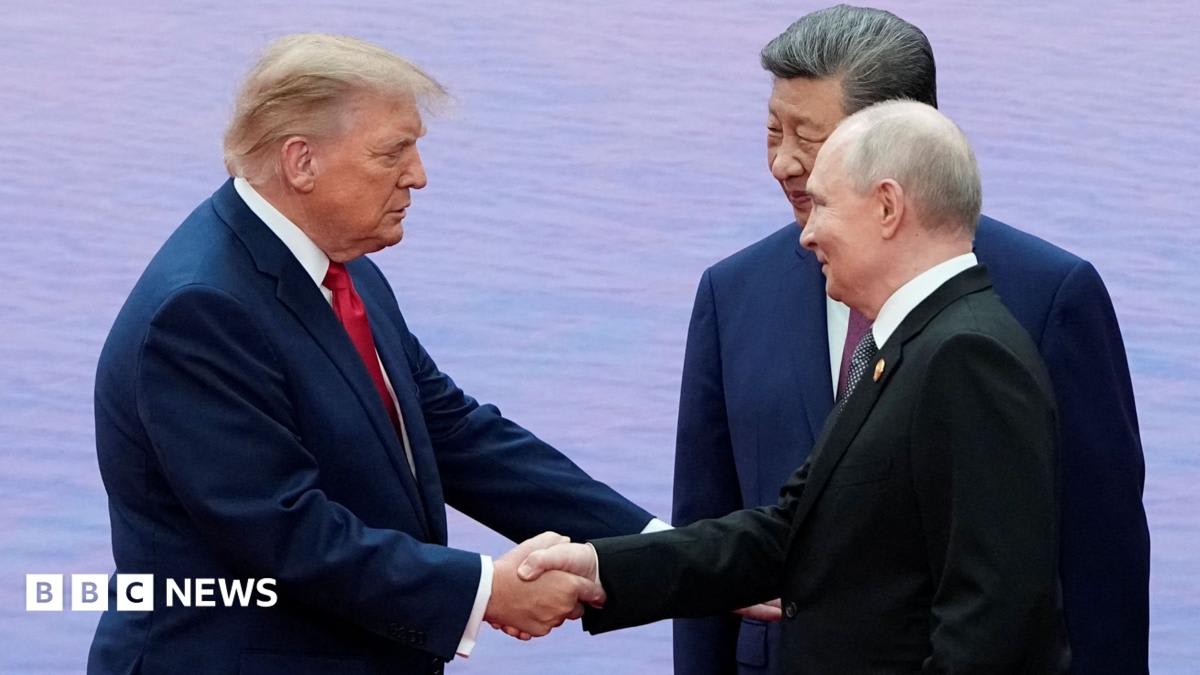
US President Donald Trump, China's Xi Jinping, and Russia's Vladimir Putin are convening in Shenzhen for a high-stakes trilateral summit. The leaders are addressing critical global issues, including nuclear arms control, regional conflicts in Ukraine and Iran, and intensifying trade and technology rivalries.
A New Global Architecture: The Shenzhen Trilateral Summit
The gathering of US President Donald Trump, Chinese President Xi Jinping, and Russian President Vladimir Putin in Shenzhen marks a potential turning point in modern geopolitics. Occurring on the sidelines of the APEC Economic Leaders Summit, this trilateral engagement is being viewed by analysts as a modern-day attempt to calibrate the global order, drawing historical comparisons to the Yalta Conference. As the world navigates a polycrisis environment, the ability of these three powers to find common ground will dictate the stability of the international system for the coming decade.
The Nuclear Conundrum
At the forefront of the agenda is the urgent need for nuclear arms control. President Trump has identified the commencement of three-way talks as a primary objective of his visit. The challenge remains significant; previous arms control frameworks were largely bilateral, involving only the United States and Russia. Integrating China into this architecture, given its growing strategic arsenal, is a complex diplomatic hurdle that requires balancing national security interests with the global necessity of non-proliferation.
Navigating Regional Conflicts
Beyond nuclear security, the summit serves as a critical venue for addressing the ongoing wars in Ukraine and Iran. The conflict in Iran, now entering its ninth month, continues to exert significant pressure on global energy markets, complicating economic recovery efforts. Simultaneously, the Russia-Ukraine war remains a primary point of contention. The trilateral format provides a unique, albeit difficult, opportunity for the leaders to leverage their respective influence to seek de-escalation strategies in these volatile regions.
Trade, Technology, and Strategic Rivalry
Underpinning the diplomatic discussions are deep-seated trade and technological disputes. US-China relations remain strained, exacerbated by recent Washington scrutiny regarding Nvidia chip exports to China. These tech-centric rivalries, coupled with escalating tensions between China and Japan, create a precarious backdrop for the APEC summit. The leaders must navigate these economic friction points to prevent further fragmentation of the global market.
Personal Diplomacy vs. Strategic Reality
While the meeting features the personal engagement of Trump, Xi, and Putin—symbolized by the welcome banquet in Shenzhen—the reality of their strategic interests cannot be ignored. The shift from bilateral competition to a trilateral dialogue reflects a world where power is increasingly multipolar. The success of this summit will not be measured by immediate resolutions, but by the establishment of a framework that allows for sustained communication between these three influential actors.
Future Implications for Global Order
The Shenzhen summit signifies a departure from traditional post-Cold War diplomatic norms. Whether this meeting leads to a 'Yalta 2.0' remains to be seen, but the intent to address systemic threats collectively is clear. If the leaders can successfully manage the immediate pressures of nuclear proliferation and regional warfare, they may set a new precedent for how major powers interact in an era of heightened economic nationalism and technological competition.
Multiple Citing Sources