Watch: Trump helps Chinese President Xi Jinping hop on escalator at APEC Summit
Source Entity
Latest News: Todays Latest News Headlines from India & World | Hindustan Times
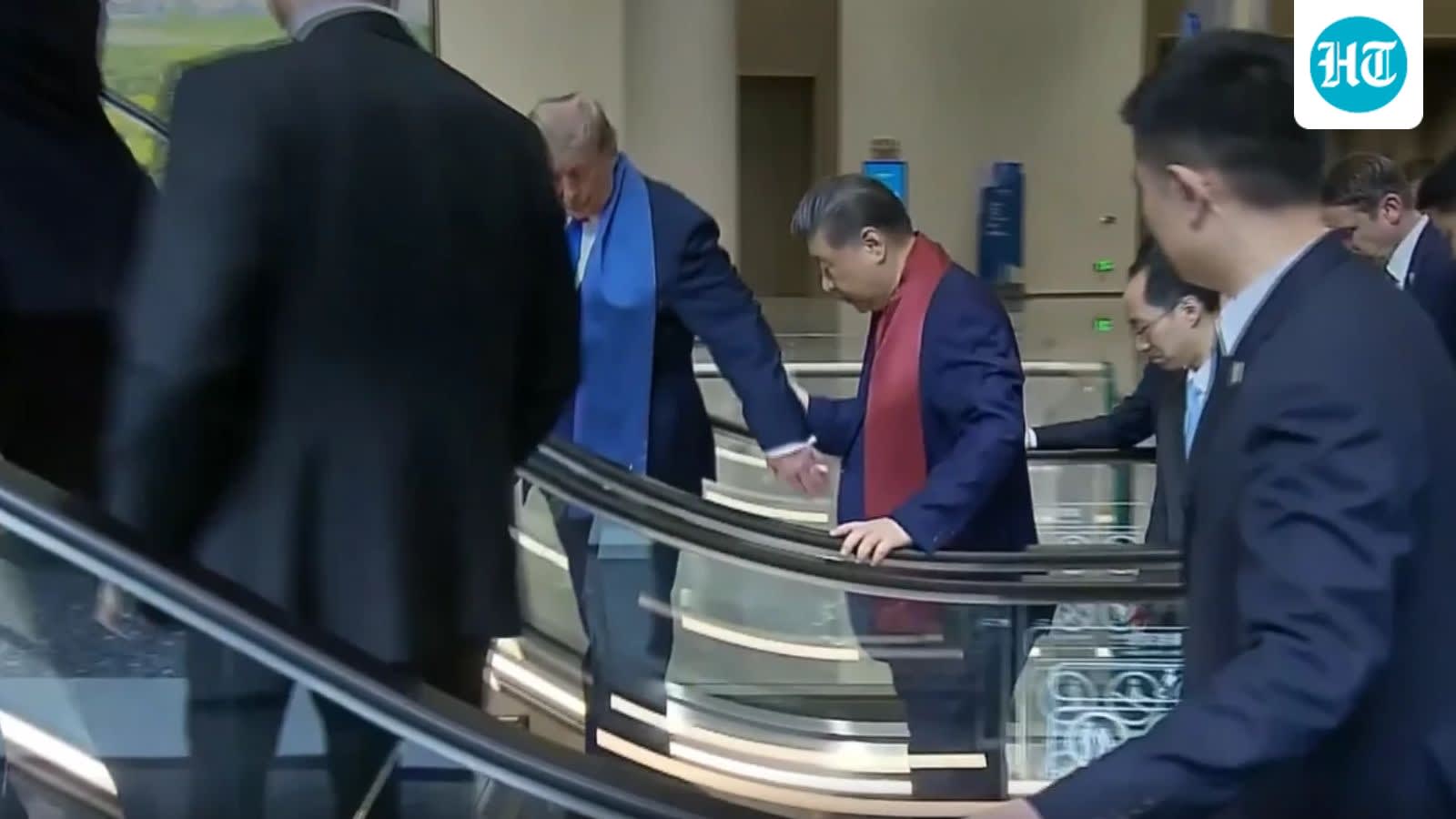
US President Donald Trump, Xi Jinping, and Vladimir Putin are convening in Shenzhen during the APEC summit to address nuclear arms control and ongoing regional conflicts. The high-stakes meeting aims to navigate complex geopolitical tensions, including the wars in Ukraine and Iran, alongside trade and technology rivalries.
A New Geopolitical Pivot: The Shenzhen Trilateral Summit
The gathering of US President Donald Trump, Chinese President Xi Jinping, and Russian President Vladimir Putin in Shenzhen, China, represents a potential inflection point in modern diplomacy. Taking place alongside the APEC Economic Leaders Summit, this trilateral engagement seeks to address the most destabilizing factors currently facing the international community. By bringing together the leaders of the world's three most influential powers, the summit attempts to establish a framework for dialogue in an era defined by multipolarity and heightened strategic friction.
The Nuclear Conundrum
At the core of these discussions is the pressing challenge of nuclear arms control. President Trump has identified the negotiation of a three-way arms limitation framework as a primary objective. Historically, nuclear stability was managed through bilateral treaties between Washington and Moscow; however, the inclusion of Beijing is now viewed as essential given the rapid evolution of global strategic capabilities. The difficulty of this task cannot be overstated, as aligning the disparate security requirements of the US, China, and Russia requires a level of transparency that has been largely absent in recent years.
Navigating Global Conflict Zones
Beyond nuclear policy, the leaders are tasked with addressing two major ongoing conflicts: the Russia-Ukraine war and the nine-month-old war in Iran. Both conflicts continue to exert significant pressure on the global economy, particularly regarding energy price volatility and supply chain disruptions. The Shenzhen meeting provides a rare venue for these leaders to engage in direct diplomacy, potentially exploring pathways to de-escalation that have thus far remained elusive in lower-level ministerial talks.
Trade, Tech, and Strategic Rivalry
Economic and technological tensions add a complex layer to these security discussions. With Washington scrutinizing Nvidia’s chip sales to China and broader trade disputes simmering, the intersection of tech security and national security has become a focal point of US-China relations. The summit must navigate these frictions, as the race for AI supremacy and the protection of semiconductor supply chains are now inextricably linked to the broader diplomatic stability of the Asia-Pacific region.
The Shadow of Regional Instability
Contextualizing this meeting is the broader landscape of regional volatility. Beyond the major wars, the escalation of tensions between China and Japan underscores the fragile state of security in the Pacific. The APEC environment, while traditionally focused on economic cooperation, is now overshadowed by these security dilemmas. The leaders’ ability to manage these secondary rivalries will be a critical indicator of whether the Shenzhen meeting can produce substantive, long-term stability or if it will merely serve as a temporary pause in global tensions.
Future Implications for Global Order
Looking ahead, the success of this trilateral summit may determine the trajectory of the 21st-century global order. If the three leaders can bridge the gap between their personal relationships and their nations' strategic interests, it could lead to a more predictable international environment. Conversely, if these talks fail to produce concrete results, the world may face a continued slide into deeper fragmentation, characterized by competing technological blocs and unresolved regional conflicts that threaten global prosperity.
Multiple Citing Sources
Verification Required?