Trump hails Xi meet as ‘very productive’; China President urges greater cooperation on AI
Source Entity
Latest News: Todays Latest News Headlines from India & World | Hindustan Times | Hindustan Times
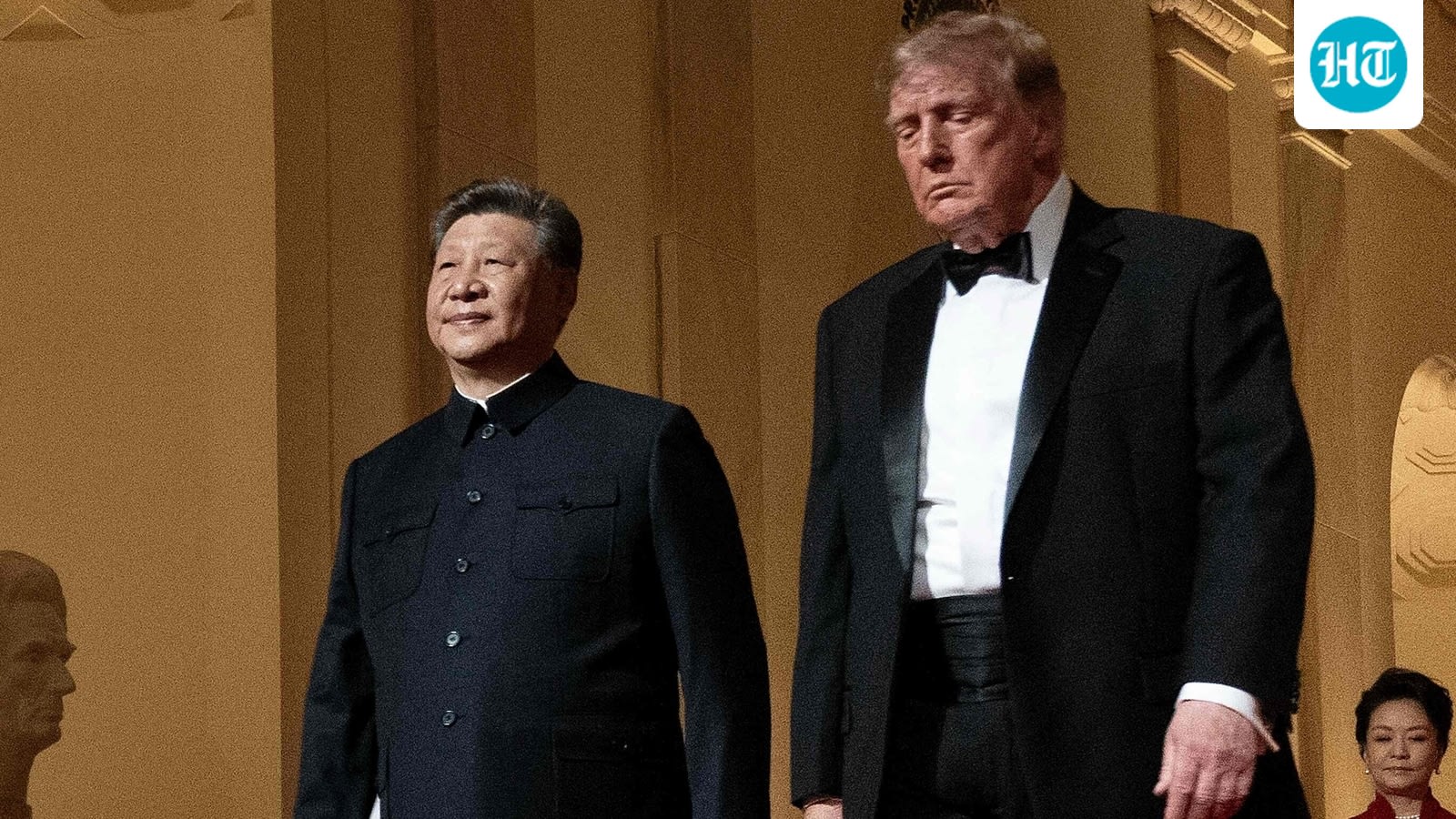
President Trump and President Xi Jinping held a high-stakes summit centered on economic stability, artificial intelligence, and diplomatic symbolism. Amidst the talks, U.S. orders for Chinese goods saw a surprise rebound, signaling corporate efforts to hedge against potential trade volatility.
Economic Resilience and Diplomatic Signaling
In a week defined by high-stakes diplomacy, the summit between U.S. President Donald Trump and Chinese President Xi Jinping has signaled a pivotal shift in the bilateral relationship. A private survey conducted by China Beige Book, which polled 1,296 companies throughout September, revealed a surprising surge in U.S. orders for Chinese goods. This uptick in trade volume, occurring just ahead of the summit, suggests that American businesses are proactively positioning themselves for continued stability between the world’s two largest economies, effectively hedging against potential future trade disruptions.
The Symbolism of State Diplomacy
The summit was punctuated by traditional diplomatic gestures aimed at setting a tone of mutual respect. During a state dinner in Washington, President Trump presented President Xi with a sculpture of a bald eagle. By describing the gift as an embodiment of the "free and soaring spirit of America," Trump utilized the national emblem to project American values. This presentation serves as a classic example of soft-power diplomacy, where the exchange of high-value cultural artifacts is intended to cultivate personal rapport between leaders, even when substantive policy disagreements persist in the background.
AI Governance at the Forefront
Beyond trade and symbolism, the summit addressed the most pressing technological challenge of the era: artificial intelligence. The presence of industry titans—including Nvidia’s Jensen Huang, SpaceX’s Elon Musk, AMD’s Lisa Su, and Apple’s Tim Cook—at the state dinner underscores the administration's recognition that AI governance is now a core component of national security. With executives from OpenAI, Google, and Microsoft also in attendance, the discussions likely moved beyond mere economic cooperation to address the existential risks associated with rapid AI development, which have recently dominated the global geopolitical agenda.
Implications of the Trade Rebound
The reported "surprise" jump in exports to the U.S. provides a concrete metric for the current state of the U.S.-China commercial relationship. The China Beige Book data indicates that China's relative tariff position has improved, allowing for a rebound in shipments on both a yearly and monthly basis. This economic data point is crucial; it suggests that despite the intense rhetoric often associated with U.S.-China relations, the underlying market forces remain highly responsive to perceptions of political stability. Businesses are clearly interpreting the summit as a de-escalation of trade tensions.
Future Trends and Strategic Outlook
Looking ahead, the integration of private industry leaders into presidential summits is likely to become a permanent feature of international relations. The convergence of AI safety concerns and established trade routes means that future policy will be dictated by a tripartite relationship between government regulators, tech innovators, and trade exporters. As the U.S. and China continue to navigate their complex interdependence, the success of these summits will be measured not just by the symbolic gifts exchanged at state dinners, but by the ability of both nations to foster a regulatory environment that supports technological innovation while maintaining economic stability at the Yantian Port and beyond.
Multiple Citing Sources
Verification Required?