Ujjain: Police Appeal For Calm As Clashes Continue Near Place of Worship | HT India
Source Entity
Latest News: Todays Latest News Headlines from India & World | Hindustan Times | Hindustan Times
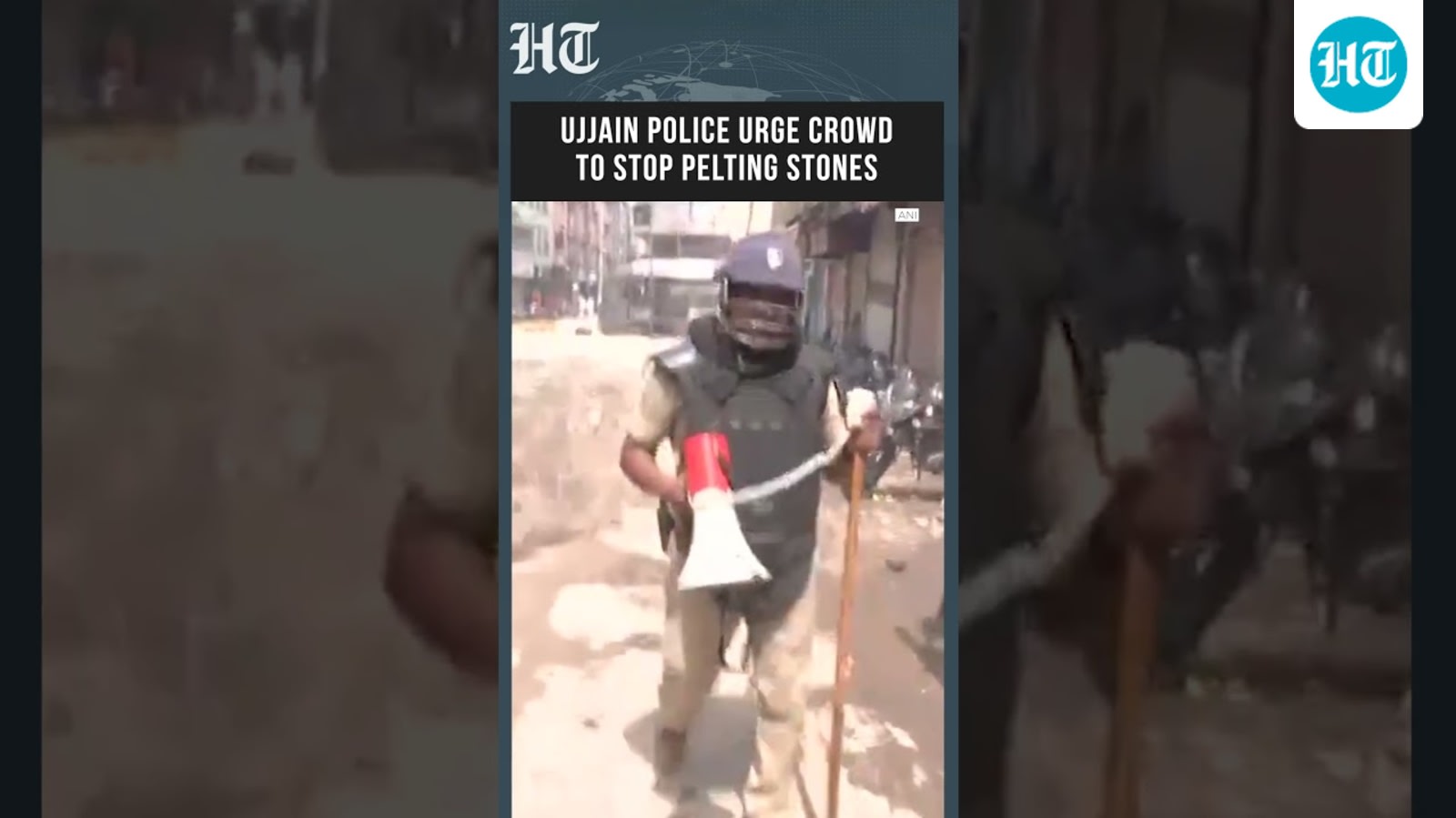
Tensions erupted in Ujjain following the partial demolition of the Shahi Masjid for a road-widening project, leading to stone-pelting and police intervention. Authorities have arrested 15 individuals and are investigating five social media influencers for allegedly spreading inflammatory propaganda online.
Tensions Erupt in Ujjain Over Mosque Demolition
On Monday, the city of Ujjain, Madhya Pradesh, became the site of significant civil unrest following the partial demolition of the 'Shahi Masjid.' The structure was partially removed to facilitate a local road-widening project, a move that triggered immediate resistance from the local community. The situation escalated rapidly as protests transformed into confrontations, necessitating a heavy-handed response from law enforcement to restore order.
The Mechanics of the Conflict
The incident began when a crowd gathered to oppose the demolition drive. According to police reports, the situation turned violent when protesters began hurling stones at security personnel stationed at the site. In response to the violence, which resulted in injuries to several police officers, authorities utilized tear gas shells and conducted a cane charge to disperse the gathering. The unrest continued into the afternoon, characterized by a protest led by local Muslim women demanding an immediate cessation of the demolition activity.
The Role of Digital Incitement
Beyond the physical clashes, the Ujjain administration is focusing heavily on the digital landscape that preceded the violence. The Madhya Pradesh police have identified five local social media influencers who allegedly utilized their platforms to circulate inflammatory content. These individuals have been booked under various legal sections, including those related to promoting enmity between groups, outraging religious feelings, and spreading false information. This suggests a growing trend where localized civic disputes are increasingly amplified by digital actors seeking to polarize public sentiment.
Law Enforcement and Public Safety
In the aftermath of the stone-pelting, the police have taken a firm stance by arresting 15 individuals accused of attempting to disturb the peace. The Kharakua police station has emerged as a central point for the investigation, providing officials with insights into the coordination of the protests. Currently, the administration is maintaining a heavy security deployment to prevent further outbreaks of violence while simultaneously appealing to the public to refrain from further escalation.
Broader Implications and Future Trends
This event highlights the complex intersection of urban development projects and communal sensitivities. When civic infrastructure initiatives, such as road-widening, intersect with religious sites, the potential for friction is high. The Ujjain incident serves as a case study for the risks associated with rapid urbanization in historically sensitive areas. Furthermore, the focus on social media influencers underscores a shift in how authorities manage public order; monitoring the digital 'rumour overdrive' has become as critical as managing the physical crowds on the ground.
Conclusion
The situation in Ujjain remains a point of concern as authorities navigate the delicate balance between completing necessary infrastructure projects and maintaining communal harmony. While the immediate violence has been met with arrests and crowd-control measures, the long-term resolution will depend on the administration's ability to communicate the project's necessity while addressing the grievances of the local population to prevent further exploitation of these tensions by online agitators.
Multiple Citing Sources
Verification Required?