Airlines criticise air traffic control as second glitch causes more disruption
Source Entity
BBC News
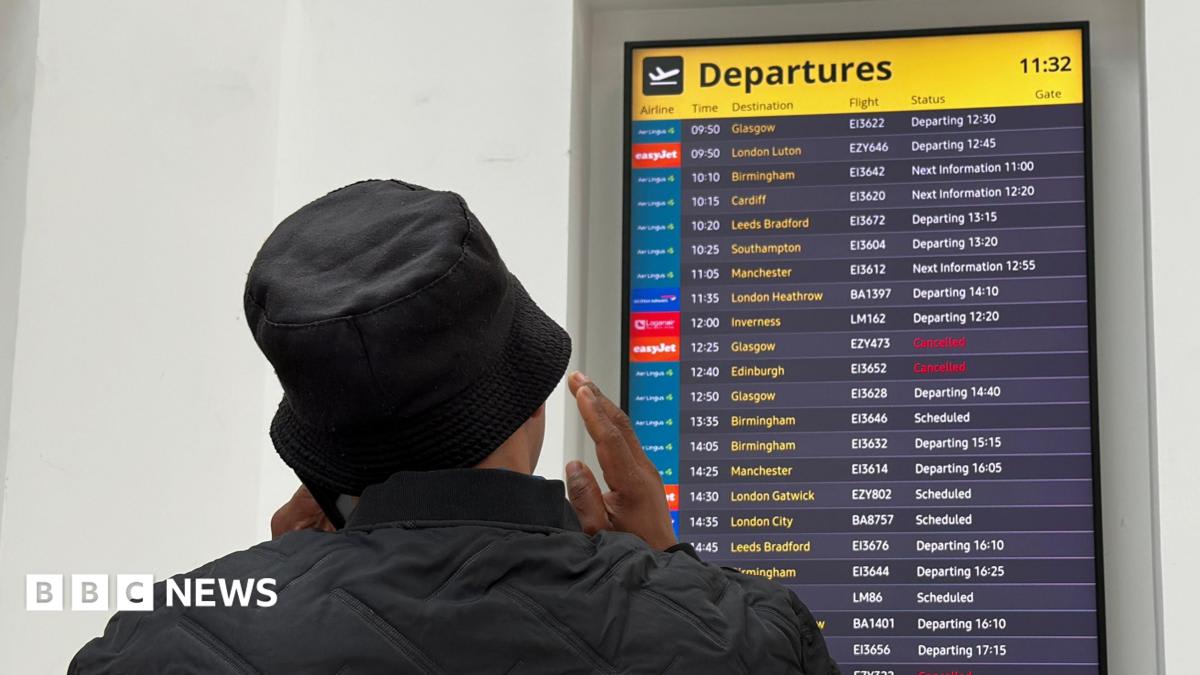
UK airlines have expressed deep concern over the resilience of the National Air Traffic Services (Nats) following a second major technical failure in two weeks. The latest glitch, originating at the Prestwick control center, caused widespread flight delays across Scotland, Northern Ireland, and northern England.
The Fragility of UK Air Infrastructure
The recent disruption within the United Kingdom's air traffic control system, managed by the National Air Traffic Services (Nats), has ignited a firestorm of criticism from major carriers. Following a second technical failure in as many weeks, the aviation industry is raising urgent questions regarding the operational stability and long-term resilience of the nation's critical infrastructure. The incident, which centered on a connectivity issue at the Prestwick facility in Ayrshire, highlights the vulnerability of a system that serves as the backbone for thousands of daily domestic and international flights.
A Crisis of Confidence
The frustration expressed by airlines such as EasyJet and Wizz Air is symptomatic of a broader "national confidence crisis." When the primary service provider responsible for safe and efficient airspace management experiences recurring failures, it undermines the trust necessary for airline scheduling and passenger management. EasyJet’s assertion that these events call into question the resilience of the system suggests that stakeholders are no longer viewing these as isolated incidents, but rather as evidence of systemic fragility that requires immediate, transparent intervention.
Analyzing the Technical Failures
It is imperative to distinguish between the nature of these recent outages. Nats has clarified that the latest issue at Prestwick was a distinct "connectivity issue" unrelated to the earlier, more catastrophic software defect at the Swanwick control center that resulted in the cancellation of 2,000 flights. While Nats maintains that these are separate technical hurdles, the proximity of these events—occurring within a two-week window—suggests that the underlying infrastructure may be struggling under current operational demands or outdated system architectures.
Regional Impact and Operational Strain
The geographic scope of this latest disruption, which disproportionately affected airports in Scotland, Northern Ireland, and northern England, demonstrates how localized technical failures can ripple across an entire national network. Even when a fault is contained at a single site like Prestwick, the interconnected nature of modern air traffic management means that delays quickly compound. For airlines operating on tight turnaround schedules, these interruptions lead to significant logistical challenges, including crew displacement and passenger dissatisfaction.
Future Trends and Necessary Reforms
Looking ahead, the aviation sector faces a critical period of scrutiny. If Nats is unable to demonstrate a robust recovery plan and a strategy for preventing further technical degradation, the industry may see increased pressure for regulatory intervention. The expectation for a seamless, high-availability service is non-negotiable in an era where global connectivity is vital for economic health. Future trends will likely favor increased investment in redundant systems and modernized digital infrastructure to ensure that the UK’s airspace management can withstand the rigors of modern air travel demand.
Conclusion
In summary, the repeated failure of Nats’ systems represents a significant challenge to the UK aviation sector. While technical glitches are an inherent risk in complex systems, the frequency of these disruptions has shifted the narrative from one of "unavoidable accidents" to one of "systemic concern." Restoring confidence will require more than just technical fixes; it will necessitate a comprehensive evaluation of how air traffic control systems are maintained, monitored, and modernized to meet the demands of the future.