Ukraine drone attack sparks fire on Liberian-flagged oil tanker carrying Indian crew
Source Entity
The Indian Express
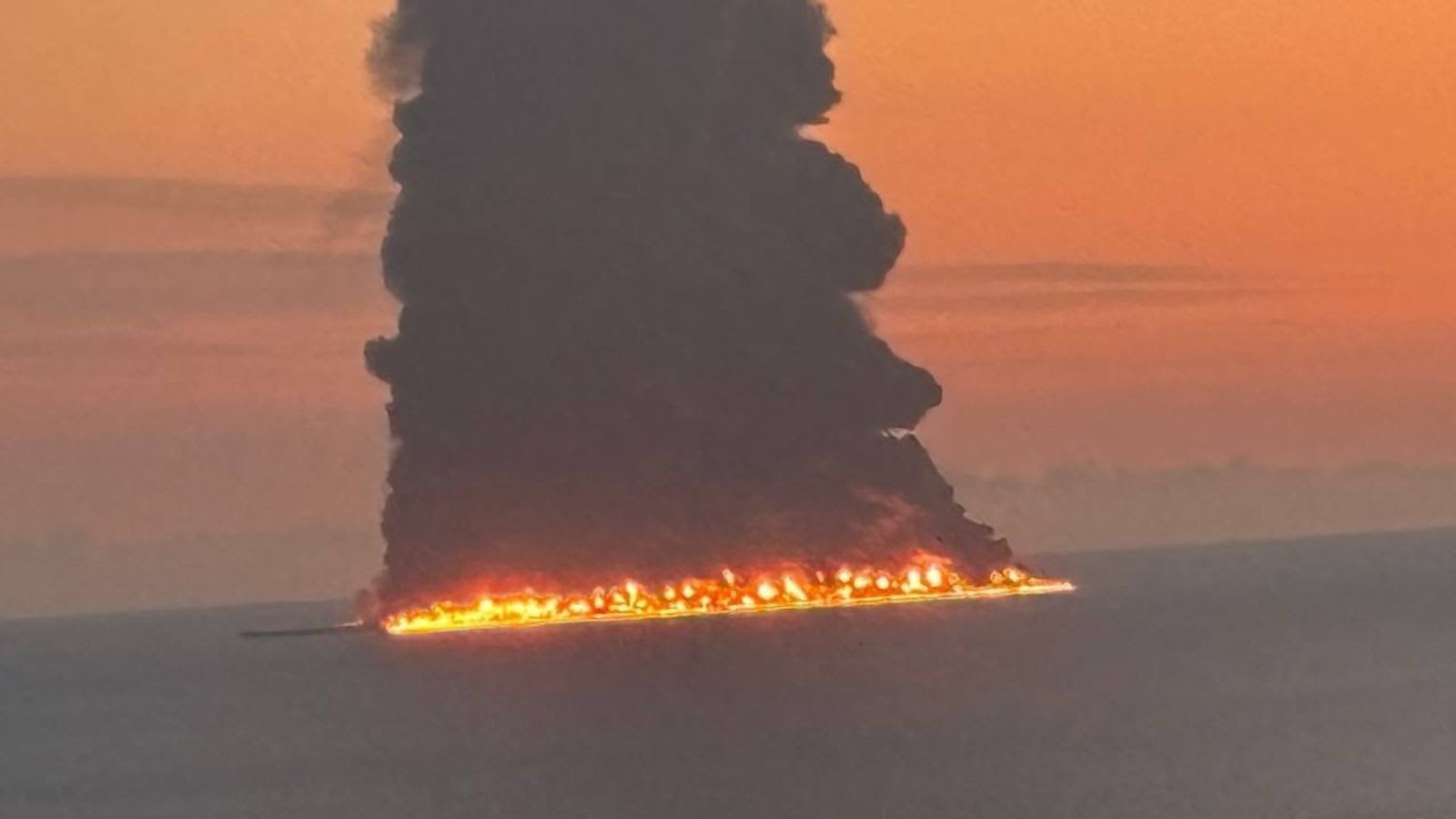
A Ukrainian naval drone attack ignited a fire on a Liberian-flagged oil tanker near Sochi, Russia. All 23 Indian crew members aboard were safely rescued, highlighting the escalating risks to commercial shipping in the Black Sea conflict zone.
The Escalating Maritime Conflict in the Black Sea
On October 6, 2026, the ongoing maritime theater of the Russia-Ukraine war reached a critical juncture when a Liberian-flagged oil tanker was struck by naval drones near the Russian resort city of Sochi. The attack resulted in an intense, visible blaze, with thick plumes of black smoke billowing over the coast. This incident highlights the increasingly volatile nature of the Black Sea, which has become a primary arena for asymmetric warfare since the conflict began in 2022.
Impact on Commercial Shipping and Maritime Safety
The vessel, which was carrying a crew of 23 Indian nationals, became the latest victim of the cross-fire characterizing the region. While the humanitarian outcome was positive—with all crew members successfully rescued without injury—the incident underscores the extreme danger posed to commercial shipping. The use of naval drones, which are relatively inexpensive yet highly effective, has fundamentally altered the security landscape of the Black Sea, making transit hazardous for neutral, international vessels.
Broader Geopolitical Implications
The strike near Sochi occurs against a backdrop of intensifying hostilities between Moscow and Kyiv. Both nations have publicly vowed to escalate their respective strike capabilities, with Russia recently targeting grain vessels near the Romanian coast, an EU member state. This tit-for-tat dynamic suggests that commercial infrastructure is no longer shielded from the broader military ambitions of the belligerents, raising concerns about the potential for further collateral damage to international commerce.
Historical Context of Black Sea Tensions
Since the initiation of the full-scale invasion in 2022, the Black Sea has transitioned from a global trade artery to a high-stakes combat zone. The disruption of trade routes, particularly those essential for the transport of oil and agricultural products, has had global economic consequences. The involvement of a Liberian-flagged ship—a common practice in international shipping—demonstrates that the conflict's reach extends far beyond the immediate Russian and Ukrainian borders, drawing in global maritime interests.
Future Trends and Risks
Looking forward, the reliance on naval drones is likely to continue, as these systems provide both nations with the ability to project power without risking large naval assets. Expert analysis suggests that as long as the conflict remains deadlocked on the front lines, the Black Sea will continue to be a site of strategic sabotage and drone operations. Future maritime logistics will likely require increased insurance premiums, heightened security protocols, and potentially more robust international oversight to prevent further incidents involving civilian crews.
Conclusion
The rescue of the 23 Indian crew members is a fortunate outcome in an otherwise alarming development. As both Russia and Ukraine ramp up their offensive capabilities, the international community must remain vigilant regarding the safety of transit corridors. This incident serves as a stark reminder that the war's impact is not limited to land-based combat, but extends directly into the critical infrastructure of global maritime trade.
Multiple Citing Sources