Ukraine War Drives European Demand For Bigger, Cheaper Missile Arsenals
Source Entity
NDTV News Search Records Found 1000
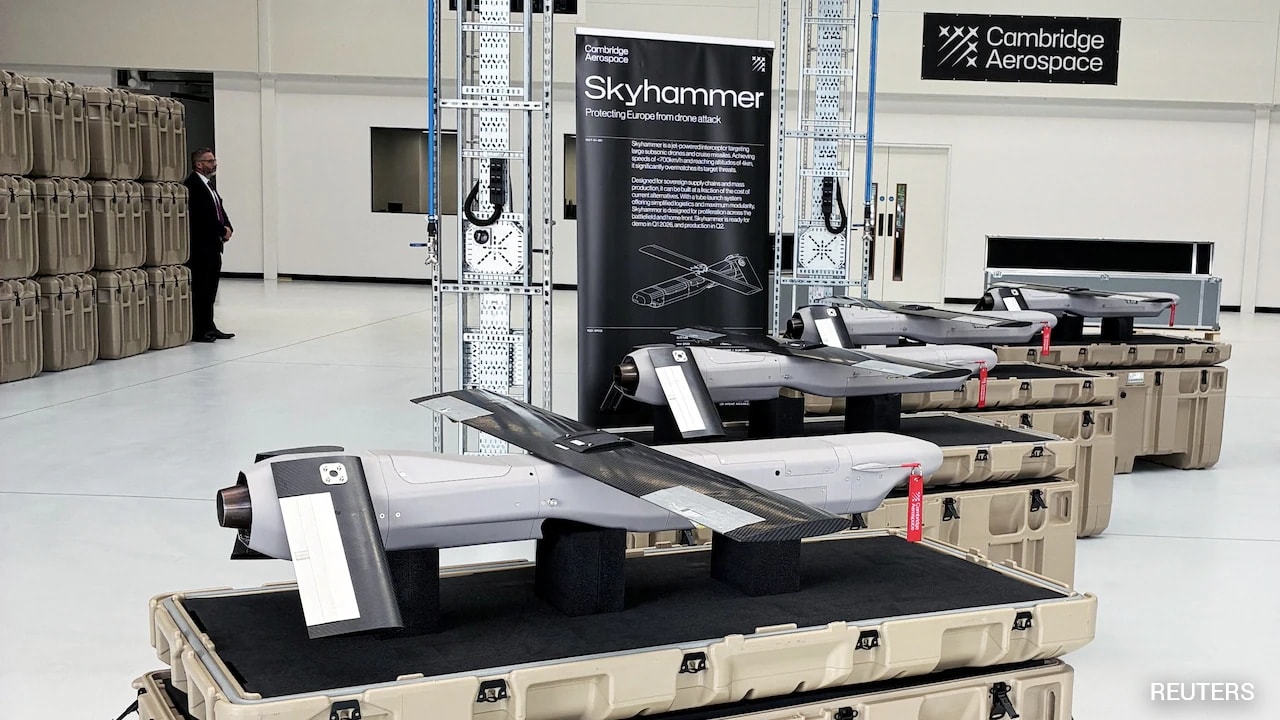
The ongoing war in Ukraine has triggered a significant surge in demand for European missile defense systems. Cambridge Aerospace is responding to this shift by showcasing its cost-effective 'Skyhammer' technology to bolster regional security.
The Strategic Shift in European Defense
The ongoing conflict in Ukraine has fundamentally altered the security architecture of the European continent, forcing a rapid reevaluation of military procurement strategies. As nations scramble to replenish depleted stockpiles and modernize their defensive capabilities, there is an intensifying demand for munitions that are not only effective but also scalable and economically viable. The emergence of the 'Skyhammer' missile system, recently showcased at Cambridge Aerospace’s manufacturing facility in Britain, represents a direct response to this urgent requirement for high-volume, cost-effective defense hardware.
The Rise of Cost-Effective Precision
Historically, the European defense industry has often prioritized highly sophisticated, expensive platforms that require long lead times for production. However, the attrition rates observed in the Ukraine war have demonstrated the critical necessity for a more pragmatic approach. By focusing on systems like the Skyhammer, manufacturers are signaling a pivot toward 'accessible lethality'—a strategy that balances advanced guidance technology with streamlined manufacturing processes. This shift is essential for maintaining a credible deterrent posture in an era of high-intensity, peer-to-peer conventional warfare.
Industrial Scaling and Manufacturing Hubs
Cambridge Aerospace’s decision to highlight its production capacity in Britain underscores the broader trend of revitalizing domestic military manufacturing. For decades, many European nations relied on lean, 'just-in-time' supply chains that proved insufficient when faced with the sudden, massive consumption rates of a major land war. The current push to expand manufacturing facilities is a move toward 'just-in-case' inventory models, ensuring that European defense firms can surge production quickly to meet the demands of NATO allies and regional partners.
Implications for Regional Security
Beyond the technical specifications of systems like the Skyhammer, the broader implication is a more resilient European defense industrial base. The ability to produce larger missile arsenals at a lower price point allows for deeper integration across NATO member states, reducing dependence on long-range supply chains that could be disrupted in a broader conflict. This democratization of high-end weaponry is likely to be a cornerstone of European security policy for the coming decade.
Future Trends in Defense Procurement
Looking ahead, we can expect a continued emphasis on modular design and rapid assembly within the aerospace sector. As technology evolves, the integration of artificial intelligence into guidance systems and the adoption of additive manufacturing techniques will likely further drive down costs while increasing the performance of systems like the Skyhammer. The current focus on quantity and speed does not necessarily signal a departure from quality, but rather an evolution toward a more sustainable and responsive defense ecosystem that can adapt to the unpredictable nature of modern geopolitical threats.
Verification Required?