Watch: UN delegates walk out of Netanyahu speech
Source Entity
BBC News
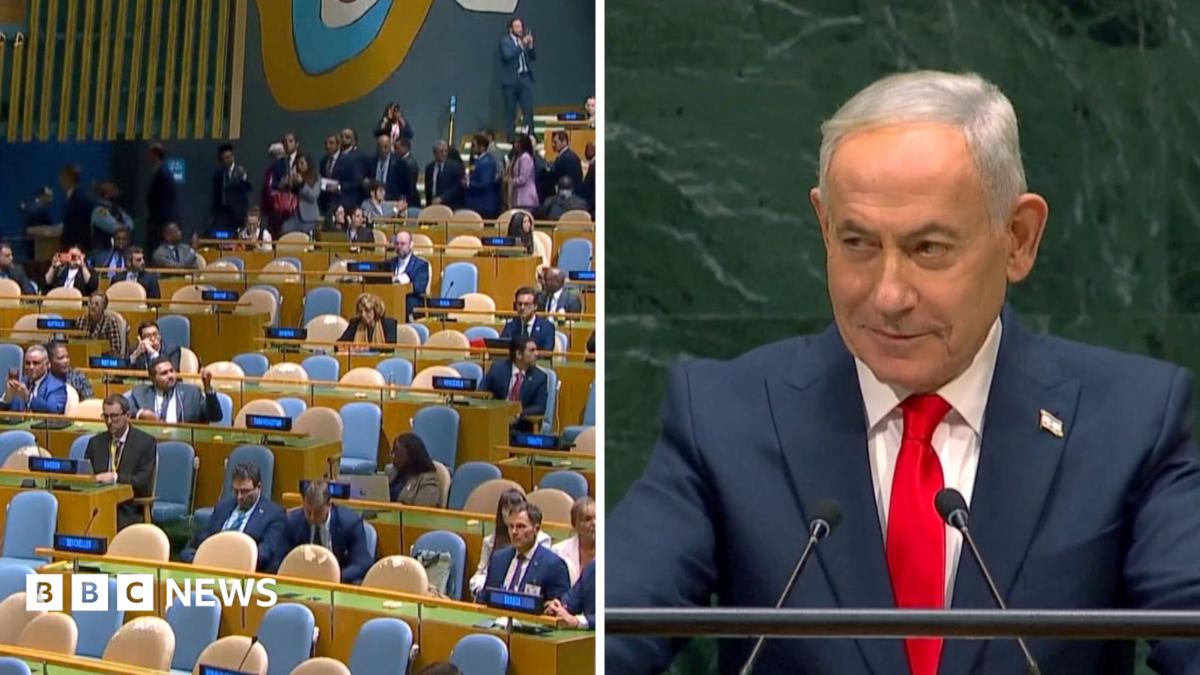
Dozens of UN delegates walked out during Israeli Prime Minister Benjamin Netanyahu's General Assembly address to protest his government's military actions. Netanyahu labeled the departing officials as 'moral cowards' while receiving cheers from his own delegation.
Diplomatic Tensions Erupt at the UN General Assembly
In a striking display of geopolitical friction, dozens of delegates staged a walkout at the United Nations General Assembly in New York as Israeli Prime Minister Benjamin Netanyahu prepared to deliver his address. This act of protest underscores the deep-seated international divisions regarding Israel's ongoing military operations in Gaza and Lebanon, which have become a focal point of global diplomatic scrutiny.
The Confrontation of Perspectives
The atmosphere inside the hall was sharply polarized. While a significant contingent of international representatives exited the chamber to signal their disapproval, the Israeli delegation remained, visibly cheering in support of their leader. This visual dichotomy highlights the widening chasm between Israel’s current strategic objectives and the growing calls from the international community for a cessation of hostilities, particularly in light of humanitarian concerns in Gaza.
Netanyahu’s Rhetorical Response
During his speech, Prime Minister Netanyahu did not shy away from the confrontation. He explicitly addressed the departing delegates, labeling them as "moral cowards" and suggesting that those who held opposing views should have left the chamber. This combative rhetoric reflects the Prime Minister's firm stance that Israel's military actions are a necessary response to existential threats, a position that remains at odds with the findings of various international bodies.
Contextualizing the Conflict
The current tensions are deeply rooted in the events of October 7, 2023, when a Hamas-led attack on southern Israel resulted in approximately 1,200 deaths and the taking of 251 hostages. This event served as the catalyst for Israel’s subsequent military campaign. However, the scale and nature of the response have led to significant international backlash, with a UN commission of inquiry previously accusing Israel of committing genocide in Gaza—an accusation that Israel has categorically and strongly rejected.
Broader Implications for Global Diplomacy
The walkout serves as a potent indicator of the challenges facing the United Nations as a mediator. When the core institutions of global diplomacy become the stage for such overt displays of protest, it suggests a breakdown in the traditional channels of dialogue. The fact that the UN has been the site of such intense scrutiny regarding the conflict in Gaza and Lebanon highlights the organization's difficult position in balancing the sovereignty of member states against the mandates of international humanitarian law.
Future Trends and Outlook
Looking forward, the incident signals that Israel will likely continue to face a hostile diplomatic environment on the global stage as long as the conflict persists. The reliance on strong, defiant rhetoric by Israeli leadership suggests a strategy of prioritizing domestic security objectives over international consensus. As the UN continues to serve as a platform for these conflicting viewpoints, the potential for further diplomatic distancing between Israel and a large portion of the international community remains high.